If your coffee tastes thin or weak, you may be using coffee ground too coarse for your brewing method. Coarse grind coffee works well for methods such as French press or cold brew, but it can underextract in faster brewing methods.
You can grind coffee a second time, but that is usually not the best fix. Regrinding can create too many fine particles and make the next brew harder to control. In many cases, it is easier to use the coarse coffee for French press or cold brew and set the grinder finer next time.
How Can You Tell If Your Coffee Is Ground Too Coarse?
Look at taste and brew speed together. The size of the grounds alone does not tell you whether the grind is wrong.
In pour-over or drip coffee, a grind that is too coarse often lets water pass through too quickly. The coffee may taste thin, sour, or weak because the water did not extract enough flavor. Coarser coffee particles generally extract more slowly, which is why a finer setting can help when a brew runs fast and tastes underdeveloped.
Espresso shows the problem in a different way. If water rushes through the puck and the shot finishes much faster than expected, the grind may be too coarse. French press and cold brew, however, normally use coarse grounds because the coffee stays in contact with water much longer.
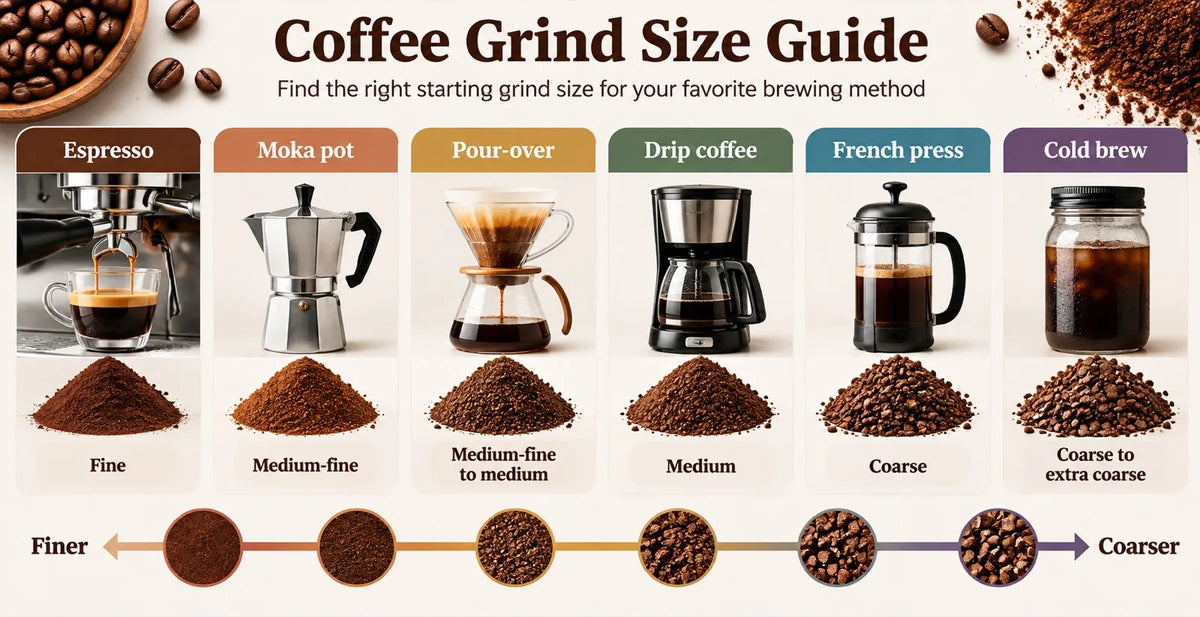
| Brewing Method | Useful Starting Range |
|---|---|
| Espresso | Fine |
| Moka pot | Medium-fine |
| Pour-over | Medium-fine to medium |
| Drip coffee | Medium |
| French press | Coarse |
| Cold brew | Coarse to extra coarse |
These are starting ranges, not fixed rules. If your pour-over drains too fast, using flow and taste to adjust the grind is more useful than trying to match someone else's grinder number.
Can You Grind Coffee Again After It Has Already Been Ground?
Yes, coffee can be ground a second time, but regrinding should be a backup option rather than your normal method.
Ground coffee already contains particles of different sizes. When you run it through a grinder again, some pieces may become much smaller while others change less. That can leave you with a mix of fine powder and larger pieces instead of a cleaner grind at the size you wanted.
Your grinder also matters. Many home coffee grinders are designed mainly for whole beans, so do not assume loose grounds can safely be poured back into the hopper. Check the instructions for your model before trying it.
If you only ruined one dose, grinding a fresh batch at the correct setting is usually easier. If a coffee shop or store ground an entire bag too coarse, changing the brewing method may be a better way to use the coffee without wasting it.
Espresso is the least forgiving case. A shot needs fairly consistent fine grounds to create predictable resistance, so regrinding a coarse batch may still make dialing in difficult.
What Can Happen When You Regrind Coffee Grounds?
Regrinding can create more fines and a wider mix of particle sizes. That can change how water moves through the coffee during brewing.
Fine particles can have a strong effect on flow. In controlled espresso tests, more fines reduced coffee-bed permeability, which slowed water moving through the grounds. This matters because a second grind may create extra fines even when some larger particles remain.
At home, you may notice:
- Slower or less even flow: Fine particles can collect in a filter or coffee bed.
- More sediment: Very small particles may pass through some filters or settle in the cup.
- Less predictable flavor: Fine and large particles extract at different rates.
- Harder dialing in: It becomes difficult to tell whether the grind setting or the second grinding pass caused the problem.
One small test will not automatically ruin your coffee. The issue is repeatability. Grinding whole beans once at the right setting gives you much more control over the next cup.
When Is It Better to Adjust Your Brewing Method Instead?
If you already have a lot of coarse coffee, use a brewing method that works well with larger particles. This is often easier than trying to regrind the whole batch.
French press is a strong option because the coffee steeps in water for several minutes. Coarse grounds work well with that longer contact time and are less likely to pass through the metal filter.
Cold brew is another practical choice. Its long steeping time is well suited to coarse coffee, so grounds that may be too large for a quick pour-over can still work well in an overnight batch.
If the grind is only slightly too coarse for drip or pour-over, you may be able to improve the cup without changing methods. A slightly longer brew time or slower pour can increase contact between the water and coffee. If the grind is far too coarse, however, switching brewers is usually simpler.
| If Your Coffee Is... | Try This |
|---|---|
| Slightly too coarse for pour-over | Slow the pour or extend contact time |
| Much too coarse for pour-over | Use French press or cold brew |
| Too coarse for espresso | Grind a fresh dose correctly |
| A whole bag of coarse pre-ground coffee | Match it to a coarser brew method |
| One accidental coarse dose | Save it for another brew |
This approach is especially useful in an American home where you may already have a drip maker, French press, or cold-brew jar available. Instead of throwing the coffee away, move it to a brewing method that fits the grind.
How to Avoid the Wrong Grind Size Next Time
Check the setting before adding beans, then test one small dose before grinding a large amount. This simple habit prevents most expensive mistakes.
If you are learning how to use a coffee grinder, begin with the recommended range for your brewing method. Brew one cup, taste it, and make a small adjustment if needed. A few habits help:
- Check the dial before every brew-method change. A grinder left on the French press setting will be far too coarse for espresso.
- Test one serving first. Do not grind an entire bag until you know the setting works.
- Move the adjustment in small steps. Large changes make it easy to go from too coarse to too fine.
- Use taste and brew behavior together. Fast and weak usually points finer; slow and harsh often points coarser.
- Save settings that work. Write down your usual range for espresso, drip, pour-over, and French press.
A burr grinder makes this easier because you can return to a defined setting and adjust from there. Building more repeatable grind adjustments into your routine reduces the chance that an entire batch of coarse grind coffee beans ends up prepared for the wrong brewer.
Grinding only what you need for the next brew also limits waste. If the first dose is wrong, you can correct the dial before touching the rest of the bag.
Give Coarse Coffee a Better Second Use
Coffee that is too coarse does not have to go in the trash. A slightly coarse grind may still work after a small brewing adjustment, while a much coarser batch can often move to French press or cold brew. Regrinding is possible, but it adds another variable and can create more fines. For a more predictable cup, use the coarse grounds where they fit and correct the grinder before the next batch.
FAQs About Coarse Coffee and Regrinding
Q1. Can You Regrind Ground Coffee to Make It Finer?
Yes, but the result may contain more fines and a wider mix of particle sizes. Check whether your grinder allows pre-ground coffee to be added, and use a fresh dose at the correct setting when you need consistent results.
Q2. What Brewing Method Is Best for Coarse Ground Coffee?
French press and cold brew are two good options because both use longer contact times. Coarse grounds are well suited to these methods and do not need to be reprocessed first.
Q3. Can You Use Coarse Ground Coffee in a Drip Coffee Maker?
Yes, but coffee that is much too coarse may brew too quickly and taste weak or sour. If that happens, use a finer setting for the next batch.
Q4. Can You Use Coarse Coffee Grounds for Espresso?
Very coarse grounds usually let water pass through an espresso puck too quickly. A fresh fine grind is more reliable than trying to turn a very coarse batch into espresso grounds by grinding it again.
Q5. What Does Medium-Fine Coffee Grind Look Like?
Medium-fine grounds are finer than a typical drip grind but still more textured than powdery espresso grounds. Use that visual description as a starting point, then adjust from the brew speed and taste.