If your pour-over finishes much faster or slower than usual, adjust the grind before changing the whole recipe. A coffee grinder for pour over gives you direct control over how much resistance the coffee bed creates. Start around medium-fine, keep your dose and pouring pattern steady, then move slightly finer for a fast, thin cup or slightly coarser for a slow, harsh one. Use brew time as a clue and taste as the final check.
What Are Fast and Slow Pour-Over Drawdowns Telling You?
Grind size is the first variable to check when your pour-over suddenly drains much faster or slower than expected. A fast drawdown usually calls for a slightly finer grind, while a slow or stalled drawdown usually calls for a slightly coarser grind.
Fast Drawdown
If water runs through quickly and the coffee tastes thin, sour, or weak, move the grinder a small step finer. Finer grounds create more resistance and give the water more contact time with the coffee.
If the brew is still unusually fast after a small grind change, check the dose, filter, and pouring pattern. A shallow coffee bed or unusually fast pouring can also shorten drawdown.
Slow or Stalled Drawdown
If the brew drains very slowly and tastes bitter, dry, or harsh, try a slightly coarser grind. Very fine particles and excess fines can restrict water flow and collect against the filter. Keep agitation gentle while testing the new setting. Heavy swirling or stirring can move more fines toward the filter and slow the brew further.
Do not judge the grind by drawdown alone. A fast or slow brew can still taste good, so use flow to decide what to test and flavor to decide whether the adjustment worked.
Should You Adjust Grind Size Based on Brew Time or Taste?
Taste should make the final decision. Brew time shows what happened to the flow, while flavor tells you whether the grind change improved the cup. A pour-over finishing at 2:40 can be excellent, while another recipe may taste better closer to 3:30.
Chasing one fixed finish time can lead to unnecessary adjustments because dose, brewer geometry, filter paper, pouring pattern, and the coffee itself can all shift drawdown. Research from the UC Davis Coffee Center has examined how grind size and filter-basket geometry can influence the sensory results of drip-brewed coffee.
Use time as your own baseline. If the same coffee and recipe normally finish around 3:00 and suddenly drain at 2:15, that difference is useful; comparing your brew with someone using another grinder, brewer, dose, and filter is much less useful. The table below combines flow and flavor so you know which direction to test first.
| What You Notice | First Grind Adjustment | What to Look for Next |
|---|---|---|
| Fast flow + thin, sour, or hollow cup | Finer | More sweetness and body without harshness |
| Fast flow + balanced, sweet cup | Keep it | No need to slow the brew for the timer |
| Slow flow + bitter, dry, or harsh cup | Coarser | Cleaner finish and less astringency |
| Slow flow + sweet, balanced cup | Keep it | The longer drawdown may suit that recipe |
| Brew time changes but taste stays good | Usually keep it | Watch for repeatability |
A medium-fine grind is a useful starting point for many cone-shaped pour-over brewers, but it is only a starting point. The better target is a grind that gives you repeatable flow and a balanced cup with your coffee, brewer, and recipe.
Why Someone Else's Grinder Setting May Not Work on Yours
A setting number only has meaning on the grinder that produced it. “Setting 12,” “20 clicks,” or “dial 6” cannot be transferred reliably to another grinder because dial scales, burr geometry, calibration, and zero points differ.
Even grinders with similar-looking scales may produce different particle distributions. Burr design affects how beans fracture, while calibration determines what physical burr gap corresponds to a number on the dial. This is why copying a coffee grinder pour-over setting from a forum can send your brew too fine or too coarse.
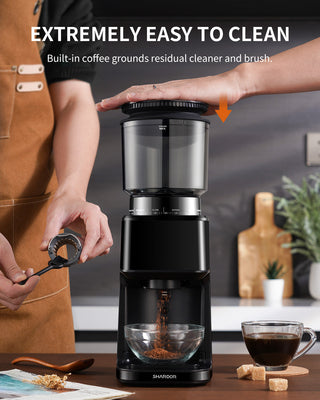
Use another person's setting as a rough direction, then dial in with your own equipment. A burr grinder for pour over is especially useful when it offers enough adjustment steps for small, repeatable changes. The SHARDOR Professional 64mm Flat Burr Grinder provides 100 grind settings, giving you room to move gradually finer or coarser while keeping the rest of the recipe stable.
How to Dial In Pour-Over One Adjustment at a Time
Changing grind size, temperature, dose, ratio, and pouring style together makes it difficult to tell what improved the coffee. Start with a repeatable recipe and change the grinder first when flow and taste point in the same direction.
Build a Repeatable Starting Point
Choose one coffee dose, one water amount, the same filter, and the same basic pouring pattern. Start around medium-fine for a typical cone brewer, then record the grinder setting and approximate finish time so you have a baseline.
The Specialty Coffee Association describes dialing in coffee as a methodical process of adjusting brewing variables to optimize flavor. At home, keeping most variables fixed makes each grind change much easier to evaluate.
Make Small Grind Changes
If the brew is fast and tastes underdeveloped, move slightly finer. If it is slow and tastes dry or harsh, move slightly coarser. Brew again without changing anything else, then compare both flavor and drawdown.
Once the cup tastes balanced, stop adjusting simply because the finish time differs from a recipe online. Save the setting for that coffee if you plan to buy it again, because your own repeatable reference is more useful than somebody else's dial number.
If changing the grind moves the brew time but does not solve the flavor problem, test the next variable while keeping the new grind setting stable. Dose, water temperature, filter choice, and pouring pattern are the next places to look.
Get More Control From Your Pour-Over Grinder
Fast or slow drawdown is useful feedback. Start with grind size, change it in small steps, and judge the result by both flow and taste. You are looking for a setting you can repeat, not a universal finish time. For more control over medium-fine adjustments across pour-over and other brew methods, explore the current burr coffee grinders.
FAQs
Q1. What Grind Size Should I Start With for Pour-Over Coffee?
Start around medium-fine for many cone-shaped pour-over brewers, then adjust from there. If the coffee drains too fast and tastes thin or sour, go slightly finer; if it drains slowly and tastes dry or harsh, go slightly coarser.
Q2. Why Does My Pour-Over Suddenly Drain Faster With the Same Grinder Setting?
A new coffee, roast level, dose, or filter can change how water moves through the bed even when the grinder dial stays in the same place. Use your previous brew as a baseline and make a small grind adjustment when the taste changes with the flow.
Q3. Can Too Many Fines Make Pour-Over Coffee Stall?
Yes. Very small particles can increase resistance in the coffee bed and collect against the filter, slowing drainage. If the bed looks muddy and the brew is both unusually slow and harsh, try a slightly coarser setting and gentler agitation.
Q4. Should I Grind Finer Until My Pour-Over Reaches Three Minutes?
No. Three minutes can be a useful reference for some recipes, but it is not a universal target. If your cup is balanced at another finish time, keep the setting and use that result as your own baseline.
Q5. Is a Burr Grinder Better for Dialing In Pour-Over?
A burr grinder makes pour-over adjustments easier to repeat because the burr gap provides a defined grind setting. More available settings also give you finer control when one adjustment step would otherwise be too large.