Freshness is the one factor that separates a great cup of coffee from a forgettable one. How you load and store beans in your coffee bean grinder plays a bigger role in that freshness than most people realize. Get these two steps right, and every brew benefits.
Why Fresh Beans Make or Break Your Coffee Bean Grinder's Performance
Not all coffee bean grinders work the same way, and knowing which type you have shapes how you should load and care for it.
There are two main types on the market:
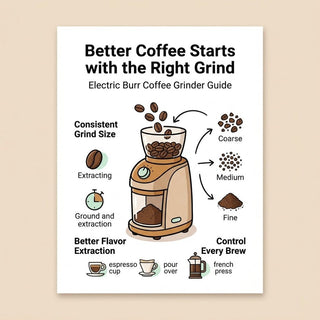
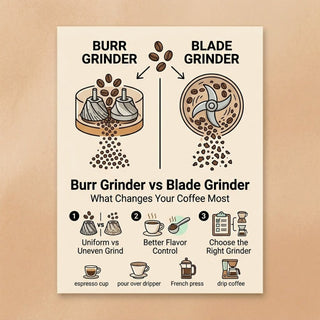
- Burr grinders use two abrasive surfaces, called burrs, to crush beans into uniform-sized particles. This consistency improves flavor extraction and is widely preferred for brewing methods like espresso, pour-over, and French press.
- Blade grinders use a spinning metal blade to chop beans. They are typically more compact and budget-friendly, though the grind size tends to be less consistent from batch to batch.
Both types share one thing in common: they perform best when fed fresh, whole beans right before brewing. Coffee starts losing its aroma and flavor the moment it is ground, because the chemical compounds responsible for taste, including carbon dioxide and volatile aromatic oils, begin to escape almost immediately after the cell walls of the bean are broken open.
Loading pre-ground coffee into a grinder defeats the purpose of having one. Fresh beans in, fresh grounds out: that is the only way to get the most out of your machine.
What Happens When You Grind Coffee Beans Too Early
When you grind coffee beans ahead of time, a clock starts ticking. Freshly ground coffee has a much larger total surface area than whole beans, which speeds up a process called oxidation, a chemical reaction between coffee compounds and oxygen in the air. The longer ground coffee sits exposed, the more flavor and aroma it loses.
Here is what happens once the grinding is done:
- Carbon dioxide escapes. This gas, naturally present in roasted coffee, plays a key role in flavor extraction during brewing. It begins escaping within minutes of grinding.
- Aromatic oils break down. These oils give coffee its signature scent and taste. When exposed to air, heat, and light, they degrade quickly.
- Moisture causes clumping. Humidity in the air can cause ground coffee to clump together, leading to uneven water flow during brewing and an inconsistent cup.
The result is coffee that tastes flat, bitter, or just plain off. Grinding right before brewing is not a preference. It is what makes the process work. For anyone using a coffee maker that grinds beans automatically before each cycle, this freshness is built into every brew by design.
How Much Coffee to Load into Your Coffee Bean Grinder Hopper
The hopper (the removable reservoir at the top of a grinder where whole beans are poured in) is not meant to double as a storage jar. A good rule of thumb: load only what you plan to brew within the next day or two.
Loading a Burr Grinder
For most home brewers, loading enough beans for 1 to 2 brewing sessions at a time is the sweet spot. In practical terms, that typically means enough for 2 to 4 cups per load. Filling the hopper all the way and leaving it for several days exposes the beans to air continuously, which dulls flavor faster than most people expect. Keeping the load small and refilling as needed takes only a few extra seconds and makes a noticeable difference in cup quality.
Loading a Blade Grinder
Blade grinders work best when loaded for a single session only. A general starting point is 1 to 2 tablespoons of whole beans per cup you plan to brew, adjusted to your taste preference. Avoid leaving leftover beans sitting in the chamber after grinding, since residual oils can mix into the next batch and affect flavor.
For both grinder types, smaller and more frequent loads keep your coffee bean grinder delivering its best results every time.
How to Store Coffee Beans Properly Next to Your Coffee Grinder

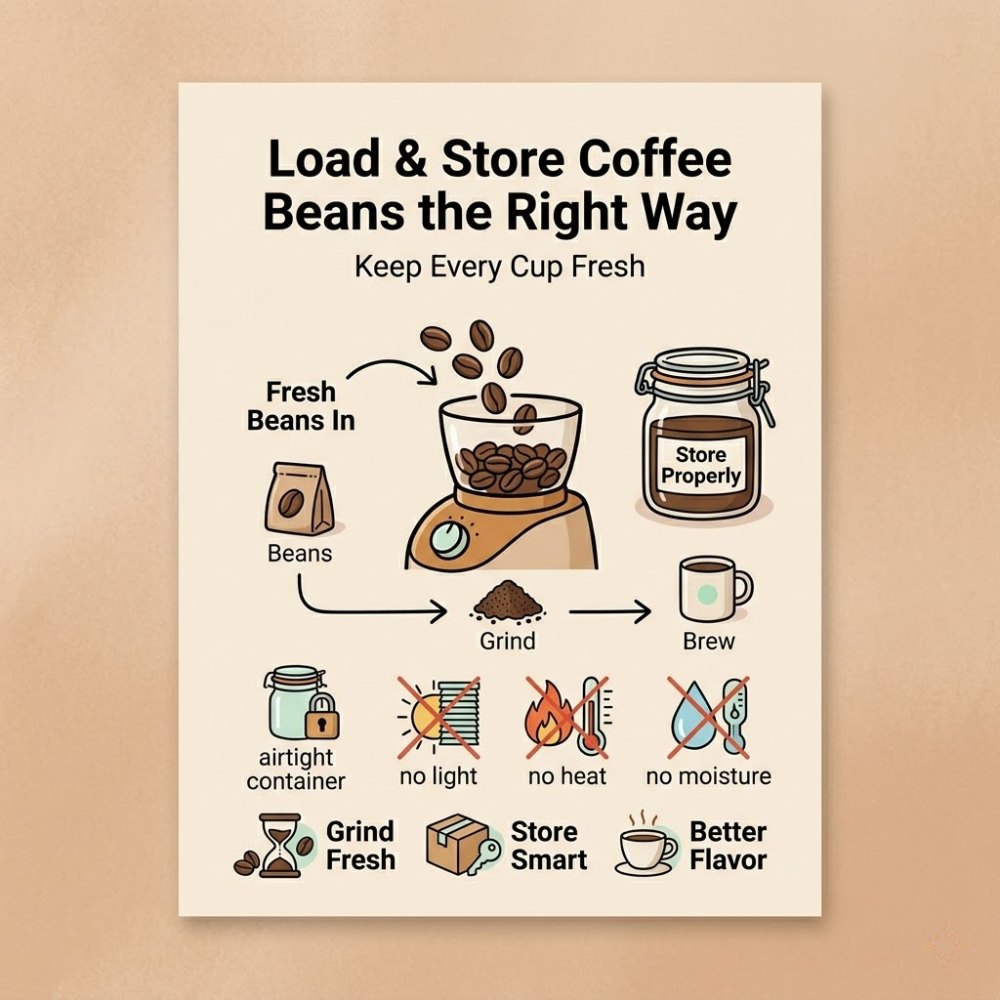
Even a well-maintained coffee bean grinder cannot save stale beans. Where and how you store whole beans between grinding sessions makes a real difference in cup quality. The four biggest enemies of fresh coffee are air, moisture, heat, and light.
Choose the Right Container
An opaque, airtight container is the best choice for storing coffee beans at home. Clear glass jars may look great on a countertop, but they allow light to pass through and accelerate the breakdown of aromatic compounds. Ceramic containers or matte-finish canisters with a tight-sealing lid are a much better option.
Some containers are specifically designed for coffee storage and include one-way valves. These valves let carbon dioxide escape from freshly roasted beans without allowing oxygen to enter, which is especially useful if you buy beans shortly after their roast date.
Pick the Right Spot
Where you place your container matters just as much as what it is made of. Keep beans away from:
- The stove or oven (generates too much heat)
- Windowsills or anywhere with direct sunlight
- The refrigerator (temperature swings cause condensation on beans, which damages flavor)
A cool, dry, dark cabinet away from heat sources is ideal. Keeping the container within arm's reach of your coffee bean grinder makes your morning routine easier, but make sure that spot is not directly above or beside a heat-generating appliance.
A well-stored bag of whole beans can stay fresh for several weeks after opening. Once ground, you have a much shorter window before flavor starts to fade. Store smart, grind fresh, and the difference will show up in your cup every single time.
Brew Better With Every Bean You Load
Loading and storing beans correctly is one of the simplest ways to improve every cup you make. Use your coffee bean grinder with only the amount of beans you need, avoid letting pre-ground coffee sit around, and store your whole beans in an airtight, opaque container away from heat and light. Small habits make a real difference. Find a grinder that fits your brewing style and start tasting what genuinely fresh coffee can do.
FAQs about Coffee Bean Grinding and Storage
Q1. Can You Store Flavored Coffee Beans in the Same Grinder Hopper as Regular Beans?
It is best to avoid mixing flavored and unflavored beans in the same hopper. The oils used to add flavor to coffee beans can coat the burrs or blade and linger long after the flavored beans are gone, affecting the taste of regular coffee brewed afterward. If you enjoy both types, a quick clean of the grinding chamber between uses helps reduce flavor transfer.
Q2. Does the Roast Level of Coffee Beans Affect How Long They Stay Fresh?
Yes, roast level plays a role. Darker roasts tend to off-gas more carbon dioxide and release oils more quickly than lighter roasts, which means they can lose freshness faster once the bag is opened. Lighter roasts are generally more stable for a longer period. Regardless of roast level, whole beans stored in an airtight container away from light and heat will always outlast pre-ground coffee in terms of freshness.
Q3. How Do You Know When Coffee Beans Have Gone Stale Before You Grind Coffee Beans?
Fresh coffee beans have a strong, rich aroma when you open the bag or container. If the smell is faint, flat, or smells more like cardboard than coffee, the beans have likely gone stale. You may also notice that the brewed coffee lacks depth, tastes dull, or has a papery or sour aftertaste. When in doubt, smell your beans before you load them.
Q4. Is It Worth Buying a Coffee Maker That Grinds Beans Built In?
A coffee maker that grinds beans automatically before each brew can be a convenient all-in-one solution for everyday use. Because it grinds right before brewing, freshness is built into the process without any extra steps. The trade-off is that these machines can be harder to clean thoroughly, and the grind settings are sometimes more limited compared to a standalone grinder. Whether it suits you depends on how much control you want over the grinding process.