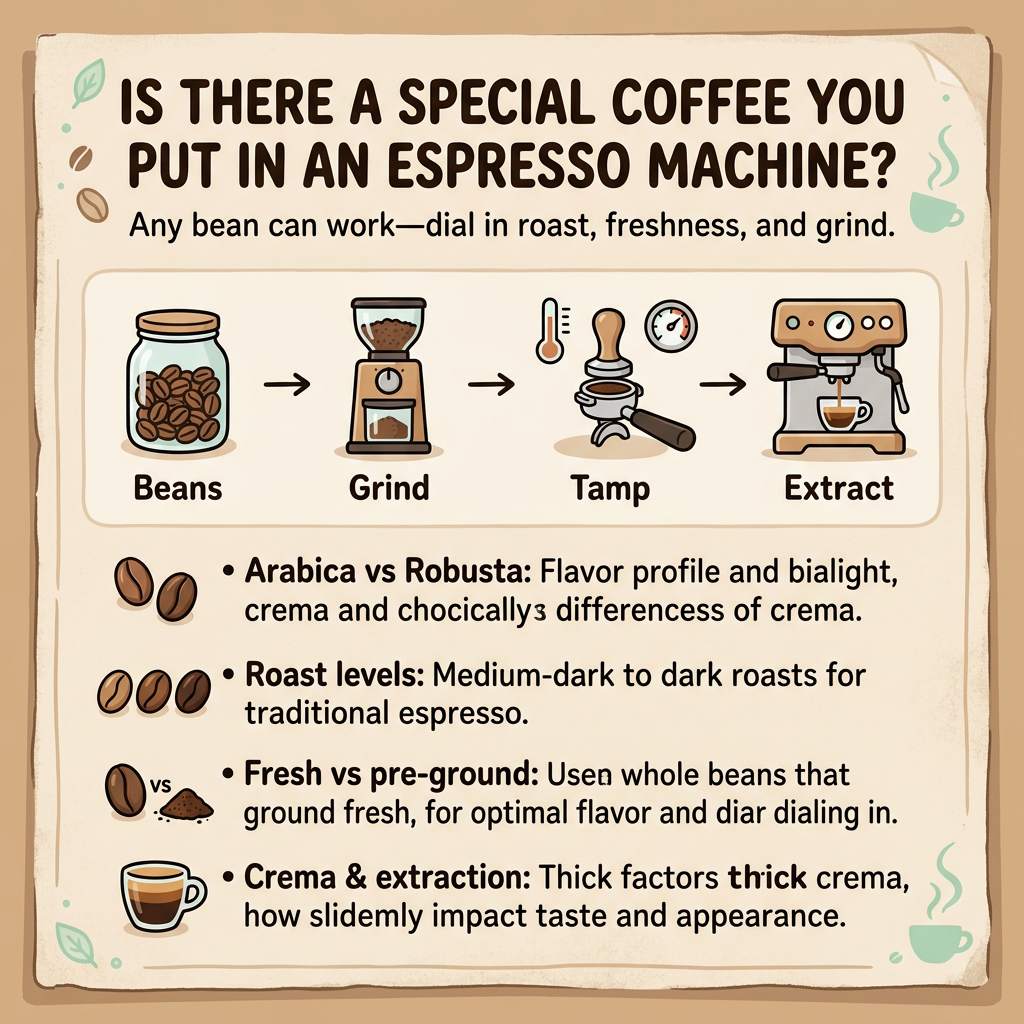
Stepping into a kitchen filled with the aroma of a fresh brew is a highlight of the day. Many beginners wonder if their new espresso machine requires a top-secret bean or a specialized blend found only in boutique shops. Success depends on the harmony between your beans and your equipment rather than a single magic ingredient. Achieving that rich, velvety finish is within reach for any home barista who knows the basics of bean selection and machine operation.
Is There a Specific Type of Bean for an Espresso Machine?
Walk down the coffee aisle and you will likely see bags labeled specifically as espresso beans. This leads many people to believe that these are a different species of plant entirely. In reality, coffee beans come from two primary species.
- Arabica: These beans are known for their sweet, complex flavors and higher acidity.
- Robusta: These are stronger, more bitter, and produce a thicker foam during the brewing process.
An espresso machine can technically process any coffee bean regardless of what the label says. Labels that say "espresso roast" are simply a recommendation from the roaster. They have chosen a bean and a roasting level that they believe tastes best when prepared under high pressure.
When you use an espresso machine for home, you are using a specific brewing method, not a specific crop. The machine uses a pump to force hot water through a tightly packed puck of coffee. This method, known as extraction, pulls out flavors much faster than a standard drip brewer. Extraction is the scientific process where water dissolves the soluble oils and solids from the coffee grounds to create the final drink.
Finding the Best Roast for Your Espresso Machine for Home
Selecting the right roast profile determines the body and sweetness of your coffee. The following categories represent the most popular choices for home brewing.
- Dark Roast: These are the traditional choice. They have been roasted longer, which causes natural oils to migrate to the surface. In a home espresso machine, dark roasts produce a thick crema. Crema is the golden, creamy layer of foam that sits on top of a well-pulled espresso shot.
- Medium Roast: Many enthusiasts now prefer these to experience more variety. They offer a balance between bitterness and acidity. Using a medium roast allows you to taste subtle hints of brown sugar or dried fruit.
- Light Roast: These offer high acidity and floral notes. While they require more precise temperature control, they provide a bright and tea-like experience for those who enjoy modern coffee trends.
Individual preference plays the biggest role in your choice. Because the machine is so efficient at pulling flavor, any bean you put inside will have its characteristics magnified. Using high-quality, balanced beans will consistently yield a professional result.
The Role of Freshness: Using an Espresso Machine with Grinder
Freshness is a vital factor in the quality of your coffee. Once a coffee bean is roasted, it begins to release carbon dioxide and lose its aromatic oils. This process accelerates once the bean is ground because more surface area is exposed to oxygen.
- Whole Beans: These stay fresh for several weeks when stored in a cool, dark place.
- Pre-ground Coffee: This starts to go stale within minutes of opening the bag.
Investing in an espresso machine with grinder is a game changer for flavor. Grinding your beans seconds before brewing ensures that the delicate flavors are trapped in your cup rather than lost to the air. Having a built-in grinder also allows you to adjust the texture of the coffee. This is important because the age of the bean changes how it reacts to water. Older beans often need a finer grind to create enough resistance for the water to build pressure.
Can You Use Pre-Ground Coffee in a Home Espresso Machine?
Many people start their journey by purchasing bags of pre-ground coffee. While pre-ground coffee is a convenient way to start, moving to freshly ground beans is the secret to elevating your flavor to the next level. Most pre-ground coffee sold in stores is intended for drip brewers. This means the grounds are too coarse for a high-pressure environment.

- Extraction Issues: Water will fly through coarse grounds too quickly, resulting in a thin and watery shot.
- Lack of Crema: Pre-ground coffee lacks the carbon dioxide needed to create a thick crema. Carbon dioxide is the gas trapped inside the beans during roasting that helps create foam under pressure.
- Pressurized Baskets: Some machines use a pressurized portafilter to help. A portafilter is the handle-mounted basket that holds the grounds. These baskets force the liquid through a tiny hole to create a fake crema, which helps the appearance but does not fix the flavor.
For the best experience, treating your espresso machine to freshly ground coffee is always the superior choice for both texture and taste.
How to Select the Best Beans for Your Home Espresso Machine?
Identifying the right price point depends on how often you brew and your flavor goals. Comparing these intervals allows you to find the best value for your daily routine.
| Bean Quality | Price Range (Per Pound) | Best For | ||
| Standard Grade | $8.00 - $12.00 | Daily lattes | and classic milk drinks | |
| Specialty Blend | $15.00 - $22.00 | Balanced straight shots and americanos | ||
| Single Origin | $25.00 - $40.00 | Discovering unique regional flavor profiles | ||
| Specialty Experience | $45.00+ | Connoisseur brewing and high-end tasting |
Comparing these ranges helps you balance your budget with your desire for professional-grade results.
High-quality beans are worth the cost because they go through a stricter sorting process. This ensures that every bean is ripe and free of defects. Selecting beans within the specialty range allows your home espresso machine to reach its full potential.
Mastering Your Home Espresso Machine: Tips for a Perfect Shot
Achieving professional results requires a combination of good technique and reliable equipment features. Modern home brewers are designed to make these steps intuitive for anyone.
- Reliable Pressure Systems: A system with a 20-bar pump ensures a stable and powerful flow throughout the extraction process. While nine bars is the traditional standard for espresso, having additional potential pressure helps overcome slight errors in grind size or tamping. This ensures a beautiful, thick crema even for those who are just starting their coffee journey.
- Intuitive Controls: Machines with touchscreen interfaces or clear adjustable dials allow you to find the exact sweet spot for your favorite beans. These precise controls remove the guesswork, helping you replicate your favorite cafe-quality shots every single morning.
- Precision Tamping: Tamping is the act of pressing the coffee grounds into the portafilter to create a flat, even surface. Using a heavy, flat tamper ensures that water moves through the entire puck of coffee evenly rather than finding a path of least resistance.
- Microfoam Perfection: If you enjoy lattes or cappuccinos, a high-performance steam wand is essential for creating microfoam. Microfoam is a smooth, velvety milk texture with bubbles so small they are invisible to the eye. A powerful frothing system allows you to achieve this professional finish in seconds.
- Durable Build Quality: A sleek stainless steel design not only looks professional in a modern kitchen but also ensures the durability needed for daily use. High-quality materials help maintain temperature stability, which is vital for consistent flavor.
Having a reliable espresso machine with these advanced features makes the process of learning barista skills enjoyable and rewarding. When your equipment handles the technical details like pressure and temperature, you can focus on exploring the endless flavors of different coffee beans.
FAQs about Espresso Coffee Basics
Q1. Can You Use Regular Coffee in an Espresso Machine?
Yes, you can use any type of coffee bean, but the results depend on the grind and roast. For the best flavor, you should use a fine grind and a medium or dark roast to ensure the machine can build enough pressure.
Q2. Does Espresso Burn Belly Fat?
No, espresso does not directly burn fat on its own. While the caffeine in espresso can slightly increase your metabolic rate, it is not a magic solution for weight loss and should be part of a balanced diet.
Q3. Is It Better to Have an Espresso Machine With a Grinder?
Yes, having a built-in grinder is much better for flavor and convenience. It allows you to grind beans fresh for every shot, which is the most important step in achieving a rich crema and a vibrant taste.
Q4. Do Espresso Beans Have More Caffeine Than Regular Beans?
No, the caffeine content depends on the type of bean and the roast level, not the label on the bag. While a shot of espresso is very concentrated, a standard cup of drip coffee usually contains more total caffeine because the serving size is much larger.
Level Up Your Coffee Craft
Success in espresso brewing depends on balancing bean freshness with precise machine settings. While any roast can technically work, mastering the grind and pressure is what separates a basic cup from a cafe-quality masterpiece. Discover a new level of flavor by pairing high-quality beans with a professional-grade brewer. Explore our latest collection of high-performance tools to find your perfect kitchen companion and start your journey toward the ultimate home espresso today.