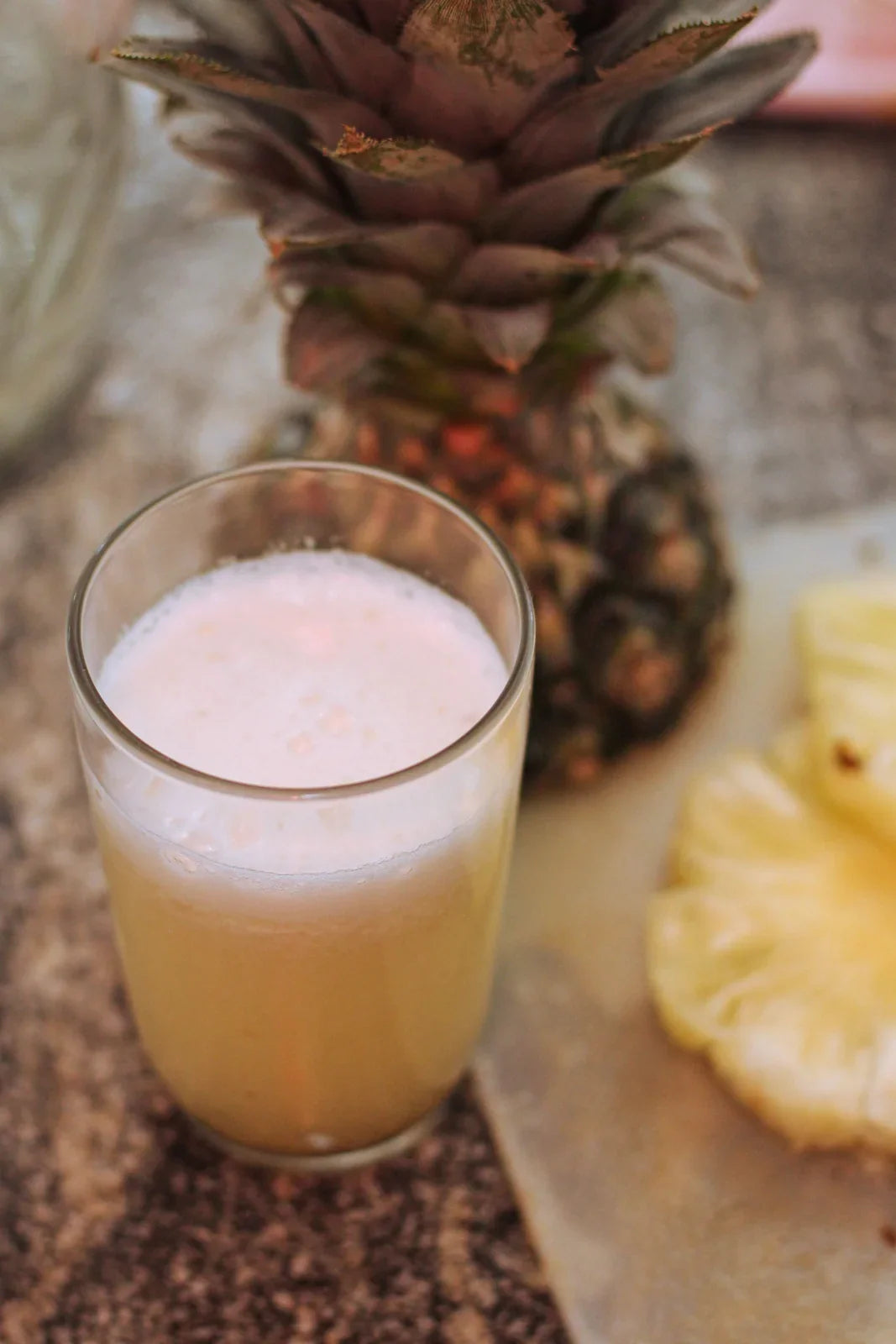
Foam on fresh juice is usually normal. It forms when air gets mixed into the juice and becomes trapped by natural compounds in fruits and vegetables. Apples, pineapple, celery, and leafy greens can create more foam than watery produce such as cucumber. To reduce it, feed ingredients at a steady pace, use the right speed for your juicer, avoid forcing produce through the chute, and let the juice rest before pouring or skimming off the foam.
Which Fruits and Vegetables Naturally Create More Foam?
Some produce foams more because its pulp, pectin, proteins, and fine plant particles help air bubbles stay in the juice. The amount of foam can change even when you use the same juicer.
Research on fruit juice foam found that pectin and water-soluble proteins can help stabilize bubbles. This helps explain why two ingredients can behave very differently during juicing even when they contain a similar amount of liquid.
Apples and Pineapple
Apples often create a noticeable foam layer, especially softer varieties. Apple juice naturally contains pectin and suspended plant particles, and pectin plays an important role in the cloud and particle stability of apple juice.
Pineapple can also foam heavily because it contains plenty of juice along with fine pulp and natural plant compounds. Removing the tough rind and core, then cutting the flesh to the size recommended for your machine, can help it feed more smoothly.
Celery and Leafy Greens
Celery, kale, and other fibrous produce can create foam and fine pulp during extraction. Long fibers may also be harder for some juicers to process smoothly.
Cut fibrous stalks according to your machine instructions rather than pushing long pieces into the chute. If you are mixing several ingredients, alternating fibrous produce with firmer, juicier items such as apple or carrot can also help keep the flow steady.
A foamy glass does not mean you chose the wrong fruit. It simply means the ingredients and juicing process trapped more air.
How Do Feeding Speed and Ingredient Size Affect Air in the Juice?
Feed produce steadily and let the machine finish processing each piece instead of forcing a large amount through at once. A smoother flow can reduce splashing, pulp buildup, and extra air entering the juice.
Ingredient size should follow the design of your machine. A wide-feed electric juicer may accept large pieces, while another model may require more cutting. Do not assume that every apple, celery stalk, or pineapple chunk should go in whole just because it fits through the opening.
Pressure matters too. Pushing hard on the food pusher does not always make juicing faster. It can overload the extraction area and make the process less even. Use steady, light pressure and let the motor or auger do the work.
If your juicer has more than one speed, use the setting recommended for the ingredient. Softer produce often needs a different speed from firm apples, carrots, or celery. For example, the 800W centrifugal juicer in SHARDOR's current collection has separate speeds for softer and harder produce, plus a 3-inch feed chute.
In a morning apple-and-celery juice, that means you can choose the setting for the produce you are processing and feed it at a steady pace rather than forcing everything through as quickly as possible. Its juice jug also includes a foam separator, which helps hold back some froth when you pour.
The same rule applies to a cold press juicer: prepare ingredients for the machine you actually own. Slower extraction does not remove the need to cut fibrous or oversized produce correctly.

Does More Foam Mean the Juice Has Gone Bad?
No. Foam that appears during or right after juicing is usually trapped air, not a sign that the juice has spoiled. Fresh juice can look very frothy and still be perfectly normal.
Foam and spoilage are different issues. Foam forms during processing when air mixes with the liquid. Spoilage happens over time and should be judged by storage conditions and clear changes in smell, taste, or appearance.
The amount of foam also says very little about how much juice you extracted. One apple variety may create a thick foam cap while another produces very little, even when both give a good amount of juice.
If the juice has just come out of the machine and smells and tastes normal, a foam layer by itself is not a reason to throw it away. You can stir it in, let it settle, or remove it depending on the texture you prefer.
How Can You Reduce or Remove Foam Before Drinking?
Start by reducing the air mixed in during juicing, then deal with any foam that remains after extraction. You do not need to remove every bubble unless you prefer a clearer glass.
While You Are Juicing
Feed ingredients at a steady pace and avoid repeatedly stopping, forcing, and restarting the flow. Use the correct speed when your machine offers different settings, and prepare produce according to the feed-chute and cutting instructions.
Keeping the juice jug correctly positioned also helps. If juice falls a long distance or splashes heavily into the container, more air can mix into it.
Do not worry if some foam still forms. Certain fruits and vegetables naturally make more, even with careful technique.
After Juicing
Let the juice sit for a few minutes. The foam will usually collect at the top, where you can remove it with a spoon if you want a smoother drink.
A fine strainer can remove extra foam and loose pulp, although it may also make the juice feel lighter. If your juicer includes a foam separator, use it when pouring so more liquid reaches the glass while the froth stays in the jug.
Pour gently rather than shaking the juice or moving it between several containers. Each extra splash can mix in more air.
If cleanup is part of what makes foam and pulp frustrating, rinse the removable parts soon after use. Following a simple electric juicer cleaning routine keeps wet pulp from drying into the filter and makes the next batch easier to process.
When Can Excessive Foam Point to an Assembly or Filter Problem?
Check the machine when the amount of foam suddenly changes and you also notice poor juice flow, heavy pulp buildup, leaks, or unusual vibration. Foam alone usually does not mean something is wrong.
Start with the filter or strainer. A mesh screen packed with old pulp cannot separate juice as cleanly, so rinse and brush it according to the product instructions. Dried fibers around small holes can also affect how liquid leaves the machine.
Next, check that all removable parts are seated correctly. The lid, pulp container, filter basket, juice jug, and safety lock should be in their normal positions before you start.
Pay attention to ingredient buildup as well. Fibrous celery, pineapple, or leafy greens can collect around the extraction area during a larger batch. If the machine instructions call for stopping and clearing the filter, do that before continuing.
A sudden change is more useful than foam volume by itself. If your usual apple juice becomes much frothier and the machine is also draining slowly, clean and reassemble the juicer before changing your recipe.
When choosing an easy-to-clean juicer, removable parts and good filter access can make these checks much faster. Keeping the screen clear also helps the machine perform the way it was designed to from one batch to the next.
Keep Fresh Juice Smooth Without Overthinking the Foam
A layer of foam is a normal part of making fresh juice, especially with apples, pineapple, celery, and other fibrous ingredients. Feed produce steadily, use the correct speed and cutting method for your juicer, and avoid forcing ingredients through the machine. If you prefer less froth, let the juice settle, skim or strain it, or use the foam separator that came with your machine. When foam suddenly increases along with poor flow or pulp buildup, clean the filter and check that the parts are assembled correctly.
FAQs About Foam in Fresh Juice
Q1. Why Is My Juice So Foamy?
Foam forms when air gets mixed into fresh juice and becomes trapped by natural compounds in the produce. Apples, pineapple, leafy greens, and some fibrous vegetables tend to create more foam than others.
Q2. Is Foam in Fresh Juice Normal?
Yes. A layer of foam right after juicing is usually normal and does not mean the juice has spoiled. If the machine also has poor flow, leaks, or heavy pulp buildup, then check the filter and assembly.
Q3. How Do You Reduce Foam When Juicing?
Feed produce at a steady pace, use the correct speed for your machine, and avoid forcing ingredients through the chute. After juicing, let the foam rise and skim it off, strain the juice, or use a foam separator if your jug includes one.
Q4. Why Do Apples and Pineapple Make So Much Foam?
Both contain pulp and natural compounds that can help stabilize air bubbles. Apple variety, ripeness, and how quickly the produce moves through the juicer can also change how much foam you see.
Q5. Does a Centrifugal Juicer Make More Foam?
It can, because high-speed spinning mixes more air into juice. That does not make the juice bad or mean the machine is working incorrectly; ingredient type, feed speed, and filtering also affect the final amount of foam.