An espresso machine with steam wand is worth having if lattes, cappuccinos, flat whites, and other hot milk drinks make up a large part of your coffee routine. A steam wand gives you direct control over milk temperature and texture, while a separate electric frother favors simpler, more automated preparation. You do not need a steam wand just to add foamed milk to espresso, but it becomes more useful as texture and drink variety matter more.
Quick Takeaways
| Your Milk-Drink Routine | Better Fit |
|---|---|
| Regular lattes and flat whites | Steam wand |
| Want to practice latte art | Steam wand |
| Prefer different milk textures for different drinks | Steam wand |
| Want push-button frothing with little practice | Electric frother |
| Make cold foam as well as hot milk drinks | Electric frother may be more convenient |
| Rarely make milk-based espresso drinks | Either can work |
The choice comes down to how much control you want over the milk and how much hands-on preparation fits your morning routine.
What Does a Steam Wand Add to an Espresso Machine for Milk Drinks?
A steam wand lets you heat and aerate milk at the same time while controlling how much air is introduced. That makes it possible to move from the fine, glossy microfoam used in a flat white to a more aerated texture for a cappuccino without changing to another appliance.
Milk foam is more than a layer of bubbles on top of coffee. A recent review of milk foam formation and stability explains that milk proteins help form and stabilize the air bubbles that give foamed milk its texture and mouthfeel. How milk is aerated and heated therefore affects the finished drink.
This control is the main reason a steam wand matters for latte-style drinks. You decide when to introduce air, how much the milk expands, and when to stop heating. With practice, that lets you prepare different textures instead of receiving the same preset foam every time.
A steam wand is less important if you mainly drink straight espresso or only occasionally add foamed milk. In that situation, a separate frother can provide the milk component without making the steam system a major part of your espresso-machine purchase.
When Is a Manual Steam Wand Worth Learning to Use?
A manual steam wand is worth learning when milk texture is part of what you enjoy about the drink, not just something you want added on top. The learning curve is most worthwhile for people who make milk drinks regularly enough to benefit from better control.
It is particularly useful if you want to make flat whites, pour latte art, or change the foam level between a latte and cappuccino. Steam injection gives you control over both aeration and heating, and research on steam-injected cappuccino milk found that milk proteins play an important role in foam formation and stability during steaming.
The first few attempts may produce milk that is too bubbly or too flat, but the process becomes more repeatable once wand position, aeration, and temperature feel familiar. For more precise control, getting the wand position, aeration, and milk temperature right helps create smoother microfoam for lattes, cappuccinos, and flat whites.
Steam Wand or Separate Milk Frother: What Changes in Daily Use?
A steam wand gives you more control; a separate electric frother reduces the amount of attention the milk needs. Both can make milk drinks at home, but they create different routines.
With a steam wand, you stay involved from start to finish. You hold the pitcher, control its position, decide how much air to introduce, and stop when the milk reaches the texture and temperature you want. This takes some practice, but it also makes one milk system useful across several espresso drinks.
An electric frother usually asks less of you. Add milk, choose the available setting, and let the appliance heat and aerate it. That can be appealing on a rushed weekday morning or in a household where several people want foamed milk without learning manual steaming.
The differences become clearer in everyday use:
- Texture control: A steam wand lets you adjust aeration while steaming. An automatic frother generally works within preset modes.
- Hands-on time: The wand needs your attention; an electric frother can often work while you prepare the espresso.
- Drink variety: A wand makes it easier to deliberately change milk texture between latte, flat white, and cappuccino.
- Cold foam: Many electric frothers include a cold-froth function, while a traditional steam wand is designed to heat milk.
- Counter space: A wand is already part of the espresso machine. A separate electric frother needs its own storage or counter space.
- Cleanup: A steam wand should be wiped and purged promptly after use; a frother usually requires cleaning its milk container and whisk or insert.
Neither workflow is automatically easier for everyone. Someone who enjoys making espresso manually may find steaming a natural part of the process, while someone who values hands-off preparation may prefer a separate frother.
What Should You Check If You Make Several Milk Drinks a Day?
If you make several lattes or cappuccinos each day, look beyond whether the machine simply has a steam wand. Water capacity, heating speed, steam control, cleanup, and how easily the machine moves between brewing and steaming all affect the routine.
Imagine two people making cappuccinos before work. You need to brew multiple espresso shots, steam enough milk, wipe the wand between pitchers, and manage the drip tray without turning breakfast into a long equipment-reset process. Features that reduce repeated filling and cleanup become much more noticeable in this situation.
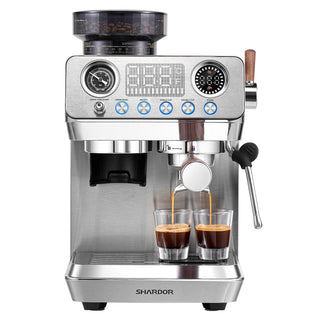
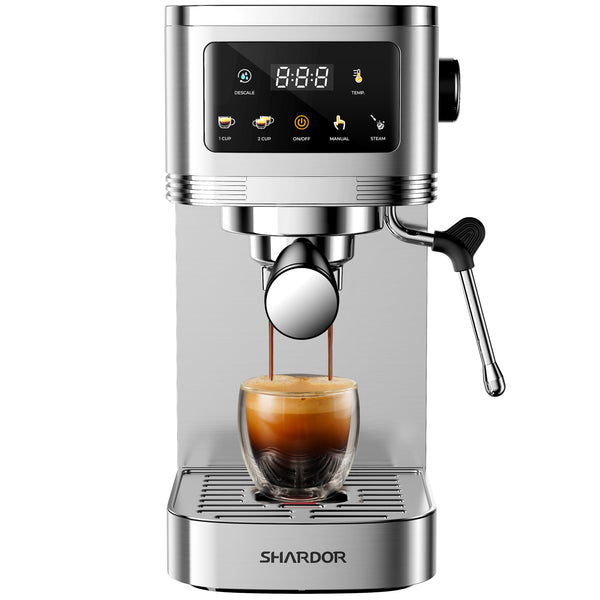
The SHARDOR 20 Bar Espresso Machine with Milk Frother Steam Wand is a practical example of how those features can work together. Its manual steam wand lets you vary milk texture for different drinks, while the removable 60 oz water tank is useful when several drinks are made back to back. After the morning rush, the detachable drip tray can be taken to the sink instead of cleaning collected water and coffee residue around the machine on the counter.
That combination matters more in daily use than treating steam power, tank size, and removable parts as separate specifications. The more milk drinks you make, the more important it becomes that steaming, refilling, and cleanup all fit into the same manageable routine.
Which Espresso Drinks Benefit Most From a Steam Wand?
A steam wand is most useful for drinks where milk texture changes the final result, especially lattes, cappuccinos, flat whites, and macchiatos. These drinks all combine espresso and milk, but they do not use the same amount of aeration or foam.
| Drink | What the Milk Needs |
|---|---|
| Latte | Smooth steamed milk with a thin layer of fine foam |
| Cappuccino | More aeration and a more noticeable foam layer |
| Flat white | Fine, glossy microfoam that blends closely with the espresso |
| Macchiato | A small amount of textured milk or foam |
| Mocha | Smooth steamed milk that blends with espresso and chocolate |
A cappuccino benefits from a wand because you can introduce more air and build a lighter, more noticeable foam layer. The balance between espresso, steamed milk, and foam is what gives the drink its characteristic texture, and the home cappuccino recipe shows how those components come together in a finished drink.
A flat white asks for something different. The milk should stay finer and more integrated with the espresso rather than forming a thick foam cap. That difference is easier to understand when comparing the flat white milk texture and proportions, which rely on velvety microfoam and a higher coffee-to-milk ratio.
That flexibility is where a manual steam wand earns its place. If you regularly move between cappuccinos, flat whites, lattes, and macchiatos, being able to change the amount of aeration from one drink to the next is more useful than producing the same foam texture every time.
Match the Milk System to the Drinks You Make Most
An espresso machine with steam wand makes the most sense when hot milk drinks are part of your regular routine and you want control over their texture. It is especially useful for lattes, cappuccinos, and flat whites, while a separate electric frother may suit people who value push-button consistency or cold-foam options. Before buying, consider how often you make milk drinks, how much technique you want to learn, and whether daily steaming and cleanup fit naturally into the way you already make espresso.
FAQs
Q1. Do You Need a Steam Wand to Make a Latte?
No. You can combine espresso with milk prepared in a separate frother, so a steam wand is not mandatory. A wand becomes more useful when you want direct control over milk temperature and microfoam texture.
Q2. Is a Steam Wand Better Than a Milk Frother?
It is better for manual control and changing milk texture between drinks, while an electric frother is often easier for hands-off preparation. The better choice depends on whether you value control or automation more in your daily routine.
Q3. Can You Make a Cappuccino With an Electric Milk Frother?
Yes. An electric frother can produce heated, aerated milk suitable for a home cappuccino. A manual steam wand gives you more control over how much air enters the milk and how the foam integrates with the espresso.
Q4. Can a Steam Wand Make Cold Foam?
A traditional steam wand is designed to use hot steam, so it is not the usual tool for cold foam. If cold foam is a regular part of your drinks, an electric frother with a dedicated cold setting may be more convenient.
Q5. Do You Need to Clean a Steam Wand After Every Use?
Yes. Milk residue should be wiped from the wand promptly, and the wand should be purged after steaming according to the machine instructions. Regular cleaning helps prevent dried milk from building up around or inside the steam tip.