Why “Slow Carb” Matters
This smoothie combines vegetables, avocado, and spices for a thicker texture and less added sweetness than many dessert-style drinks. Adjust the portion and sweetener to suit your own dietary needs.
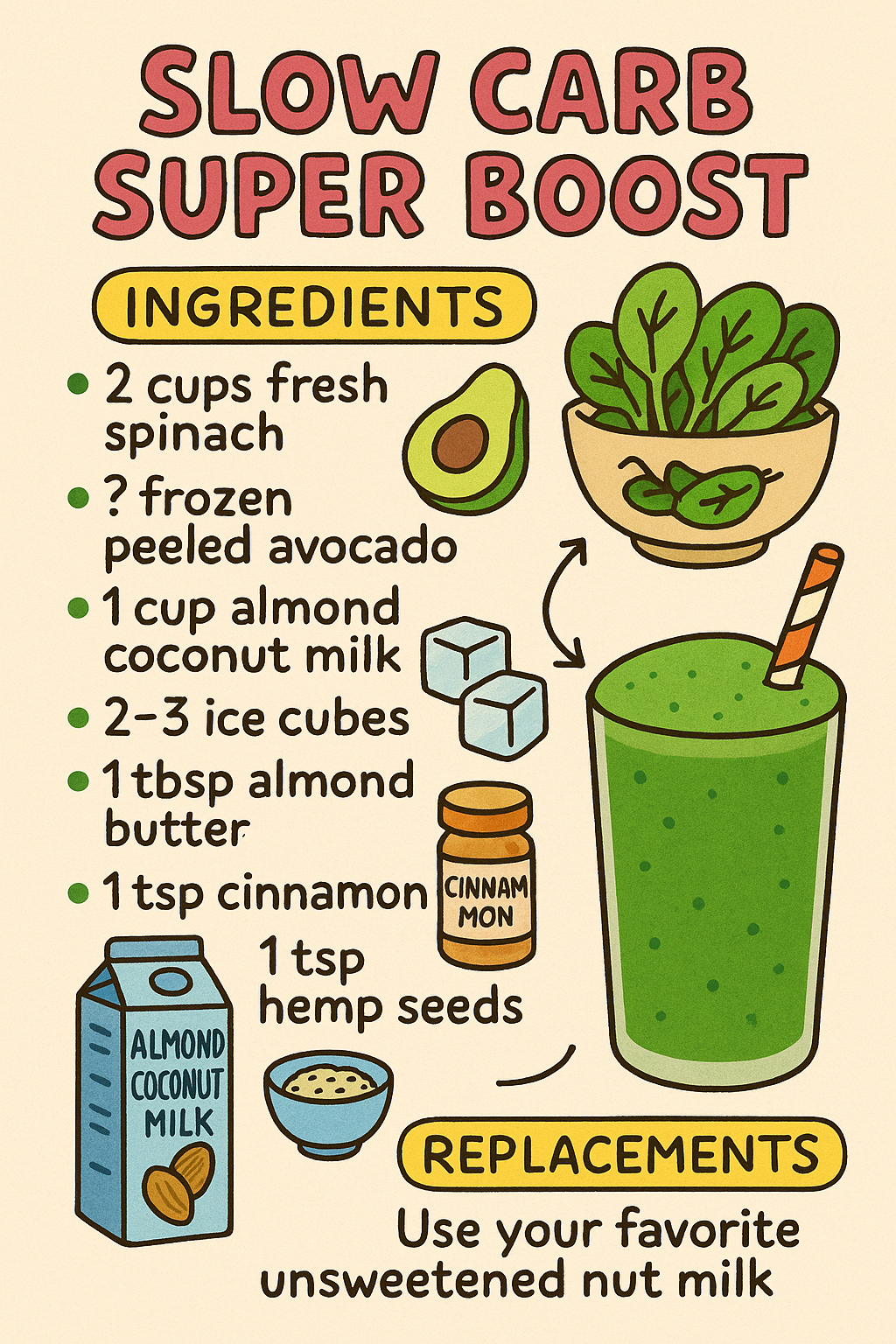
The Recipe: Slow Carb Super Boost
Ingredients:
- 2 cups fresh spinach
- ½ frozen peeled avocado
- 1 cup almond coconut milk
- 2–3 ice cubes
- 1 tbsp almond butter
- ½ tsp cinnamon
- 1 tsp hemp seeds
Replace almond coconut milk with your favorite unsweetened nut milk if desired.
Instructions:
- Add all ingredients to your blender or juicer.
- Use the centrifugal juice function for a smooth texture or opt for manual juice pressing if you prefer a thicker sip.
- Blend until creamy and enjoy immediately for best nutrient retention.
The Science Behind the Ingredients
Spinach delivers essential magnesium and iron, supporting muscle recovery and oxygen flow. Avocado provides heart-healthy monounsaturated fats that keep you full longer. Almond butter and hemp seeds offer plant protein that aligns perfectly with the slow carb diet principles.
Cinnamon primarily adds warmth and aroma. Use it for flavor rather than treating the drink as a way to manage blood sugar.
Pairing and Lifestyle Tips
This smoothie pairs beautifully with high-protein breakfasts, such as scrambled eggs or Greek yogurt. It is also a great pre-workout fuel—offering slow-releasing carbs and fats that power your entire session.
The Slow Carb Super Boost is a reminder that nutrition doesn’t have to be complicated. With the right juicer, families can enjoy professional-level juice or vegetable blends from home—no added sugar, just pure nourishment.
If you’re making fresh juice regularly, explore the technique behind centrifugal juice systems versus manual juice pressing. Centrifugal juicers save time and yield smooth textures, while manual pressing preserves more fiber, ideal for anyone focusing on gut health.
A Short History of Green Juices
From ancient Ayurvedic tonics to modern smoothie bowls, green juices have been celebrated for centuries as vitality boosters. The modern slow carb version just refines that idea—keeping sugars low and phytonutrients high. It’s not only about losing weight; it’s about feeding your body in a way that sustains energy and focus all day.