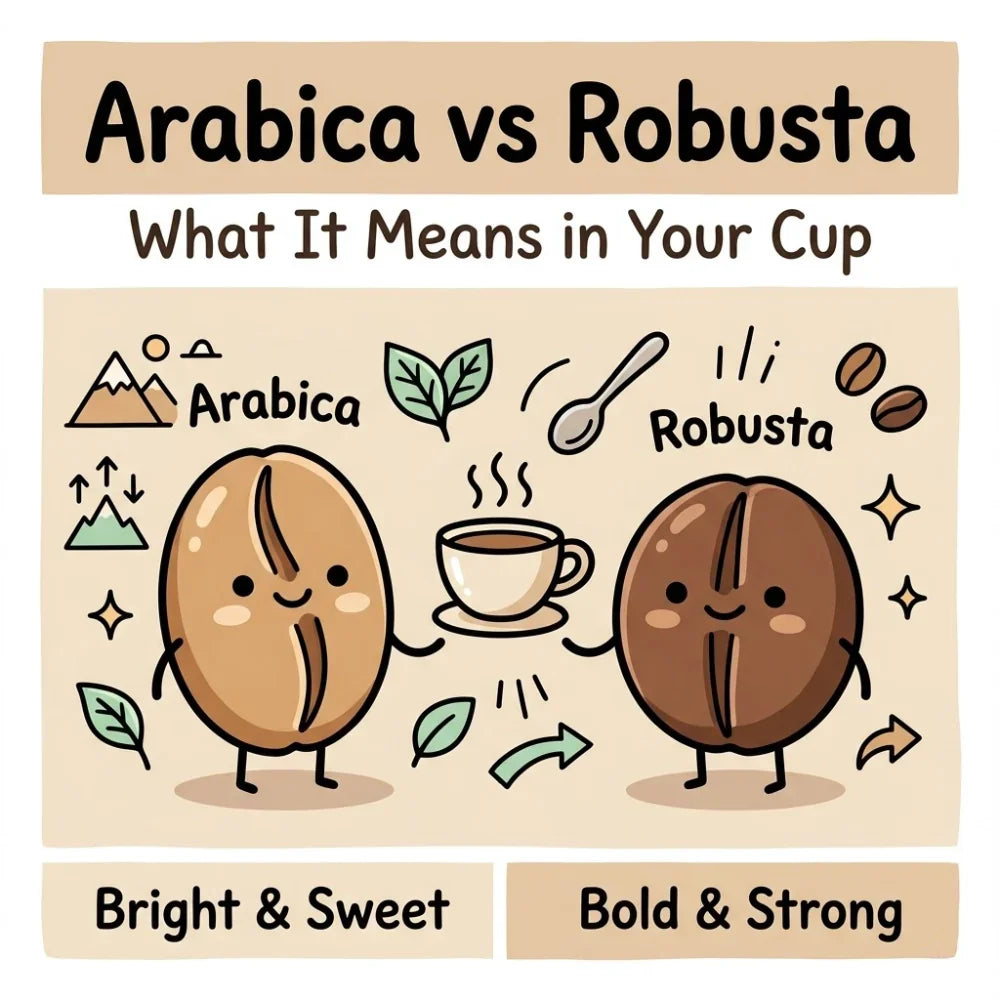
You have seen "100% Arabica" on coffee bags dozens of times. But what does it actually mean for how your coffee tastes? Arabica coffee beans and Robusta beans come from different plants, grow in different environments, and produce very different cups. Knowing the difference helps you shop smarter, brew better, and finally understand why some coffees taste the way they do.
What Makes Arabica and Robusta Coffee Beans Different
Arabica and Robusta are two distinct species of coffee plant, and their differences start long before the beans reach your cup. Here is a direct comparison across the factors that matter most.
| Factor | Arabica | Robusta |
| Scientific name | Coffea arabica | Coffea canephora |
| Growing altitude | High altitude, cooler climate | Low altitude, warmer climate |
| Growing regions | Ethiopia, Colombia, Central America | Vietnam, West Africa, Indonesia |
| Plant hardiness | Delicate, disease-sensitive | Hardy, pest and disease resistant |
| Bean shape | Oval with a curved crease | Rounder with a straight crease |
| Caffeine content | Lower | Roughly double that of Arabica |
| Flavor character | Complex, bright, sweet | Bold, earthy, bitter |
| Acidity | Higher | Lower |
| Price | Generally more expensive | Generally more affordable |
| Common uses | Specialty coffee, pour-over, drip | Espresso blends, instant coffee |
Arabica's higher price reflects its more demanding growing conditions and lower yield per plant. Robusta's higher caffeine content is a natural insecticide, which is part of why the plant is so much hardier. Both beans have a clear place in the coffee world depending on what you are brewing and what you want in the cup.

How Arabica Coffee Beans Taste Compared to Robusta
Flavor is where the difference between the two beans becomes most obvious. Brewing the same way with two different bean types will give you noticeably different results in the cup, and those differences come directly from the bean's chemistry and growing environment.
The Flavor Profile of Arabica
Arabica coffee beans are known for their complexity and range. Depending on the origin and roast, Arabica can express:
- Bright, fruity notes like berry, citrus, or stone fruit
- Floral aromas, particularly in lighter roasts from Ethiopian origins
- Mild natural sweetness with a soft, clean finish
- Wine-like or chocolate undertones in medium to dark roasts
The acidity in Arabica is one of its defining characteristics. In coffee, acidity (also called brightness) refers to a lively, crisp quality in the flavor rather than sourness. Well-grown Arabica has a pleasant, balanced acidity that adds complexity to the cup.
The Flavor Profile of Robusta
Robusta has a very different character. It is bolder, earthier, and more bitter than Arabica, with less acidity and a heavier body. The flavor profile tends toward:
- Strong, grainy, or woody notes
- Dark chocolate or rubbery undertones at higher roast levels
- A thick, full-bodied mouthfeel
- Less sweetness and less aromatic complexity than Arabica
Robusta is not a lesser bean because of these characteristics. Its bold flavor and high caffeine content make it a deliberate choice for specific applications, particularly in espresso blending and instant coffee production where strength and body matter more than delicate flavor notes.
Which Coffee Bean Works Better for Espresso and Other Brew Methods
The right choice depends on how you brew and what you want in the cup. Both Arabica and Robusta have genuine strengths depending on the brewing method and the flavor outcome you are after.
Why Espresso Blends Often Use Both Bean Types
Espresso is where Robusta earns its strongest case. When brewed under high pressure, Robusta produces a thick, persistent crema (the golden foam layer on top of an espresso shot) because of its higher oil and protein content. Arabica brings the flavor complexity, brightness, and sweetness. Together, the two beans give roasters more control over the final balance of flavor, body, and strength than either bean can achieve alone.
High-pressure brewing, such as that produced by a 20 bar espresso machine, is what fully unlocks the oils, flavor compounds, and crema potential in the grounds, bringing out the best in whatever bean blend you choose. The SHARDOR 20 Bar Espresso Machine with adjustable pressure settings gives you direct control over extraction, so you can dial in the right pressure for any bean blend you use. The touchscreen interface makes it easy to adjust settings without guesswork, and the built-in steam wand lets you add frothed milk directly to your espresso for a complete café-style drink at home.
Matching Bean Type to Your Brewing Method
The table below shows how Arabica and Robusta align with common home brewing methods. Different methods extract flavor differently, and bean choice plays a big role in the final result.
Matching your bean to your brew method is one of the most effective ways to improve your coffee without changing anything else about your routine.
| Brewing Method | Best Bean Choice | Why |
| Espresso | Blend or Robusta-heavy | High pressure extracts crema and body well from Robusta |
| Pour-over | Arabica | Highlights clarity, brightness, and origin flavors |
| Drip coffee | Arabica or blend | Balanced extraction suits Arabica's complexity |
| French press | Robusta or blend | Full immersion brewing suits bold, heavy-bodied beans |
| Cold brew | Arabica | Long steep time brings out sweetness and smooth flavor |
| Instant coffee | Robusta-heavy | High yield and strong flavor hold up well after processing |
As the table shows, the best bean depends on the method. Neither Arabica nor Robusta is universally superior. They are simply optimized for different outcomes.
Know Your Beans, Brew a Better Cup
Arabica coffee beans offer complexity, brightness, and a wide range of flavor notes depending on origin and roast. Robusta brings strength, body, and crema-building properties that make it a key component in serious espresso work. Most great cups of coffee come down to matching the right bean to the right method and the right equipment. Find the combination that fits your taste and make every brew count.
FAQs about coffee beans and espresso
Q1. Is Arabica Always Better Quality Than Robusta Coffee?
Not necessarily. Arabica is more widely associated with specialty coffee because of its flavor complexity, but quality depends on how the bean was grown, processed, and roasted rather than species alone. Low-grade Arabica can taste worse than well-processed Robusta. Robusta is deliberately chosen for espresso blending and certain brewing styles where its properties are an advantage, not a compromise.
Q2. What Are the Best Beans for Espresso Coffee?
A blend of Arabica and Robusta is widely considered the best approach for espresso. Arabica contributes flavor complexity and sweetness, while Robusta adds body, crema, and a stronger caffeine kick. Single-origin Arabica can also work well for espresso if you prefer a lighter, more nuanced shot. The key is matching your bean choice to the flavor profile you want and using a coffee machine that can extract it properly under consistent pressure.
Q3. What Are the Four Enemies of Coffee?
The four main enemies of coffee beans are heat, moisture, light, and oxygen. Any of these can accelerate staling and break down the aromatic compounds that give coffee its flavor. Storing beans in an airtight, opaque container at room temperature away from direct sunlight is the most effective way to preserve freshness. Grinding just before brewing also helps, since ground coffee loses its aroma much faster than whole beans.
Q4. What Time of Day Is Best to Drink Coffee?
Caffeine timing is personal. If coffee disrupts your sleep, avoid drinking it late in the day and adjust the serving size to your own tolerance.