Buying an espresso machine should not feel like picking a side in a debate. But the difference between a semi automatic espresso machine and a fully automatic one is real, and it affects your morning in ways that go beyond price. This article breaks down what each type actually does, where they differ on the things that matter daily, and how to figure out which one fits the way you actually live.
What Semi Automatic, Automatic, and Manual Espresso Machines Actually Are
Not all espresso machines work the same way. The automation level determines how much the machine handles and how much you control, and that split shapes everything from shot quality to cleanup time.
Semi Automatic Espresso Machines
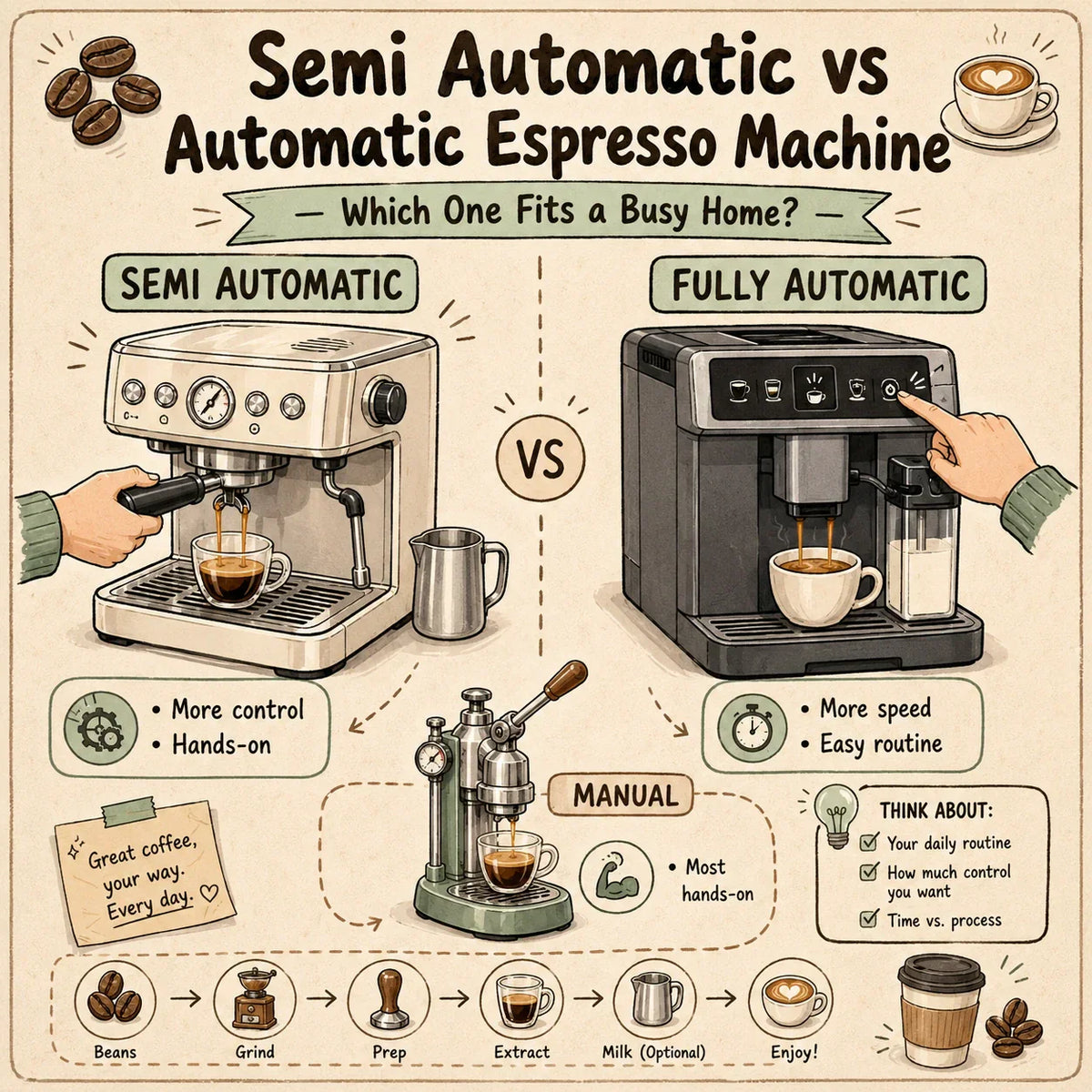
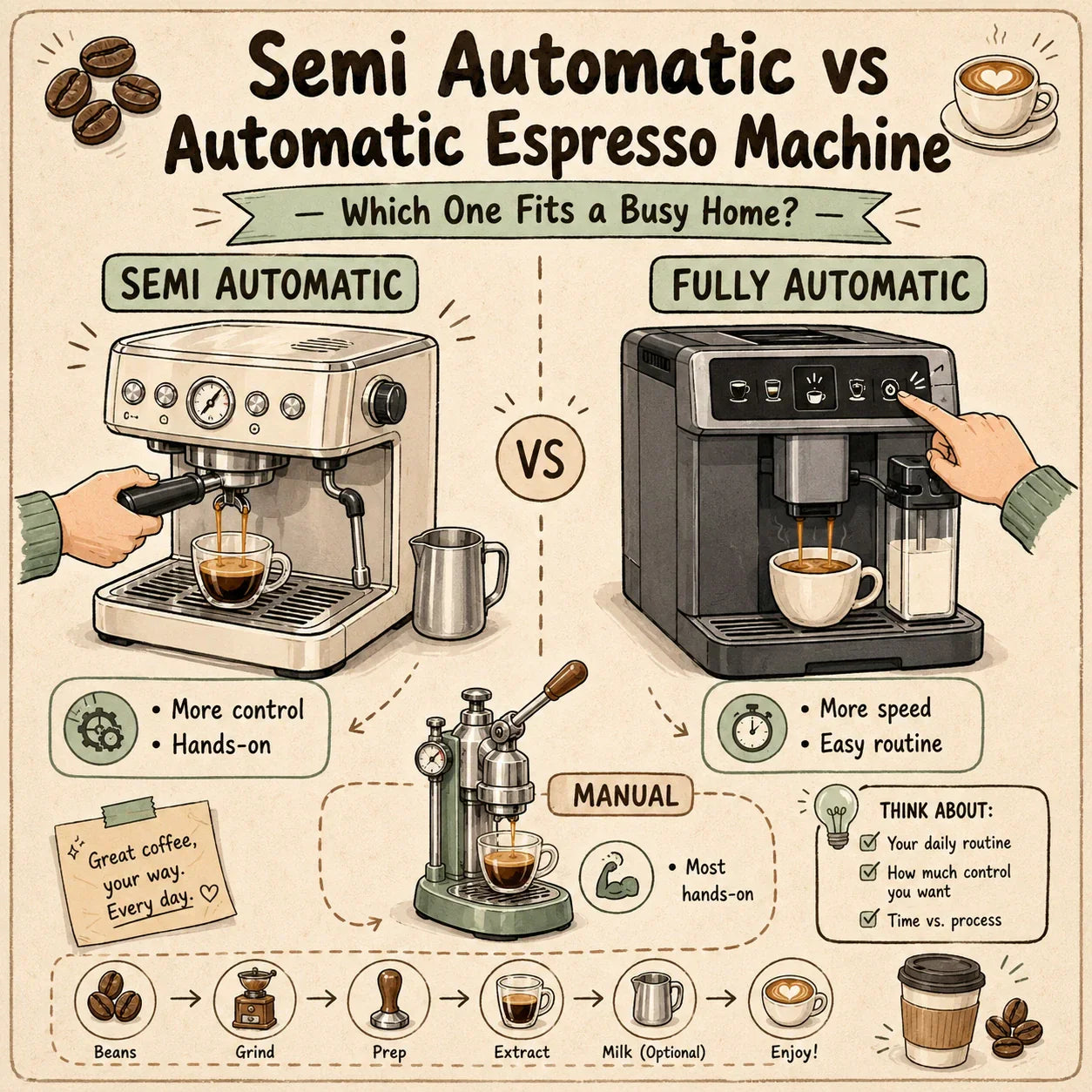
A semi automatic espresso machine gives you control over the grind, the dose (how much coffee you load into the portafilter), and the tamp (how firmly you press the grounds down), while the machine manages water pressure and temperature during extraction. You start and stop the shot manually.
This is the most common type found in home setups that prioritize shot quality. It requires some learning, but the payoff is a high degree of control over how your espresso tastes.
Fully Automatic Espresso Machines
A fully automatic espresso machine automates the entire brewing cycle including water volume, so you press one button and the machine stops the shot on its own. Some models also include built-in grinders and milk systems. The trade-off is less flexibility over individual variables.
Manual Espresso Machines
A manual espresso machine (also called a lever machine) requires you to physically apply pressure through a lever to push water through the coffee grounds. These machines have no pump and offer the most hands-on experience of all three types. They appeal to enthusiasts who want complete control but require significant skill and practice to use consistently.
Semi Automatic vs Fully Automatic Espresso Machine: Key Differences
Once you understand what each machine type does, the comparison between semi automatic and fully automatic becomes more practical. These are the two options most home buyers are actually choosing between.
The table below maps out the key differences across the factors that affect daily home use. Neither option is objectively better; the right one depends on your routine.
| Factor | Semi Automatic | Fully Automatic |
| Shot control | Manual start and stop | Automated volume and timing |
| Grind and dose | User controls both | Often built-in and preset |
| Learning curve | Moderate | Low |
| Drink flexibility | High | Moderate |
| Maintenance | Portafilter cleaning required | More internal components to maintain |
| Best for | Users who want to dial in their espresso | Users who want speed and consistency |
The semi automatic espresso machine suits people who enjoy the process of making coffee and want to improve their technique over time. The fully automatic suits people who want reliable results with minimal involvement each morning.
One important clarification: fully automatic does not mean better extraction. It means more automation. A well-pulled shot on a semi automatic espresso machine can easily outperform a fully automatic machine in flavor complexity, especially once the user gets comfortable with the variables.

How to Choose the Right Espresso Machine for Your Home Routine
The best espresso machine for your home is the one that fits how you actually live, not the one with the most features. Three practical factors narrow down the choice faster than any spec comparison.
How Much Time You Have Each Morning
If your morning involves a tight schedule and you need espresso in under two minutes with no thinking involved, a fully automatic machine removes the most friction. You load beans, press a button, and walk away.
A semi auto espresso machine takes slightly longer because you are managing the grind and extraction yourself. For most people, that adds two to four minutes to the process. For some households, that is the enjoyable part of the morning. For others, it is a dealbreaker.
What Drinks You Want to Make
Espresso-based drinks fall into a few categories, and machine type affects how well you can make each one:
- Straight espresso and americano (espresso diluted with hot water): both machine types handle these well
- Cappuccino and latte (espresso with textured or steamed milk): a semi automatic machine with a steam wand gives more control over milk texture, which affects the final drink noticeably
- Specialty or experimental drinks: a semi automatic espresso machine is the better platform for adjusting variables and trying different roasts or ratios
If milk-based drinks are your main goal, look for a machine with a capable steam wand regardless of automation level.
How Much You Want to Learn and Improve
A semi automatic espresso machine has a learning curve. The first few weeks involve dialing in the grind size, adjusting dose, and learning how long to run the shot. That process is genuinely satisfying for people who enjoy it, and the results improve noticeably with practice.
A fully automatic machine removes most of that process. The shots are consistent from day one, which is exactly what some households need. The ceiling on quality is slightly lower, but the floor is much more reliable.
The SHARDOR 20 Bar Semi Automatic Espresso Machine is built around this balance. The touchscreen controls and three temperature settings make the learning process approachable, while the 20 bar pump and professional steam wand give you the tools to improve your technique over time. It suits the household that wants to grow into espresso rather than just consume it.
Choose the Machine That Matches Your Morning
A semi automatic espresso machine gives you control and room to grow. A fully automatic machine gives you speed and consistency. A manual espresso machine gives you the most hands-on experience of all. None of them is the wrong answer. The right choice is the one that fits your schedule, your skill level, and the drinks you actually want to make. If you enjoy the process and want to build your technique, a semi automatic espresso machine is the most rewarding long-term investment for a home setup.
FAQs
Q1. Is a Semi Automatic Espresso Machine Good for Beginners?
Yes, a semi automatic espresso machine is a reasonable starting point for beginners who are willing to spend a few weeks learning the basics of grind size and shot timing. The learning curve is real but not steep, and most people see noticeable improvement within a month of regular use. Starting with a consistent grind and following basic dose guidelines gets you to a solid shot faster than most beginners expect.
Q2. What Is the Difference Between Semi Auto and Fully Automatic Espresso Machine Maintenance?
A semi auto espresso machine requires regular portafilter cleaning, backflushing (a process that pushes water backward through the group head to clear coffee residue), and occasional descaling. A fully automatic machine has more internal components including automatic milk systems and built-in grinders that need their own maintenance routines. Neither is particularly difficult, but semi automatic machines tend to have fewer components that can fail over time.
Q3. Can a Semi Automatic Espresso Machine Make Lattes and Cappuccinos?
Yes. Most semi automatic espresso machines include a steam wand that lets you texture and heat milk for lattes, cappuccinos, and flat whites. The steam wand on a semi automatic machine typically offers more manual control over milk temperature and foam density than the automated milk systems on some fully automatic models, which makes it easier to customize your drink to your preference.
Q4. How Does a Manual Espresso Machine Differ From a Semi Automatic Espresso Machine?
A manual espresso machine requires the user to physically apply extraction pressure through a lever, with no electric pump involved. A semi automatic espresso machine uses a built-in pump to maintain consistent water pressure throughout the shot, which makes repeatable results significantly easier to achieve. Manual machines appeal to enthusiasts who want complete hands-on control, but they require considerably more skill and practice than a semi automatic setup.