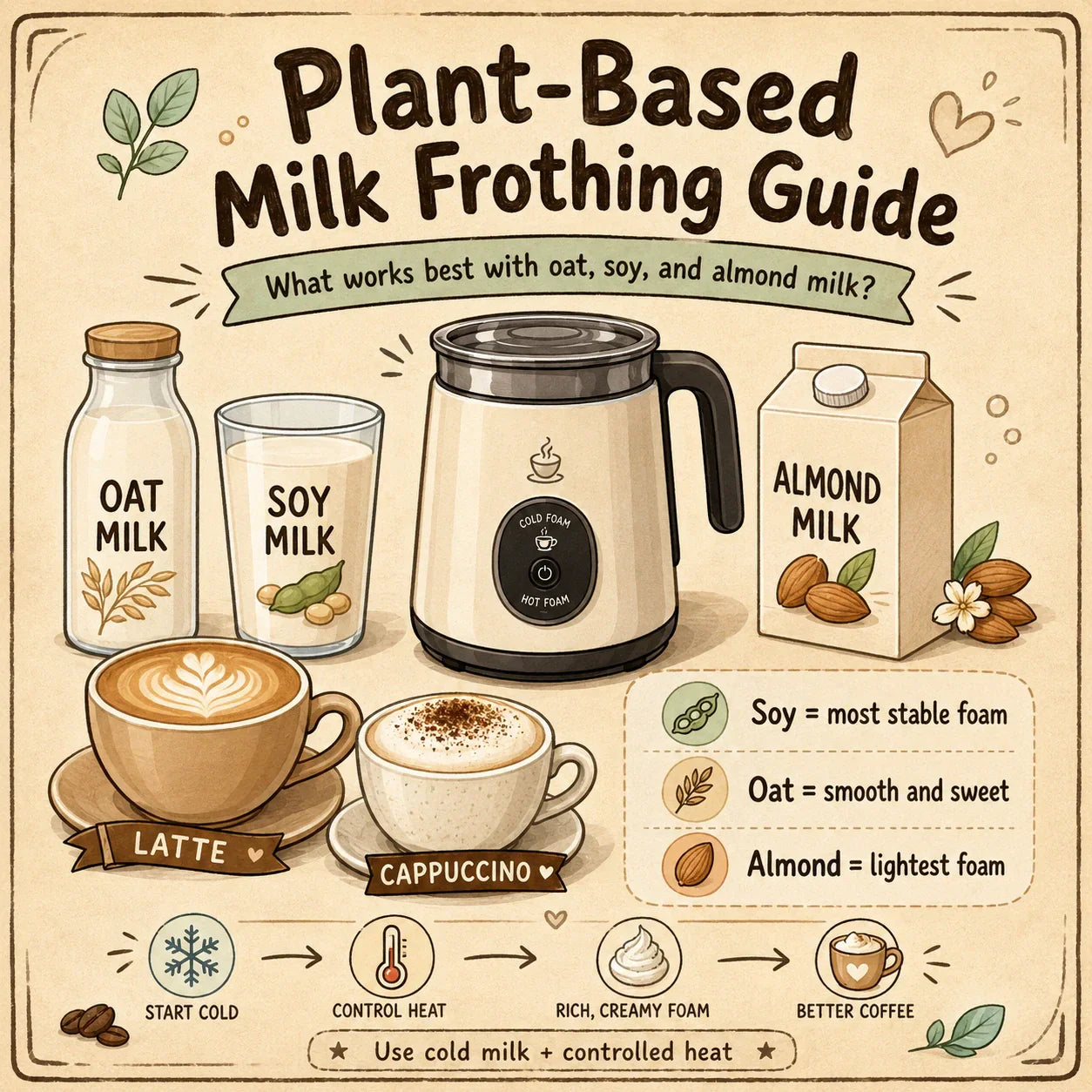
Plant-based milk has gone from niche to mainstream, but one thing most people discover quickly is that not every carton behaves the same way in a frother. An automatic milk frother that works beautifully with whole milk can produce flat, watery results with almond milk and slightly different results again with oat or soy. The science behind why this happens is simpler than it sounds, and knowing it changes how you approach every drink you make at home.
Why Plant-Based Milk Froths Differently From Dairy
Dairy milk froths so reliably because of its natural composition. It contains casein and whey (two types of protein that unfold under heat and trap air bubbles) along with fat molecules that migrate to bubble surfaces and stabilize the foam structure. The combination creates a foam that holds its shape long enough to pour latte art and stay intact in the cup.
Plant-based milks lack casein entirely. Their protein types, fat content, and sugar structures vary significantly depending on the source ingredient, which is why each one behaves differently in an electric milk frother.
Three factors determine how well any milk froths:
- Protein content and type: Higher protein generally means more stable foam, though the type of protein matters as much as the amount
- Fat content: Fat stabilizes bubbles and adds creaminess; very low-fat milks produce foam that collapses quickly
- Added emulsifiers: Commercial plant milks often include ingredients like sunflower lecithin or gellan gum that improve frothing by mimicking the stabilizing role of dairy proteins
Temperature also plays a critical role. Overheating any plant-based milk breaks down its structure and produces thin, flat results. A coffee milk frother with precise temperature control gives you the ability to stop the cycle at the right point for each milk type, which makes a measurable difference in foam quality.
How Oat, Soy, and Almond Milk Perform in an Automatic Milk Frother
Each plant milk has a distinct frothing profile. Knowing what to expect from each one helps you choose the right mode and temperature setting before you even press start.
The table below compares the three most common plant milks across the factors that matter most for home frothing. These are general characteristics; barista-formulated versions of each milk consistently outperform standard grocery store varieties.
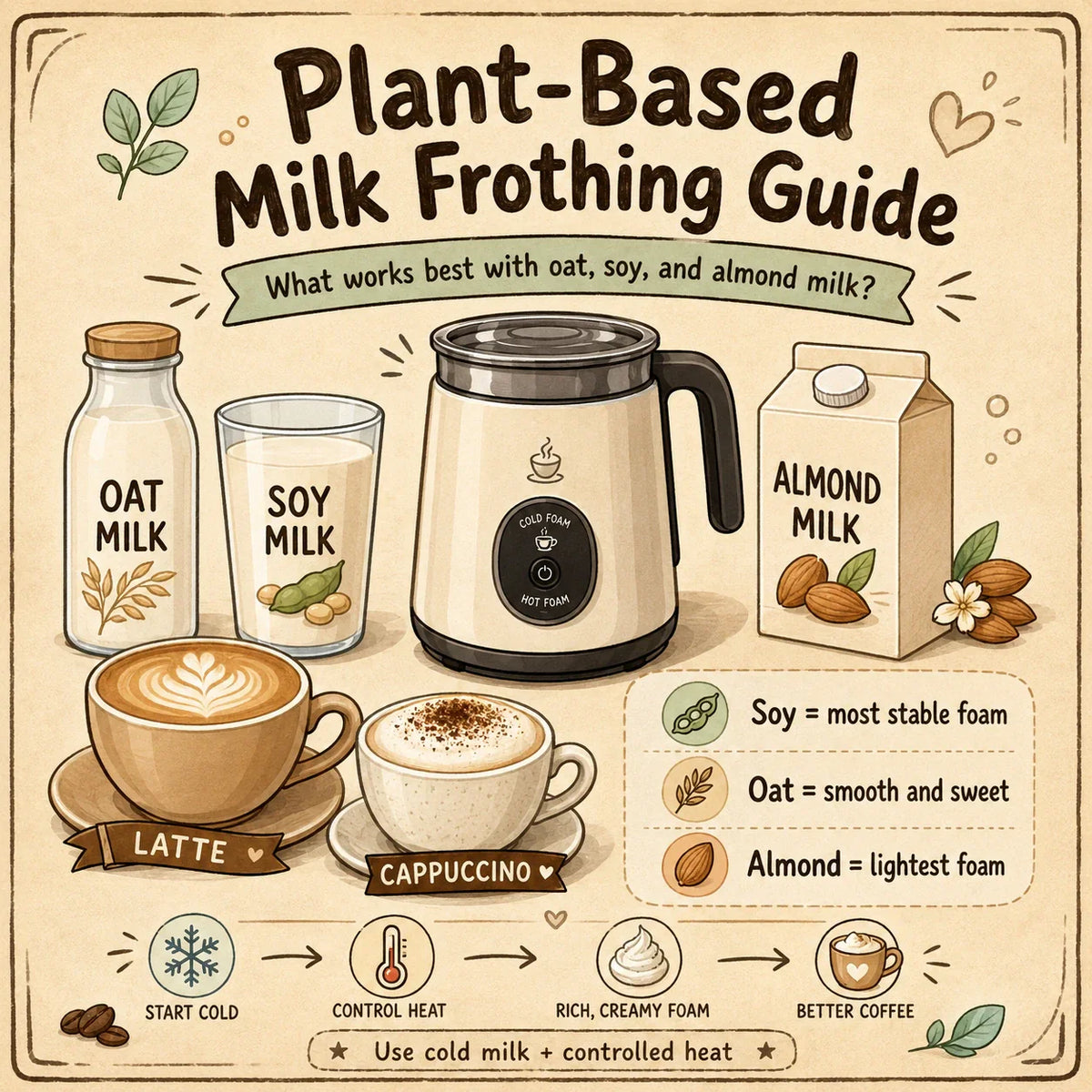
| Milk Type | Foam Stability | Best For | Key Tip |
| Oat milk | Good, slightly sweet | Lattes, flat whites | Use barista-grade; avoid overheating |
| Soy milk | Best of the three | Cappuccinos, lattes | Use lower temperature setting |
| Almond milk | Lightest, thinnest | Light lattes, cold foam | Barista version essential |
Each milk has a real place in a home frothing routine, but the approach varies slightly for each one.
Oat Milk
Oat milk is the most popular plant milk for coffee drinks, and for good reason. It has a mild, naturally sweet flavor that complements espresso without competing with it. Its beta-glucan content (a soluble fiber that helps trap air) gives it better foam stability than almond milk, though it is still softer than soy.
Standard oat milk can turn thin and watery at higher temperatures. A medium temperature setting on an automatic milk frother produces the best texture, giving you a smooth, slightly glossy foam suitable for lattes and flat whites. Barista-formulated oat milk, which contains added oils and emulsifiers, froths noticeably better and holds its shape longer in the cup.
Soy Milk
Soy milk is the closest plant-based option to dairy in terms of frothing performance. Its higher protein content produces a denser, more stable foam than oat or almond milk, and it can hold up well in cappuccino-style drinks where a thick foam layer is part of the texture.
The main consideration with soy milk is temperature sensitivity. Soy protein can separate or curdle when heated too aggressively. Using a lower temperature setting on your frother keeps the foam smooth and prevents the grainy texture that can appear when soy milk is overheated. Starting with cold soy milk straight from the refrigerator also gives you a better result by giving the proteins more time to incorporate air before the heat sets in.
Almond Milk
Almond milk has the lowest protein and fat content of the three, which means its foam is lighter and less stable than oat or soy. Standard almond milk produces thin foam that collapses within a minute or two of frothing.
For home use, barista-formulated almond milk is essentially a requirement if you want foam with any staying power. It contains added pea protein and emulsifiers that significantly improve the result. Almond milk also works well for cold foam (a thick, unheated foam made by frothing cold milk without any heat applied), where the cold temperature helps the bubbles hold longer before collapsing.
How to Use an Automatic Milk Frother for Better Plant-Based Foam

The technique matters as much as the milk you choose. A few consistent habits improve your results across all plant milk types.
- Start with cold milk. Cold milk gives proteins and emulsifiers more time to incorporate air before temperature changes the structure. This is true for dairy and plant milks alike, and it is especially important for soy milk where heat sensitivity is highest.
- Match the mode to the drink. Most automatic milk frothers offer multiple modes covering thick foam, thin foam, and hot milk without foam. Thick foam mode suits cappuccino-style drinks where you want a dense, spoonable layer on top. Thin foam mode produces the silkier, more integrated texture that works better in lattes. Hot milk mode with no foam is useful for flat whites or any drink where you want warm plant milk without aeration.
- Use temperature control intentionally. Different plant milks have different optimal temperature ranges. Soy milk benefits from a lower setting to prevent separation. Oat milk performs well at a mid-range temperature. Almond milk is forgiving on temperature but benefits from lower settings that preserve its lighter foam structure longer.
- Do not overfill. Milk expands as it froths, and overfilling the jug produces spills and uneven results. Filling to the maximum line marked inside the frother gives the milk room to move and aerate evenly.
The SHARDOR Electric Milk Frother covers all of these needs with four frothing modes (Hot Thick Foam, Hot Thin Foam, Hot Milk, and Cold Thin Foam) and four temperature settings ranging from 130 to 160°F. The real-time temperature display lets you monitor exactly where the milk is in the heating process, and the 30-minute auto-warming function keeps your frothed milk at the right temperature if you are still pulling an espresso shot when the frother finishes.
How to Choose the Best Electric Milk Frother for Plant-Based Milk
Not every milk frother is built equally for plant-based use. A few specific features make a significant difference when you are regularly working with oat, soy, or almond milk.
Temperature control with multiple settings is the most important feature. A single fixed temperature does not account for the different heat sensitivities of each plant milk type. Adjustable settings let you dial in the right temperature for whatever you are making.
Multiple frothing modes matter because plant milks produce different foam textures depending on mode. Having both thick and thin foam options gives you the range to make everything from cappuccinos to lattes without switching equipment.
A non-stick interior simplifies cleanup significantly. Plant milks, particularly oat milk, can leave a starchy residue that sticks to uncoated surfaces. A non-stick coating makes the jug easy to rinse between uses.
Quiet operation is a practical consideration for households where early mornings are shared spaces. A frother that runs quietly is noticeably easier to live with on a daily basis.
Froth Smarter, Not Harder
Plant-based milk frothing is not complicated once you know what each milk needs. Soy handles heat well and produces the most stable foam. Oat delivers natural sweetness and good texture at medium temperatures. Almond requires a barista-formulated version and a lighter touch. An automatic milk frother with temperature control and multiple modes gives you the tools to get consistent results from all three.
FAQs
Q1. Does an Automatic Milk Frother Work With All Plant-Based Milks?
Yes, but results vary depending on the milk's protein and fat content. Soy milk produces the most stable foam among common plant milks, while almond milk produces lighter foam that collapses more quickly. Using barista-formulated versions of any plant milk consistently improves frothing performance compared to standard grocery store varieties.
Q2. What Temperature Should You Use When Frothing Oat Milk in an Electric Milk Frother?
A mid-range temperature setting works best for oat milk, typically in the range that most electric milk frothers label as their standard or latte setting. Overheating oat milk breaks down its structure and produces a thin, flat result. Starting with cold oat milk and using a controlled temperature setting gives you a smoother, more consistent foam.
Q3. Why Does Soy Milk Sometimes Curdle in a Coffee Milk Frother?
Soy milk curdles when it is heated too quickly or at too high a temperature, which causes its proteins to denature and separate. Using a lower temperature setting on your frother and starting with cold soy milk reduces the risk significantly. Barista-formulated soy milk is also more resistant to curdling because it contains stabilizers designed specifically for high-heat applications.
Q4. Is Cold Foam Possible With Plant-Based Milk in an Automatic Milk Frother?
Yes. Cold foam mode, which froths milk without applying heat, works with plant-based milks and is particularly effective with barista-formulated oat or almond milk. The cold temperature slows bubble collapse and produces a thicker, more stable layer that holds its shape when spooned over iced drinks. Standard plant milks can work in cold foam mode as well, though barista versions produce noticeably more stable results.