Espresso and ristretto are two coffee shots that both pack a punch, but they do so in different ways. Whether you’re a seasoned coffee lover or just beginning your journey, understanding the differences between ristretto vs espresso can help you perfect your coffee routine at home. While both shots use the same ground coffee, the method of preparation and the machine you use can significantly influence the final result.
Quick Comparison
| Aspect | Espresso | Ristretto |
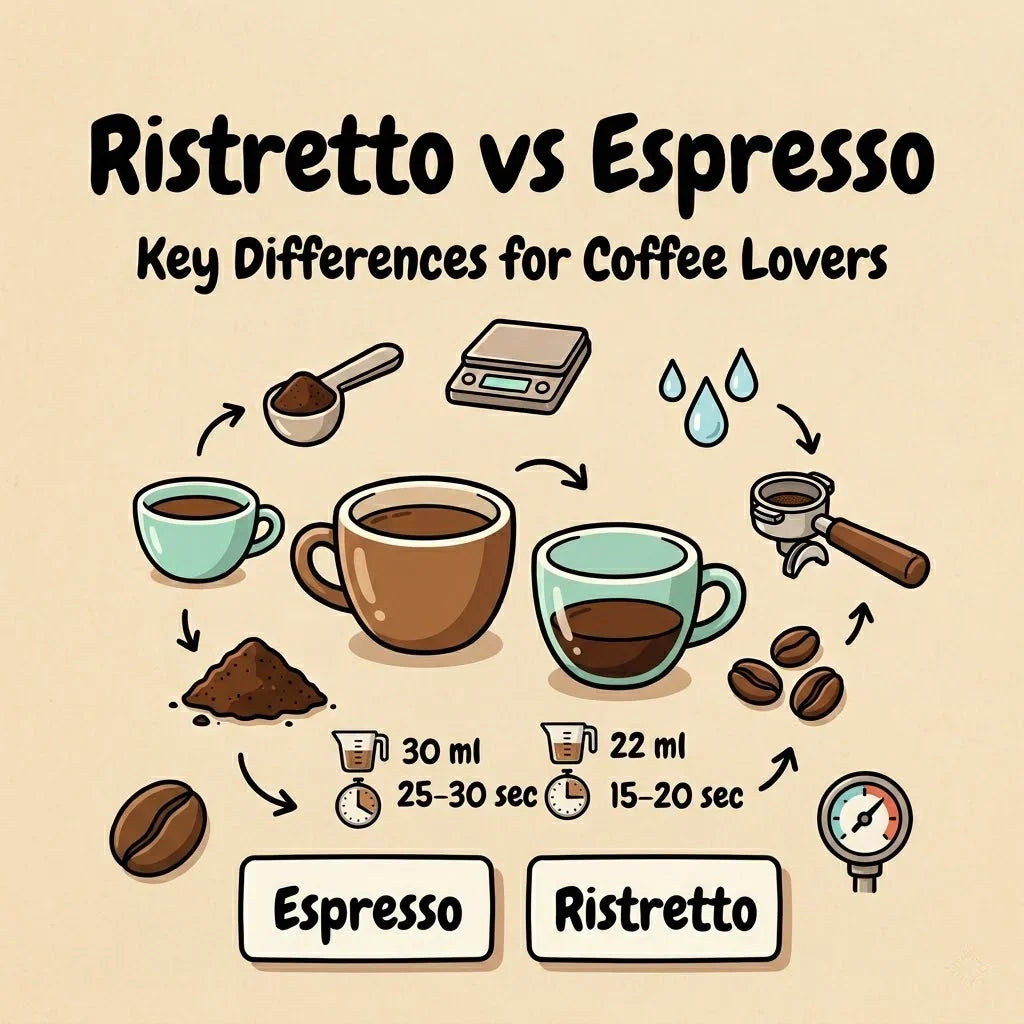
| Water Volume | 30 milliliters | 22 milliliters |
| Extraction Time | 25-30 seconds | 15-20 seconds |
| Flavor Profile | Balanced, rich, with slight bitterness | Smoother, sweeter, less bitter |
| Strength | Full-bodied, can be slightly bitter | Stronger in flavor, more intense |

What a Ristretto Is and How It Differs from a Standard Espresso
Ristretto is a more concentrated version of espresso, made using the same ingredients but with a key difference in extraction. A standard espresso uses a full amount of water to extract flavors from the coffee grounds, whereas ristretto uses less water, resulting in a smaller, more intense shot.
- Espresso: A traditional espresso shot is extracted with around 30 milliliters of water. This full volume allows a range of flavors to extract evenly, providing a balanced, rich taste that’s typical of espresso.
- Ristretto: A ristretto shot uses less water, usually around 22 milliliters, creating a more concentrated flavor. The reduced water volume enhances the extraction of oils and soluble compounds, resulting in a sweeter and fuller flavor profile with less bitterness.
The difference in water-to-coffee ratio highlights the importance of using a quality machine. Machines that offer precise control over water volume can help achieve the best shot for both ristretto and espresso, ensuring you get the most out of your coffee beans.
The Extraction Process Behind Ristretto and Espresso Shots
To understand the differences in flavor, it's important to first look at how these two shots are brewed. Both espresso and ristretto shots are created using high-pressure brewing systems that force hot water through finely ground coffee. The key difference lies in the amount of water used and the extraction time.
- Espresso Extraction:
- Water Volume: 30 milliliters
- Extraction Time: Around 25-30 seconds
- Pressure: Typically 9 bars, though some machines provide even higher pressure for a more intense shot.
Espresso extraction typically involves a slightly longer brewing time, which allows the coffee to release a full range of flavors. The longer extraction also pulls a slight bitterness, contributing to the complex, balanced nature of a regular espresso shot.
- Ristretto Extraction:
- Water Volume: 22 milliliters
- Extraction Time: 15-20 seconds
- Pressure: Similarly high, but the shorter extraction time enhances flavor concentration.
Because the water is passed through the coffee grounds more quickly, ristretto has a much more intense flavor. This makes it ideal for those who prefer a bolder, smoother coffee without the bitterness typically associated with espresso.
Having a machine that allows for precise control over extraction time and water volume is key to ensuring you get the most from your coffee grounds. If you're aiming for consistency in both espresso and ristretto, choosing equipment that offers customizable settings can help you experiment with these variables to perfect your shots.
Flavor and Strength Differences Between Ristretto and Espresso
The flavor profiles of ristretto and espresso are distinctly different, and this comes down to the extraction method and the amount of water used. A ristretto shot is often described as sweeter, more intense, and less bitter compared to espresso. Let's explore the flavor differences in more detail:
- Espresso Flavor: Espresso offers a balanced profile with a rich body, but the longer extraction time allows some bitterness to be present. This bitterness can be a desirable characteristic for some, but it can overshadow the subtle sweetness of the coffee.
- Ristretto Flavor: Ristretto, being more concentrated, delivers a smoother and sweeter taste. The shorter extraction time means fewer bitter compounds are drawn out, allowing for a cleaner, more vibrant cup. The taste tends to have a fuller body, making it ideal for those who enjoy bold coffee without the sharpness of bitterness.
When aiming for the perfect espresso or ristretto, your machine's temperature consistency and pressure control play a big role in ensuring your shots come out as expected. Machines with precise temperature control can help ensure a more consistent extraction, leading to a more refined flavor.
Which Shot Type Pairs Better with Milk and Specialty Coffee Drinks
When it comes to pairing these shots with milk, both espresso and ristretto offer distinct advantages. Espresso’s well-balanced profile makes it ideal for creamy, milk-based drinks, while ristretto provides an even more concentrated base for those who want their coffee flavor to shine through.
- Espresso: Works great in milk-based drinks such as lattes, cappuccinos, and flat whites. The balanced nature of espresso pairs well with the creaminess of milk, creating a harmonious blend that many coffee lovers enjoy.
- Ristretto: Ideal for those who enjoy stronger coffee drinks like cortados or macchiatos, where the coffee flavor needs to be more pronounced. Because ristretto is more concentrated, it stands up better against milk, ensuring that the coffee taste is never overwhelmed by the dairy.
Choosing a coffee machine that offers precision in milk steaming and shot extraction will allow you to perfect these drinks at home. The ability to dial in your shot to your preferred strength and texture makes a big difference in achieving the ideal coffee experience.
Explore the Best Way to Brew Your Perfect Shot
Whether you enjoy the smooth, balanced flavor of a classic espresso or the bold, concentrated hit of a ristretto, both shots have a place in every coffee lover’s routine. The right equipment plays a crucial role in delivering these flavors exactly as you want them. A machine with customizable settings allows you to fine-tune your shots for the perfect coffee experience every time. Home baristas who prefer full control over their brewing process should look for machines with customizable settings and precision controls to discover their perfect shot.
FAQs about Ristretto and Espresso
Q1. Is Ristretto Stronger Than Espresso?
Ristretto is often considered stronger than espresso due to its more concentrated flavor. While both shots use the same amount of coffee grounds, ristretto uses less water, which leads to a higher concentration of coffee compounds. This makes ristretto taste bolder, richer, and less diluted compared to a regular espresso shot. However, both shots provide a similar caffeine content per ounce.
Q2. Do Italians Drink Espresso or Ristretto?
In Italy, espresso is the more commonly consumed shot, forming the base for many traditional coffee drinks like cappuccinos and lattes. However, ristretto is also enjoyed by some Italians who prefer a more intense and concentrated flavor. It is often seen as a choice for those who like their coffee with less bitterness and a more pronounced taste. So, both espresso and ristretto have their place in Italian coffee culture, with espresso being the more popular option.
Q3. Can I make a Ristretto with Any Espresso Machine?
Yes, most modern espresso machines allow you to adjust the water volume and extraction time, making it easy to brew ristretto shots. By simply reducing the water volume, you can create a ristretto that delivers a stronger, more concentrated flavor. Some espresso machines even come with preset options for ristretto, making it easier for you to brew it to perfection. If you want full control over your shot, look for a machine that allows you to customize your brew settings.
Q4. What Is the Best Coffee Grinder for Ristretto and Espresso Shots?
For both ristretto and espresso, the quality of your burr grinder is the best choice, as it provides a consistent grind size, which is essential for uniform extraction. A grinder with adjustable settings allows you to fine-tune the grind for both espresso and ristretto. Investing in a high-quality grinder ensures that you get the most out of your coffee beans and helps you achieve the perfect shot every time.