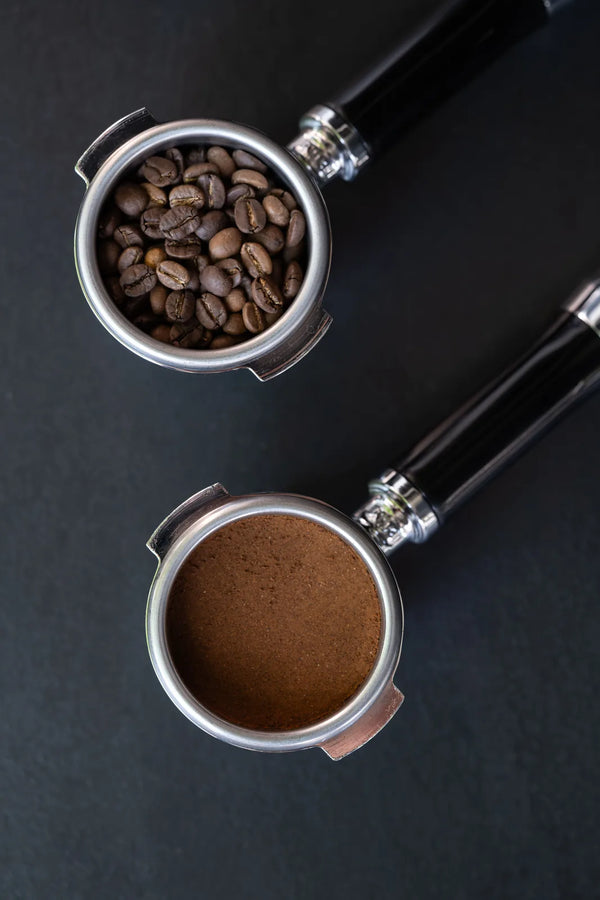
Fresh coffee grounds often stick to the grinder, coat the catch cup, or scatter across the counter because grinding creates static electricity. Dry indoor air, low-moisture beans, and finer grind settings can make the problem more noticeable. Coffee oils and old grounds in the chute can also cause sticking. Before changing your beans or adding moisture, check the catch cup position, let the grounds settle, and keep the grinder clean.
Why Do Coffee Grounds Stick to the Grinder and Catch Cup?
Static electricity is the main reason dry coffee grounds stick to the grinder or scatter when you remove the catch cup. Grinding breaks beans into small particles and can give those particles an electrical charge. Research on static during coffee grinding found that charged grounds can cling to grinder surfaces, form clumps, or remain inside the grinding area.
Not all sticking comes from static. Coffee oils and old fines can also collect around the chute and catch cup. If the grounds look dry and seem to jump or cling to the walls, static is more likely. If they look sticky or oily, the grinder may need cleaning.
| What You See | Likely Cause |
|---|---|
| Grounds jump when the cup is removed | Static |
| Fine dust coats the catch cup | Static and fines |
| Grounds collect around the chute | Static or buildup |
| Grounds look sticky or oily | Coffee oils and residue |
Why Is Coffee Grinder Static Worse in Winter or Dry Rooms?
Static usually gets worse when the air is dry. Low humidity makes it harder for electrical charge to escape, so more grounds stay charged after grinding.
This is why you may notice more mess during winter when indoor heating dries the air. The grinder can be working normally even if the same beans suddenly cling more to the cup or scatter across the counter.
You usually do not need to change your grinder because of seasonal static. Start with simple fixes such as keeping the chute clean, placing the catch cup correctly, and waiting a few seconds before removing it.
Do Roast Level and Grind Size Affect How Much Coffee Sticks?
Yes. Different beans and grind settings can create different amounts of static. A new bag may behave differently even when you have not changed the grinder.
Darker roasts are often drier and may create more noticeable static during grinding. Their surface oils can also make some grounds stick to the chute, so dry flying grounds and oily buildup may need different fixes.
Fine grinding can make the mess more noticeable because it creates many small, light particles. Espresso grounds may therefore cling or scatter more than a coarse French press grind.
Keep the grind size that suits your coffee. Do not grind coarser just to reduce mess; improve the handling and cleaning routine instead.
What Can You Try Before Adding Moisture to Coffee Beans?
Start with dry, low-risk fixes. A few seconds of patience and basic cleaning can reduce how much coffee ends up outside the catch cup without changing the beans or introducing water near the grinder.
Start With the Grinder and Catch Cup
First, make sure the catch cup is fully seated under the chute before grinding. A small gap can let lightweight grounds escape even when static is only moderate.
After the grinder stops, wait a few seconds before pulling the cup out. This gives loose particles time to settle. A gentle tap on the side of the grinder or catch cup can also help remaining grounds fall downward rather than scattering when the container moves.
Check the chute regularly as well. Dry coffee buildup gives new grounds another surface to stick to, and compacted fines can reduce the clean path from the burrs to the cup. Following a regular grinder brushing and cleaning schedule helps keep the burr area and chute clear without turning every morning into a deep-cleaning job.
Keep the grinder parts dry unless the manual says they are washable. A dry brush is usually the safer tool around burrs, chutes, and internal grinding areas.
Add Moisture Only When the Grinder Allows It
You may see coffee enthusiasts lightly mist whole beans before grinding, a method often called the Ross Droplet Technique or RDT. Scientific testing found that very small amounts of added water could reduce static and prevent fines from sticking inside the tested grinder.
That does not mean every home coffee grinder should be used this way. Check the manufacturer's instructions first, especially with hopper-based grinders where dampened beans could remain inside instead of being ground immediately.
Never spray water directly into the burrs, hopper, chute, or motor area. If the manual does not approve adding moisture to the beans, stay with dry fixes such as better cup placement, settling time, brushing, and regular cleaning.
When Can a Burr Coffee Grinder Make the Daily Workflow Cleaner and More Consistent?
A burr grinder can make everyday grinding more repeatable because you can return to a defined grind setting while keeping the beans moving through a controlled path into the catch cup. Models with specific anti-static and easy-clean features can also reduce the amount of mess you manage after each brew.
Imagine a weekday routine where you grind for pour-over before work. You want the dose to fall into the cup, move cleanly to the brewer, and leave as little loose coffee on the counter as possible. A well-positioned catch cup, repeatable grind setting, and an easy-to-clean chute all make that routine simpler.
Some grinders are designed specifically around that problem. The SHARDOR Coffee Burr Grinder with 48 Grind Settings uses an anti-static system to reduce grounds sticking to the chamber and scattering around the work surface. Its removable hopper, chamber, and burrs also make it easier to clear coffee buildup when routine brushing is needed.
Those features do not change the basic habits that keep grinding tidy. Place the catch cup correctly, wait briefly after the motor stops, remove the cup carefully, and brush away old grounds before they build up.
If you are learning how to use a coffee grinder, these small habits matter as much as the grind setting itself. A cleaner workflow means more of the coffee you measured reaches the brewer instead of staying in the chute or landing on the counter.
Keep More Coffee in the Cup, Not on the Counter
Coffee grinder static is a normal result of grinding dry beans into small particles, and it often becomes more noticeable in dry weather or at fine settings. Start with simple fixes: position the catch cup correctly, wait before removing it, clear the chute, and keep the grinder clean.
If static is a regular problem, a burr coffee grinder with a verified anti-static design can make daily cleanup easier. The goal is not to eliminate every stray particle, but to create a grinding routine that stays clean and repeatable from one brew to the next.

FAQs About Coffee Grinder Static
Q1. Why Is My Coffee Grinder Suddenly Producing More Static?
A change in indoor humidity, coffee beans, roast level, or grind setting can all change the amount of static you see. Winter heating often makes indoor air drier, so the same grinder may become messier at certain times of year.
Q2. Does a Finer Coffee Grind Create More Static?
It can. Fine grinding creates many small particles, and research has found that grind size affects electrical charge during coffee grinding. Keep the grind size that suits your brewing method and manage the static through handling, cleaning, or verified anti-static features instead.
Q3. Why Do Coffee Grounds Stick Inside the Catch Cup?
Static charge can make light coffee particles cling to the walls of the cup instead of falling freely. Coffee oils or old residue can also cause sticking, so check whether the grounds look dry and dusty or oily and pasty.
Q4. Should I Add Water to Coffee Beans Before Grinding?
Only if the grinder instructions allow it. Tiny amounts of water have been shown to reduce static in controlled studies, but spraying water directly into a grinder or leaving damp beans in a hopper is not a safe general rule for every machine.
Q5. Is Coffee Grinder Static a Sign That the Grinder Is Broken?
Usually not. Static can change with room humidity, bean moisture, roast level, and grind size even when the grinder is working normally. If the grinder also slows down, clogs, sounds unusual, or shows heavy buildup, clean it according to the manual and check for a separate maintenance issue.