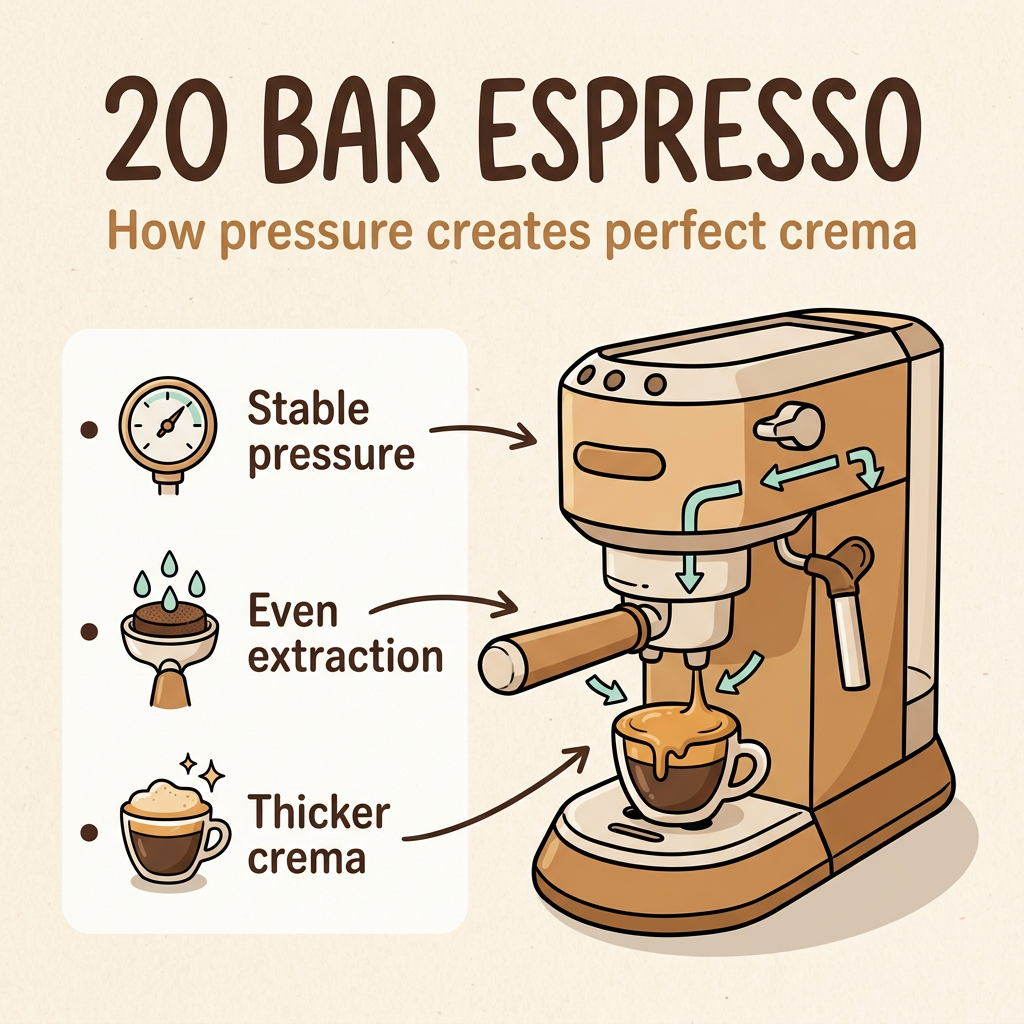

Crema is the golden, velvety layer that sits on top of a well-pulled espresso shot. It's the first thing you see, and it tells you a lot about what's in the cup. Getting it right comes down to pressure, and that's exactly where a 20 bar espresso machine earns its place in the home kitchen. Here's a clear look at how high-pressure extraction works and why it produces better crema every time.
How a 20 Bar Espresso Machine Works
A 20 bar espresso machine uses a pump to force hot water through tightly packed coffee grounds at high pressure. A bar is a unit of pressure, with one bar equal to the atmospheric pressure at sea level. The higher the bar rating, the more force the machine can generate during extraction.
The Role of Pressure in Espresso Extraction
Pressure is what separates espresso from every other brewing method, and understanding how it works explains why machine quality matters so much.
Espresso extraction refers to the process of hot water being pushed through a compressed puck of ground coffee to pull out flavor compounds, oils, and gases. At high pressure, water penetrates the coffee bed more thoroughly and more evenly, dissolving a wider range of soluble compounds in a short amount of time.
This matters because espresso is a concentrated brew. The goal is to extract the best-tasting compounds quickly, without over-extracting the bitter ones. Pressure controls how fast water moves through the grounds and how much of each compound ends up in the cup.
Why 20 Bar Differs From Lower Pressure Machines
Not all espresso machines operate at the same pressure level, and that difference shows up directly in the cup.
Here is how pressure affects key aspects of the espresso:
| Pressure Level | Extraction Quality | Crema Formation | Flavor Result |
| Low (under 9 bars) | Uneven, under-extracted | Thin or absent | Weak, sour |
| Standard (9 bar) | Balanced, consistent | Present, moderate | Clean, classic espresso |
| High (15 to 20 bar) | Full, thorough | Rich, thick, persistent | Intense, layered, aromatic |
Higher operating pressure gives the pump more range to maintain stable extraction pressure throughout the entire brew cycle. The table above shows that more pressure generally supports better crema and more complete flavor development.

How High Pressure Affects Espresso Flavor
Pressure does more than just push water through coffee. It actively changes the chemistry of what ends up in your cup, and a 20 bar espresso machine creates the right conditions for that to happen consistently.
What Even Extraction Does to the Taste in Your Cup
When pressure is consistent and sufficient, water moves through the coffee puck evenly from edge to edge, and that balance translates directly into flavor.
The result is a more balanced taste. Sweetness, acidity, and bitterness are all present in proportion, rather than one dominating because part of the puck was over-extracted while another part was under-extracted. Espresso from a well-pressurized machine tends to taste fuller, with a longer finish and more complexity.
The Connection Between Pressure and Crema Formation
Crema does not just appear randomly. It forms as a direct result of what happens under pressure during extraction.
Crema forms when pressurized water forces carbon dioxide out of freshly ground coffee and emulsifies it with the coffee's natural oils. This combination of gas and oil creates a stable foam that floats on top of the espresso. Higher pressure produces more vigorous emulsification, which is why machines operating at elevated bar ratings tend to generate thicker, more persistent crema. The crema is not just visual. It carries aromatic compounds and contributes to the rich, slightly bitter top note that defines a properly pulled espresso shot.
How to Read Crema From Your Espresso Machines for Home
Crema is one of the most useful visual indicators of extraction quality, and most espresso machines for home use make it easy to observe since the shot drops directly into an open cup or glass.
What Good Crema Looks Like
Once you know what to look for, crema tells you a surprising amount about what happened during the brew.
Well-formed crema has a few consistent visual characteristics:
- Color: Deep golden to reddish-brown, sometimes with a darker "tiger stripe" pattern
- Thickness: A layer substantial enough to hold its shape for at least a minute after pulling
- Texture: Fine-bubbled and smooth, not large and airy
- Coverage: Even across the surface of the shot without gaps or pale patches
If the crema is very light in color or nearly white, it usually indicates under-extraction. If it is very dark or disappears almost immediately, over-extraction or stale beans may be the cause.
What Crema Tells You About Your Extraction
Crema gives you real feedback on your brewing variables before you even taste the shot.
A thick, well-colored crema generally means the grind size, dose, tamp pressure, and water temperature are all working together correctly. Thin or uneven crema is often the first sign that something is off. Common causes include grind that is too coarse, coffee that is not fresh enough, or water temperature that is outside the ideal brewing range. Using a machine with precise temperature control and stable pressure output helps you address these variables consistently.
How to Keep Your Espresso Machine for Home Performing Well
A home espresso machine delivers its best results when it is maintained regularly. Pressure and temperature performance can decline over time if mineral deposits or coffee oil residue are allowed to build up inside the machine.
Key maintenance practices for consistent home espresso:
- Flush the group head before each shot by running a small amount of water through without coffee. This clears residual grounds and stabilizes the temperature of the brew head, which is the component that holds the portafilter and delivers water to the coffee puck.
- Descale regularly to remove mineral buildup inside the boiler and water lines. Hard water deposits reduce heating efficiency and can affect pressure stability over time. Many modern machines include a one-touch descaling function to simplify the process.
- Clean the portafilter and filter baskets after every use to prevent coffee oil buildup, which turns rancid and adds off-flavors to future shots.
- Wipe the steam wand immediately after steaming milk to keep the tip clear and prevent milk residue from hardening inside the nozzle.
- Use fresh, filtered water to reduce mineral content and protect internal components while also improving the taste of the espresso itself.
Pull a Better Shot Every Morning
A 20 bar espresso machine gives you the pressure, precision, and control needed to produce rich crema and full-flavored espresso at home. From the mechanics of high-pressure extraction to the daily habits that keep your machine at its best, every detail adds up to a better cup. Explore the espresso machines for home that match your brewing style and start pulling shots you are genuinely proud of.
FAQs about 20 Bar Espresso Machines
Q1. Is 20 Bar Pressure Better Than 15 Bar?
Both 15 bar and 20 bar machines are capable of producing good espresso, but the higher pressure rating gives the pump more range to maintain stable extraction pressure throughout the shot. In practice, a 20 bar machine can sustain consistent pressure more reliably, which supports better crema development and more even extraction. The actual brewing pressure used during extraction is typically around 9 bar, and having a higher maximum rating helps the pump reach and hold that level more stably.
Q2. Does High Pressure Affect Coffee Bitterness?
Pressure alone does not cause bitterness. Bitterness in espresso is primarily driven by over-extraction, which happens when water spends too long in contact with the grounds or when the grind is too fine. A well-calibrated high-pressure machine actually reduces the risk of over-extraction by completing the shot quickly and evenly. Dialing in the correct grind size and dose matters more for controlling bitterness than adjusting pressure directly.
Q3. What Grind Size Works Best for a 20 Bar Espresso Machine?
A fine grind is standard for espresso, but the exact setting depends on your specific beans and how they were roasted. As a starting point, the grounds should feel similar in texture to fine table salt. If the shot pulls too quickly and tastes sour or watery, grind finer. If it pulls too slowly and tastes harsh or bitter, grind coarser. Dialing in grind size is the most effective way to improve shot quality with any high-pressure espresso machine.
Q4. How Often Should I Clean the Brew Head on a Home Espresso Machine?
The brew head, which is the component that delivers pressurized water to the portafilter and coffee puck, should be flushed with clean water before every shot and wiped down after each use. A more thorough backflush cleaning is recommended at least once a week for regular home use. Consistent cleaning prevents coffee oil buildup that can clog the shower screen and affect both pressure distribution and flavor in the cup.