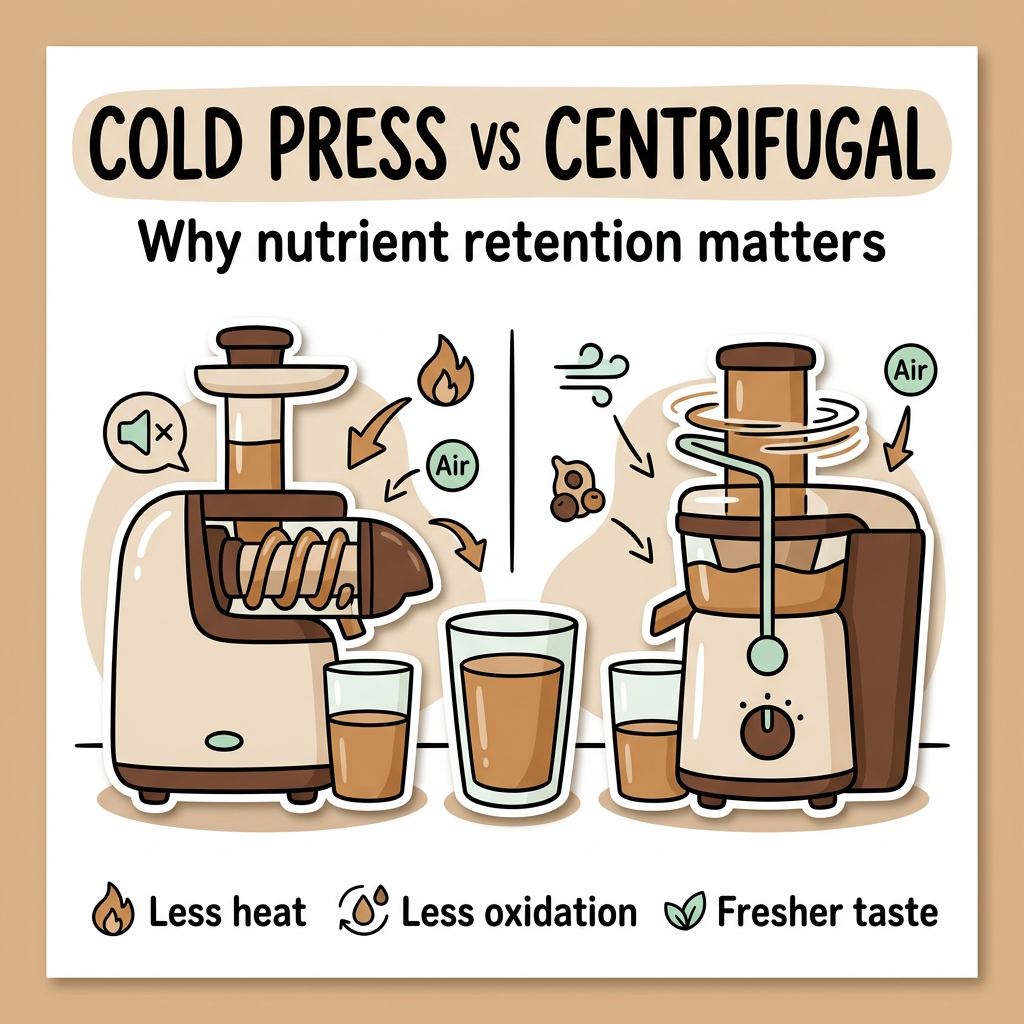
Most people grab a juicer based on price or speed, without thinking much about what happens to the nutrients inside. Nutrient retention matters because it determines how much of what's in the produce actually makes it into your body, and the juicer you use is the biggest variable in that equation. A cold press juicer works very differently from a centrifugal juicer, and that difference has a real impact on flavor, freshness, and nutrition. Here is a straightforward look at how the two compare and which one might work better for you.
What Is a Cold Press Juicer?
A cold press juicer extracts juice by using slow mechanical pressure instead of fast-spinning blades. Because the process generates very little heat, more of the natural nutrients in your produce are protected from start to finish. This type of machine is also called a masticating juicer or slow juicer, and all three terms refer to the same thing.
How a Cold Press Juicer Extracts Juice
A cold press juicer uses a slow-turning auger, which is a screw-shaped part that crushes and presses fruits and vegetables against a fine mesh screen. The juice passes through the screen into a collection container, while the dry pulp is pushed out separately.
The auger moves at a very low speed, which means very little friction and very little heat. This low-heat environment helps protect vitamins, enzymes, and other plant compounds that break down when exposed to higher temperatures.
How a Centrifugal Juicer Works by Comparison
A centrifugal juicer, the most common type of regular juicer, works by spinning a flat blade at high speed. Produce is shredded quickly, and the juice is separated through a mesh basket by the force of the spinning motion.
Centrifugal juicers are fast and easy to use, making them a practical choice for busy routines. Compared to cold pressing, the high-speed process introduces more heat and air contact during extraction, which influences how the two methods compare in terms of nutrition.
The Extraction Difference Between a Cold Press Juicer and a Centrifugal Juicer
The extraction method affects more than just speed. It changes the taste, shelf life, and nutritional profile of the juice. Here is a side-by-side look at how the two approaches compare across the factors that matter most.
The table below gives a quick overview of cold press versus centrifugal extraction.
| Factor | Cold Press Juicer | Centrifugal Juicer |
| Extraction speed | Slow | Fast |
| Heat generated | Minimal | Higher due to blade speed |
| Oxidation level | Lower | Higher due to air contact |
| Nutrient retention | Well preserved | Good, best consumed fresh |
| Juice shelf life | Stays fresh longer | Best enjoyed soon after juicing |
| Noise level | Quiet | Louder |
| Pulp separation | Dry, efficient | Effective, wetter pulp |
| Produce prep needed | Minimal with wide feed chute | Varies by model |
Each method has clear strengths, and the better choice depends on what you want out of your juicing routine.

Speed, Heat, and What They Do to Your Juice
The biggest technical difference between the two methods is how each one handles heat and air during extraction.
Cold press juicers keep things cool throughout the entire process. The slow auger movement creates very little friction, so the juice temperature stays low from the moment produce enters the machine to the moment juice comes out. This is important because some vitamins and enzymes, which are natural proteins that support digestion and nutrient absorption, are sensitive to heat and begin to break down at higher temperatures.
Centrifugal juicers work fast and deliver fresh juice quickly. The high-speed mechanism does generate more heat and pull more air into the juice during extraction, which affects how nutrients behave compared to cold pressing.
Juice Yield, Pulp, and Taste Differences
The two methods also produce noticeably different results in terms of juice quality and yield.
Cold press juicers tend to produce drier pulp, meaning more liquid is extracted from the same amount of produce. The juice also tends to:
- Taste clean and fresh, closely reflecting the raw produce
- Hold its color and texture longer after extraction due to lower oxidation
- Stay good for longer when stored in a sealed container in the fridge
Centrifugal juicers produce vibrant, fresh juice that tastes great when enjoyed right away, making them a great fit for people who juice on the go or prefer drinking fresh immediately after making it.
Are Cold Pressed Juices Healthy? What the Nutrients Show
Cold pressed juice has a strong reputation for being nutritious, and the way it is made explains why. The key question is how well nutrients survive the extraction process from produce to glass.
How Extraction Method Affects Vitamins and Enzymes
Raw fruits and vegetables contain nutrients that are sensitive to both heat and oxygen. Cold press extraction is designed to keep both to a minimum, which directly influences what ends up in the finished juice.
Nutrients most affected by extraction conditions include:
- Heat-sensitive vitamins such as vitamin C and certain B vitamins, which hold up better at lower extraction temperatures
- Enzymes that support digestion, which stay more active when heat is kept low during processing
- Phytonutrients, beneficial plant compounds with antioxidant properties, which are sensitive to oxidation
- Color and flavor compounds that reflect the freshness and quality of the juice
Centrifugal juicers produce healthy, nutritious juice that is best consumed fresh. Cold press extraction adds an extra layer of protection for those who want to prioritize nutrient preservation.
What Cold Pressed Juice Actually Retains
Cold press juicers are built to protect juice quality at every step. The slow auger limits heat, and the pressing action reduces how much air gets mixed into the juice.
The result is juice that holds onto more of the original vitamins, enzymes, and plant compounds from the raw produce. This is why cold pressed juice is known for clean flavor, stable color, and a longer shelf life when stored properly in a sealed container.
Which Type of Juicer Should You Choose?
Both cold press and centrifugal juicers can make fresh, nutritious juice at home. The right fit depends on your habits and what matters most to you.
- Choose a cold press juicer if you juice regularly for health, want to preserve more nutrients, prefer juice that stays fresh longer, or often juice leafy greens and soft produce
- Choose a centrifugal juicer if speed is your top priority, you juice occasionally, or you prefer drinking juice immediately after making it
Both types of juicers have a place in a health-conscious kitchen, and the best one is simply the one that fits how you actually live and juice.
Make Every Glass Count
Nutrient retention is what separates a good glass of juice from a great one. A cold press juicer protects more vitamins, enzymes, and plant compounds through slow, low-heat extraction. A centrifugal juicer delivers speed and fresh juice on demand. Both have their place depending on your routine. If getting the most nutrition out of every glass matters to you, a cold press juicer is worth a serious look. Explore your options and find the juicer that fits the way you live.
FAQs about Cold Press Juicing
Q1. How Do I Choose a Good Cold Press Juicer?
A good cold press juicer should have a wide feed chute to minimize prep time, a low-speed auger to protect nutrients during extraction, and parts that are easy to disassemble and clean. A quiet motor is also worth considering if you plan to juice early in the morning or at night. Look for a model with a reverse function as well, since it helps clear any blockages during juicing without interrupting the process.
Q2. How Long Does Cold Pressed Juice Last?
Cold pressed juice stays fresh longer than most other types of fresh juice when stored correctly. Keep it in a sealed, airtight container in the refrigerator and it will generally maintain good flavor and nutritional quality for up to two to three days. For the best taste and nutrition, drinking it as soon as possible after juicing is always a good idea.
Q3. How Much Cold Pressed Juice Can You Drink a Day?
One to two glasses of cold pressed juice per day is a reasonable amount for most people as part of a balanced diet. Cold pressed juice is nutrient-dense, but it is still a concentrated source of natural sugars, so moderation is key. It works best as a complement to whole fruits and vegetables rather than a full replacement for them.
Q4. What Fruits and Vegetables Work Best in a Cold Press Juicer?
Cold press juicers handle a wide range of produce well, including leafy greens like kale and spinach, soft fruits like oranges and berries, and harder vegetables like carrots, beets, and celery. Leafy greens in particular are an area where cold press juicers excel, since the slow pressing action extracts juice from fibrous leaves efficiently. Wide feed chute models allow whole fruits and vegetables to be loaded with minimal pre-cutting, saving time across all produce types.