Ingredients Worth Knowing
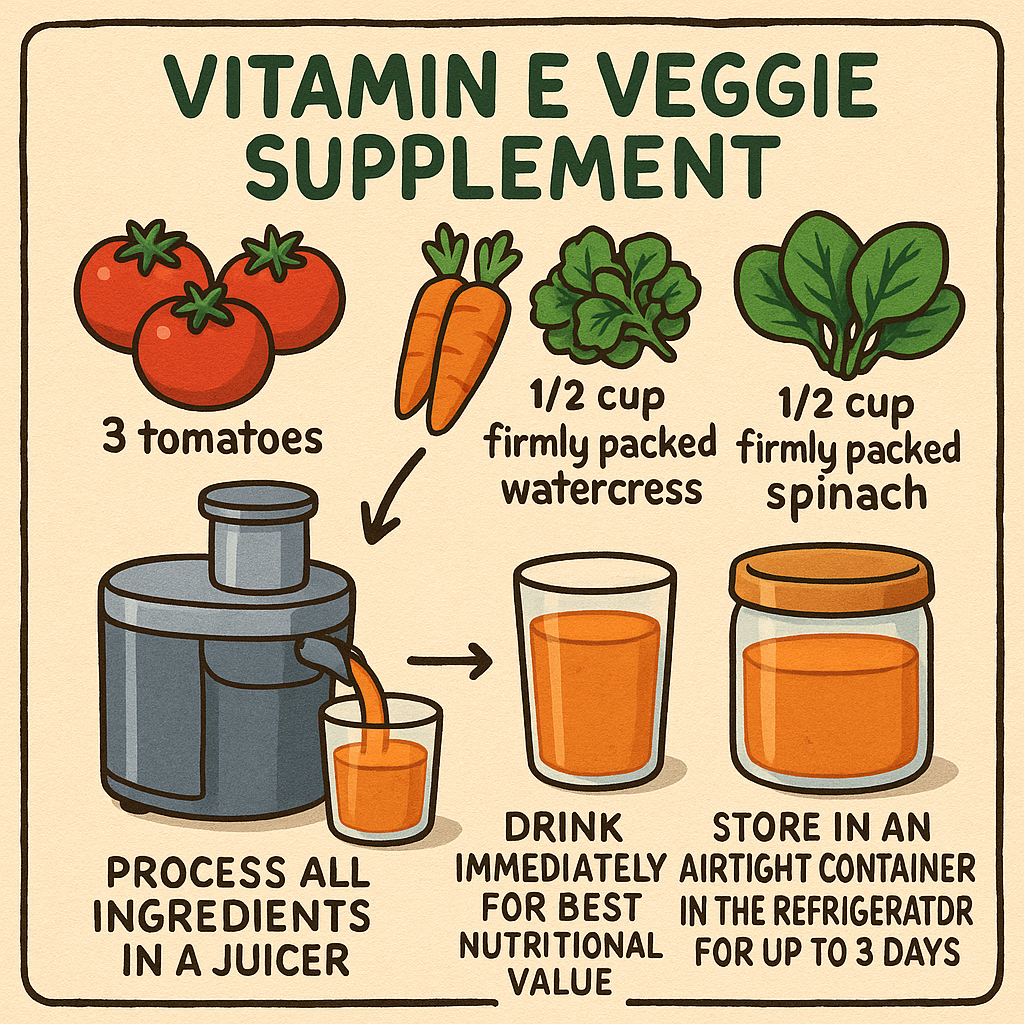
This recipe uses simple, accessible vegetables that together create an exceptional nutrient profile:
- Tomatoes — rich in lycopene and vitamin E, help protect your skin and heart health.
- Carrots — famous for beta-carotene, they also provide a gentle sweetness and support vision.
- Watercress — though often overlooked, it ranks high when you ask “Which vegetable is highest in vitamin E?”; it’s also dense in minerals like iron and calcium.
- Spinach — a classic leafy green and one of the best vegetarian sources of vitamin E; it adds smooth texture and earthy taste.
Together, these ingredients form a naturally balanced blend of sweetness and freshness, keeping sugar levels moderate while maximizing vitamin content — ideal for people managing energy, weight, or blood sugar.
How to Make This Vitamin E Veggie Juice
- Wash and roughly cut 3 tomatoes, 2 carrots, ½ cup watercress, and ½ cup spinach.
- Process them in a centrifugal juice extractor or a manual juicer, depending on your preferred style. A centrifugal juicer is quicker and great for busy mornings, while a manual juicer preserves more fibers and yields a slightly thicker texture.
- Serve immediately to keep the nutrients intact. You may store the juice in an airtight glass container in the refrigerator for up to 3 days.
Healthy Living Through Fresh Juicing
Juicing has a long tradition in wellness routines. Ancient civilizations used crushed fruits and herbs for medicine, and in modern times, we continue the practice for natural detox and nutritional balance.
Adding this Vitamin E Veggie Supplement Juice to your week can complement your meals, especially breakfast or post‑workout snacks. Its balance of antioxidants, fibers, and plant‑based nutrients makes it a great alternative to processed drinks.
You can even experiment — add a squeeze of lemon for brightness, a hint of ginger for circulation, or blend it with avocado for a creamy smoothie‑style variation. Each twist keeps it exciting yet wholesome.
Why Make Your Own Juice at Home
Homemade juice means you control what goes in. There are no additives, excessive sugars, or artificial preservatives — just fresh produce and your favorite juicer. Investing time in preparing your own vegetable juice method not only saves money but also strengthens your awareness of what your body needs.
So next time you wonder, “What are vegetarian sources of vitamin E?” or “How can I naturally support my immune system?” — just look toward your kitchen counter and your trusty juicer.