Can Apple and Carrot Be Eaten Together?
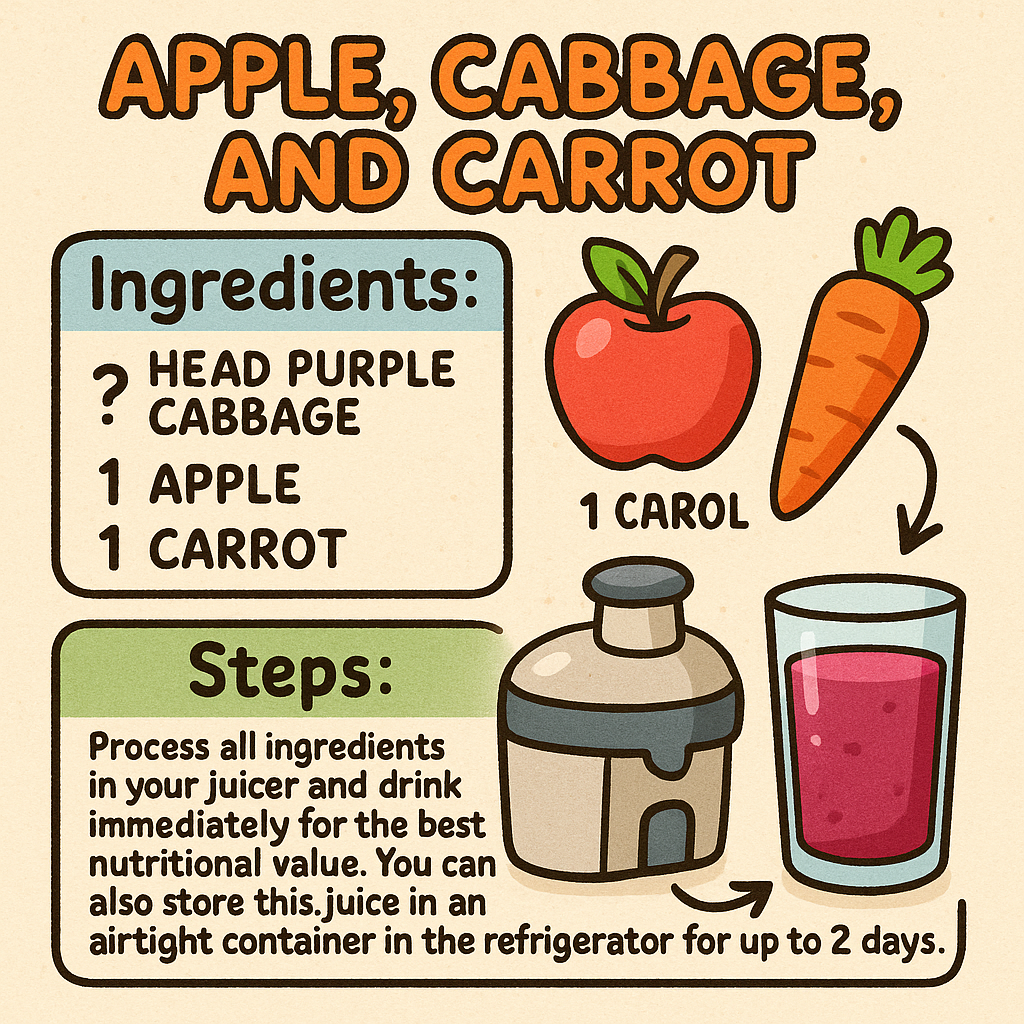
Absolutely! Apples and carrots complement each other beautifully in flavor and nutrition. Apples add a natural sweetness while carrots bring earthy notes and a boost of beta-carotene. Together, they provide fiber, vitamins A and C, and antioxidants that support eye health, skin vitality, and immune function.
In fact, pairing apples with carrots in a juice ensures a balanced taste—neither too sweet nor overly earthy—and a nutrient profile that works well for everyday consumption.
Do Cabbage and Apple Go Together?
You might not think cabbage belongs in a juice, but purple cabbage adds a surprisingly mild, slightly peppery flavor and a stunning hue. Cabbage is one of the lowest glycemic vegetables, making it ideal for people who want to stabilize blood sugar. It’s also rich in vitamins B6, C, and E, as well as antioxidants that support heart health.
When combined with apples, the slight bitterness of cabbage is mellowed by apple’s fruity sweetness, creating a blend that’s both refreshing and balanced. This pairing has also been used in traditional European cuisine for centuries, especially in winter salads and drinks, for its immune-supporting properties.
Can Carrots and Cabbage Be Eaten Together?
Yes. Carrots and cabbage are an excellent match both in raw dishes and in juices. Carrots are high in beta-carotene, while cabbage offers antioxidant-rich phytochemicals. Combining them in juice provides a colorful drink that supports detoxification, digestion, and energy levels.
For those watching carbohydrate intake, purple cabbage can help dilute the natural sugars from carrots and apples without sacrificing taste, making the drink suitable for people mindful of blood sugar levels.
Preparation Tips for Maximum Freshness
- Choose Fresh Ingredients: Look for firm apples, crisp carrots, and cabbage leaves with deep purple color.
- Drink Immediately: Fresh juice contains the most enzymes and vitamins when consumed right after preparation.
- Storage: If you must store it, use an airtight container and refrigerate for up to 48 hours to retain most nutrients.
A Brief History of Vegetable Juicing
Vegetable juices have been a part of human diets for centuries. In European folk medicine, cabbage juice was used for digestive health, while carrot juice became popular in the early 20th century as a “health tonic.” The combination of these vegetables and fruit in modern juicing bridges traditional wisdom with modern nutritional science.