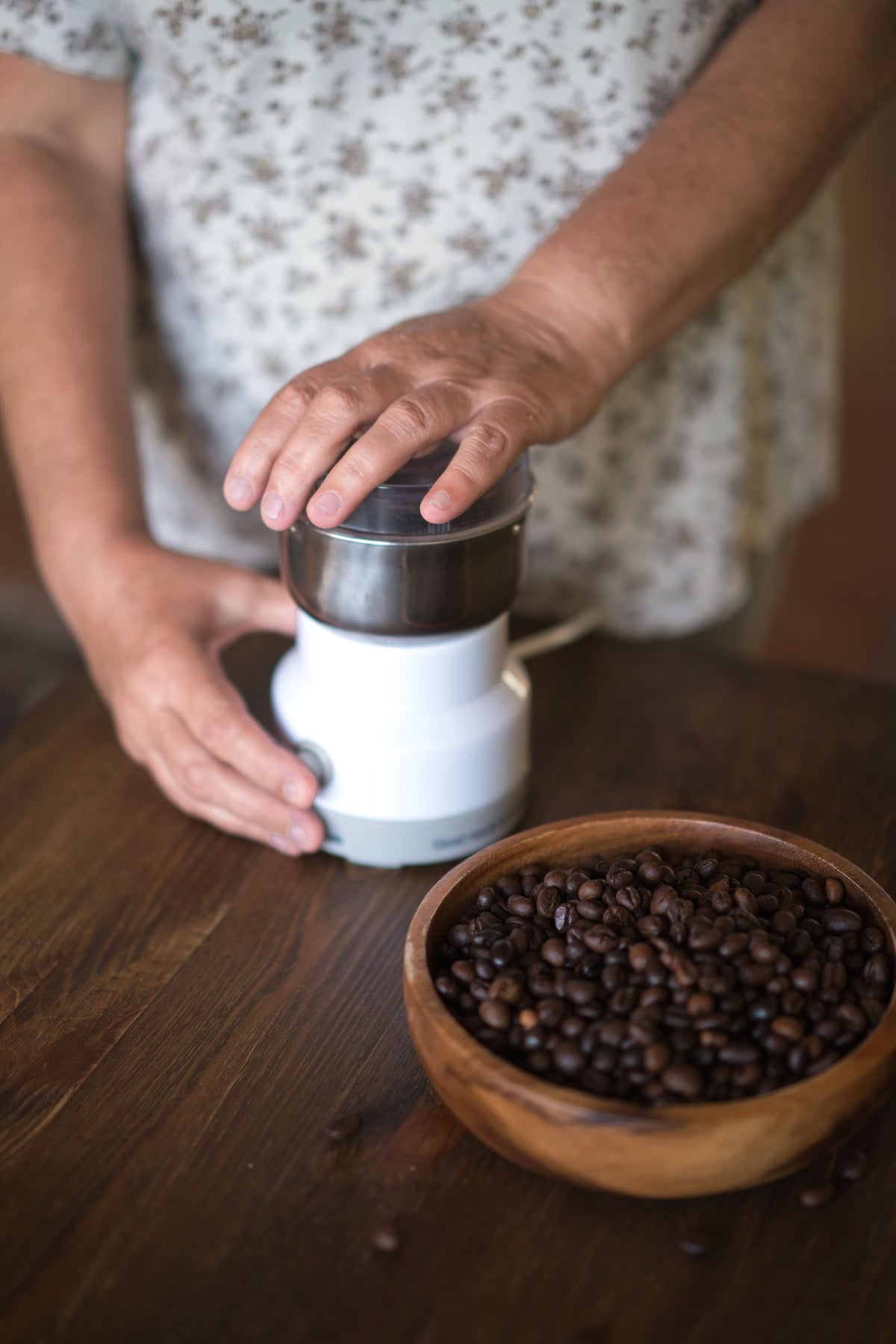
A hand coffee grinder makes sense when you usually brew one or two cups, value a quiet and compact setup, and do not mind adding some physical effort to your routine. An electric grinder becomes more convenient as your daily coffee volume grows, especially for espresso, multiple back-to-back drinks, or a full pot of drip coffee. The better choice depends less on which type is “best” and more on what you actually grind every day.
Key Takeaways
| Your Routine | Better Fit |
|---|---|
| 1–2 cups a day | Hand grinder |
| Several cups or a full pot | Electric grinder |
| Frequent espresso | Electric grinder |
| Small kitchen or frequent travel | Hand grinder |
| Shared household coffee routine | Electric grinder |
The right choice depends on how much coffee you grind, how often you brew, and how much hands-on work you want in your routine.
How Much Coffee Do You Grind on a Normal Day?
Daily coffee volume is one of the easiest ways to narrow the choice. Grinding a single 15–25 gram dose by hand can fit comfortably into a morning pour-over routine. Grinding enough coffee for several people or a full drip brewer changes the experience quickly because every additional dose means more cranking.
For one person making one or two cups, a manual burr coffee grinder can be practical without taking over the routine. You weigh the beans, grind them, and move straight to brewing. Manual grinders are also easy to put away after use, which can be useful in an apartment or kitchen with limited counter space.
The decision changes when coffee is part of a busier household routine. If two people each make multiple drinks before work, or you regularly brew a 10-cup pot on weekends, an electric grinder lets you process a larger amount without repeating the same physical step several times.
Think about your busiest coffee day rather than your lightest one. A grinder that feels convenient for one Saturday pour-over may feel very different when you need enough grounds for four mugs before everyone leaves the house.
How Much Time and Effort Does Manual Grinding Add to Your Routine?
For small filter-coffee doses, manual grinding usually adds a short hands-on step. For fine espresso or larger batches, the effort becomes much more noticeable. The exact grinding time depends on the burr size, beans, grind setting, dose, and how quickly you turn the handle, so fixed time claims are not very useful across different grinders.
The grind itself also gets harder as you move finer. Espresso requires much finer particles than typical drip or pour-over coffee, which means more resistance at the burrs. Dense, light-roasted beans can also require noticeably more effort than darker, more brittle beans.
That makes the question less about whether hand grinding is objectively difficult and more about whether you want that task in your routine. Some home brewers enjoy the physical process while the kettle heats. Others would rather press a button while weighing water, preparing a brewer, or packing breakfast.
Noise and space can shift the decision back toward manual grinding. A hand grinder has no electric motor, so it is useful when you make coffee early and want to keep the kitchen quieter. Its smaller footprint also means you can store it in a drawer or cabinet instead of dedicating permanent counter space to another appliance.
A good manual coffee grinder should therefore fit more than your preferred grind size. Capacity, handle comfort, adjustment system, and the amount of effort required at your usual setting all affect whether you will still enjoy using it six months later.
When Does an Electric Grinder Make Daily Brewing Easier?
Electric grinding becomes increasingly useful when speed, repeated doses, or hands-free operation matter more than portability. Instead of turning a handle for every serving, you can start the grinder and use those seconds to prepare another part of the brew.
Several everyday situations make that convenience more noticeable:
- Multiple morning coffees: Grinding several doses by hand turns a small task into repeated work.
- Full-pot drip brewing: A larger batch may exceed the capacity of a compact hand grinder and require more than one load.
- Frequent espresso: Fine grinding demands more effort, especially when you are pulling several shots or adjusting the grind while dialing in new beans.
- Shared household use: A push-button workflow may be easier when several people with different levels of coffee experience use the same grinder.
- Busy mornings: Automatic or timed dosing reduces the amount of hands-on work between waking up and getting coffee into the brewer.
This is where an electric grinder's features can support a real routine rather than simply adding more specifications. For example, the SHARDOR Burr Coffee Grinder with 51 Precise Settings combines a 12.5-ounce hopper with cup and timer controls. For a household grinding several servings from the same beans, that means you can keep enough coffee ready in the hopper and select the amount needed instead of hand-grinding each dose separately.
Electric does not automatically mean better coffee, though. Burr design, adjustment range, grind consistency, and how well the grinder suits your brewing method still matter. The motor primarily changes how the grinding work gets done.
How Do Espresso, Pour-Over, and Full-Pot Brewing Change the Decision?
Your preferred brewing method affects both the required grind and the amount of work involved. Research from the UC Davis Coffee Center notes that grind size has a significant effect on extraction rate, with finer grounds extracting differently from coarser grounds. That makes a useful adjustment range important whether you turn the burrs yourself or use a motor.
Pour-Over and Other Single-Cup Brewing
A hand grinder fits naturally with pour-over when you make one carefully measured cup at a time. The dose is usually manageable, the grind is less demanding than espresso-fine settings, and grinding can happen while the water heats.
An electric grinder still makes sense if you value speed or make several pour-overs in succession. The difference is mostly workflow rather than a rule that one grinder type produces the correct pour-over grind and the other does not.
Espresso and Fine Grinding
Espresso places more pressure on the grinder decision because you need both a fine grind and small, repeatable adjustments. A capable hand grinder can work for espresso, but daily effort increases when you need several shots or make repeated adjustments while dialing in.
The Specialty Coffee Association describes dialing in coffee as a process of methodically adjusting variables such as grind and dose to optimize the brew. An electric grinder can make this repeated testing less physically demanding when espresso is part of your everyday routine.
Full Pots and Larger Batches
Batch size is where electric grinding has one of its clearest convenience advantages. A full drip brewer may require far more coffee than a compact hand grinder holds at once, which can mean refilling and grinding several batches.
If you regularly make coffee for a partner, family, or weekend guests, check grinder capacity alongside grind quality. Saving a minute on one dose may not matter much, but avoiding several rounds of hand grinding can noticeably simplify a larger brew.
Which Grinder Type Fits Different Home Coffee Routines?
The easiest way to choose between manual and electric grinding is to look at what happens in your kitchen on a normal week. Cup count, brew method, available space, and who uses the grinder all affect which workflow feels easier over time.
One Coffee Drinker Making One or Two Cups
A manual burr coffee grinder can fit this routine very well, especially for pour-over, French press, or other small-batch brewing. The dose is manageable, the grinder takes up little space, and the extra grinding step may fit naturally while your water heats.
An electric grinder can still be useful if mornings are rushed, but the time savings are smaller when you are only grinding one serving.
A Household Making Several Coffees
Electric grinding becomes more convenient when two or more people need coffee around the same time. Several back-to-back doses can make hand grinding feel repetitive, particularly when everyone is using the same beans. A larger hopper or timed dosing can also simplify busy mornings because you do not need to measure and hand-grind each serving separately.
Espresso as the Main Daily Drink
A capable hand grinder can produce espresso-fine grounds, but fine grinding takes more physical effort. If you pull several shots a day or regularly adjust the grind while dialing in new beans, an electric grinder can make that repeated work easier. For someone who makes only an occasional espresso and values a compact setup, manual grinding may still be perfectly practical.
Small Kitchens, Quiet Mornings, and Travel
Manual grinders have a clear advantage when space and noise matter most. They are compact, do not use a motor, and can be stored easily when counter space is limited.
They also work well for travel, camping, or anywhere you do not want to depend on an outlet. If your grinder stays permanently on a home coffee bar and serves several people, those advantages may matter less than speed and capacity.
The best choice is the one that removes friction from the routine you repeat most often. A good manual coffee grinder should make small-batch brewing feel easy, while an electric grinder should save meaningful time when your coffee volume or frequency increases.
Match the Grinder to the Way You Make Coffee
A hand coffee grinder fits small batches, quieter mornings, limited counter space, and people who enjoy a hands-on brewing routine. Electric grinders become more convenient as coffee volume, espresso frequency, and the number of daily users increase.
Start with your normal week: how many servings you grind, how fine you usually go, and how much hands-on work you want before the first cup. If an electric workflow better matches those habits, the SHARDOR burr coffee grinder collection includes options for single cups, timed dosing, larger hoppers, espresso, pour-over, and full-pot routines.
FAQs
Q1. Is a Manual Coffee Grinder Better Than an Electric Grinder?
Not automatically. A manual grinder can offer precise burr grinding in a compact, quiet format, while an electric grinder reduces physical effort and makes repeated or larger doses easier. The better option depends on how much coffee you grind and how much convenience you want.
Q2. Can You Use a Hand Coffee Grinder for Espresso?
Yes, if the grinder is designed to reach espresso-fine settings and offers sufficiently small adjustments. Keep in mind that fine grinding generally requires more effort, so frequent espresso drinkers should also consider whether they want to hand-grind every shot.
Q3. How Long Does It Take to Grind Coffee by Hand?
Grinding time varies with the grinder, dose, roast, burr size, and grind setting. A small pour-over dose can be fairly quick with an efficient grinder, while larger batches and espresso-fine settings usually take longer and require more effort.
Q4. Are Manual Burr Coffee Grinders Worth It?
They can be a good fit for people who make small amounts of coffee, value quiet operation, need portability, or prefer not to dedicate counter space to an electric appliance. Daily volume and brewing method matter more than the manual label itself.
Q5. Is an Electric Coffee Grinder Better for Making a Full Pot?
It is usually more convenient. A full pot requires a larger dose than a single cup, so an electric grinder can process the beans with less hands-on work and may offer a larger hopper or grounds container for batch brewing.