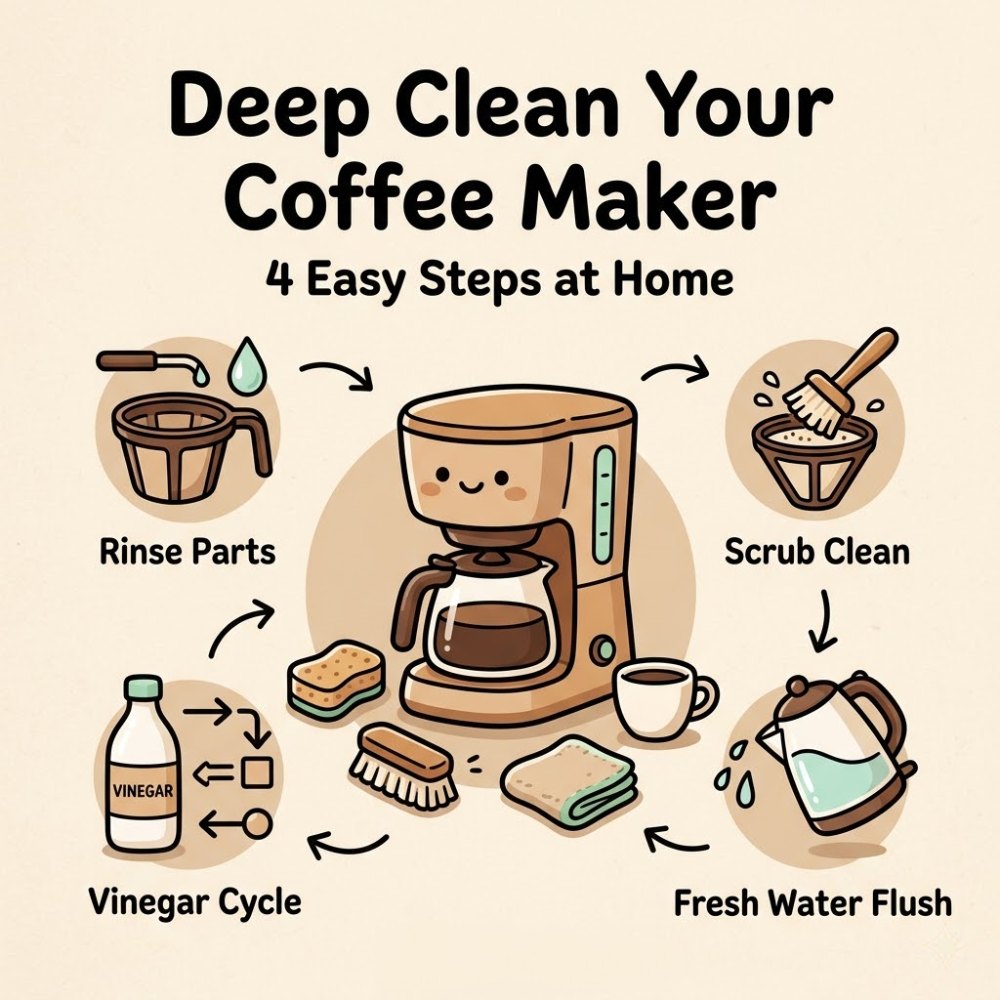

Mineral deposits and old coffee oils build up inside your brewer over time, silently dragging down every cup you make. A consistent clean coffee maker routine takes less than an hour and makes a noticeable difference in taste. These four steps cover everything from the removable parts to the internal pipes.
Quick Takeaways
- Step 1: Unplug the machine, remove all detachable parts, and rinse them under warm water
- Step 2: Scrub the carafe, filter basket, and drip tray with soap and a brush
- Step 3: Run a half-vinegar, half-water brew cycle to dissolve internal mineral buildup
- Step 4: Flush the machine with two full cycles of fresh water, then dry and reassemble
Why Your Coffee Maker Needs a Deep Clean
Every brew leaves something behind. Coffee oils coat the interior components, and minerals from tap water gradually accumulate along the heating element and water lines.
The mineral buildup is called scale, which is a hard, chalky deposit that forms when water containing dissolved calcium and magnesium is repeatedly heated. Scale narrows the water pathways, forcing your machine to work harder and brew slower.
Coffee oil residue ages into a bitter, rancid layer that flavors every new cup you make. The longer it sits, the worse it gets.
Keeping a clean coffee maker is not just a hygiene habit. It directly protects the taste of your coffee and the lifespan of your machine.
What You Need to Clean a Coffee Maker Machine
Before starting, pull together your supplies. Having everything within reach makes the process faster and avoids interruptions once you begin.
Here is what you will need:
- White distilled vinegar (a natural descaler that dissolves mineral deposits without harsh chemicals)
- Fresh, clean water
- Mild dish soap
- A soft sponge or non-scratch scrub brush
- A dry microfiber cloth
- A small bottle brush for hard-to-reach spots like spouts or nozzles
Most of these items are already in your kitchen. No specialized cleaning products are required to keep a coffee maker machine properly maintained.
How to Clean a Coffee Maker in 4 Simple Steps
A thorough clean covers both the external parts you can see and the internal pathways you cannot. The steps below walk through the full process from start to finish, so nothing gets missed.
Step 1: Disassemble and Rinse All Removable Parts
Start by unplugging your coffee maker and allowing it to cool completely. Never clean a machine while it is still hot or plugged in. Once cooled, remove every detachable component:
- The water reservoir, which is the tank that holds water before brewing
- The drip tray, which is the small platform beneath the spout that catches overflow
- The filter basket, which is the compartment that holds your coffee grounds or paper filter
Rinse each piece under warm running water to flush out loose grounds and surface residue. This step takes only a couple of minutes but sets up each part for a more effective wash.
Step 2: Wash the Carafe, Filter Basket, and Drip Tray
The carafe is the glass or stainless steel container that collects your brewed coffee. Fill it with warm soapy water and use a bottle brush to scrub the interior walls and the bottom. Coffee stains tend to build up along the base and lower sides, so focus your scrubbing there. Rinse until the water runs completely clear.
For the filter basket and drip tray, use a soft sponge with dish soap and work into the corners and edges. These spots collect moisture and coffee grounds between uses, making them two of the dirtiest parts of the machine and also among the most commonly skipped during a quick rinse.
Once clean, set all parts on a dry towel and let them air out while you move on to the interior.
Step 3: Run a Vinegar Cycle to Descale Your Coffee Maker
Descaling refers to the process of removing mineral buildup from inside the machine's water lines and heating element. White distilled vinegar is the most accessible option for home use because it is acidic enough to break down scale without damaging internal components.
Fill the water reservoir halfway with white distilled vinegar and top it off with fresh water. Place the carafe back in position and run a full brew cycle without any coffee grounds. As the solution heats up and moves through the internal pipes, it dissolves accumulated scale along the way.
Once the cycle finishes, let the machine sit undisturbed for 20 to 30 minutes. This resting period allows the vinegar solution to continue working on any remaining deposits that a single pass may not have fully cleared.
Step 4: Flush with Fresh Water and Reassemble
After the vinegar cycle, the machine needs a thorough rinse before you brew coffee again. Any leftover vinegar will affect the taste of your next cup if it is not fully flushed out.
Fill the reservoir with fresh, clean water and run two complete brew cycles back to back. This clears the internal pathways of any vinegar residue.
Once the rinse cycles are done:
- Wipe down the exterior with a lightly damp microfiber cloth
- Dry all removable parts thoroughly before putting them back
- Plug the machine back in once everything is fully reassembled
Your coffee maker is now clean inside and out.
How Often Should You Clean Your Coffee Maker Machine

Getting the deep clean right is only part of the picture. How often you clean your coffee maker machine matters just as much as how well you clean it. The table below breaks down a simple maintenance schedule based on task type.
| Cleaning Task | Recommended Frequency |
| Rinse carafe and filter basket | After every use |
| Wipe down exterior and drip tray | Every 2 to 3 days |
| Full wash of all removable parts | Once a week |
| Vinegar descaling cycle | Every 1 to 3 months |
Use the table above as a starting point, then adjust based on how frequently you brew and the quality of your local water supply.
Hard water, which refers to water with a high concentration of dissolved calcium and magnesium minerals, accelerates scale buildup significantly. If your area has hard water, plan to run a descaling cycle every four to six weeks rather than every three months.
Watch for these warning signs that a deep clean is overdue:
- Coffee tastes noticeably more bitter or flat than usual
- The machine brews slower or produces less liquid than expected
- Visible discoloration or residue appears on removable components
Catching these signs early makes the cleaning process easier and prevents more stubborn buildup from forming.
Keep Every Cup at Its Best
A clean coffee maker is the difference between a cup that tastes flat and one that delivers the flavor it should. Four steps, basic household supplies, and a simple maintenance schedule are all it takes. Start your first deep clean this week and keep the habit going. The improvement in taste is noticeable almost immediately.
FAQs about Deep Cleaning Coffee Makers
Q1. Can I Use Apple Cider Vinegar to Clean a Coffee Maker?
White distilled vinegar is the standard choice because it is clear, minimally scented, and highly effective at dissolving mineral deposits. Apple cider vinegar contains additional organic compounds that can leave a faint residue or a lingering odor inside the machine. For the cleanest result, white distilled vinegar is the more reliable option.
Q2. Does a Coffee Maker Machine Still Need Descaling If I Use Filtered Water?
Filtered water reduces mineral content, which slows down scale buildup compared to unfiltered tap water. However, filtration does not remove all dissolved minerals, so some scale will accumulate over time regardless. A vinegar descaling cycle every two to three months is still a good practice even when using filtered or softened water.
Q3. What Happens If You Never Deep Clean a Coffee Maker?
Without regular deep cleaning, coffee oil residue and mineral scale continue to build up inside the machine unchecked. The flavor of your coffee degrades gradually, becoming more bitter or stale with each brew. In more advanced cases, scale can partially block the water lines, leading to slower brewing speeds and reduced output volume.
Q4. How Long Does It Take to Deep Clean a Coffee Maker at Home?
Most deep cleans take between 45 and 60 minutes from start to finish. The vinegar brew cycle and two rinse cycles account for the majority of that time, and most of it is hands-off waiting. The active portion, which includes washing and drying the removable parts, typically takes around 10 to 15 minutes.