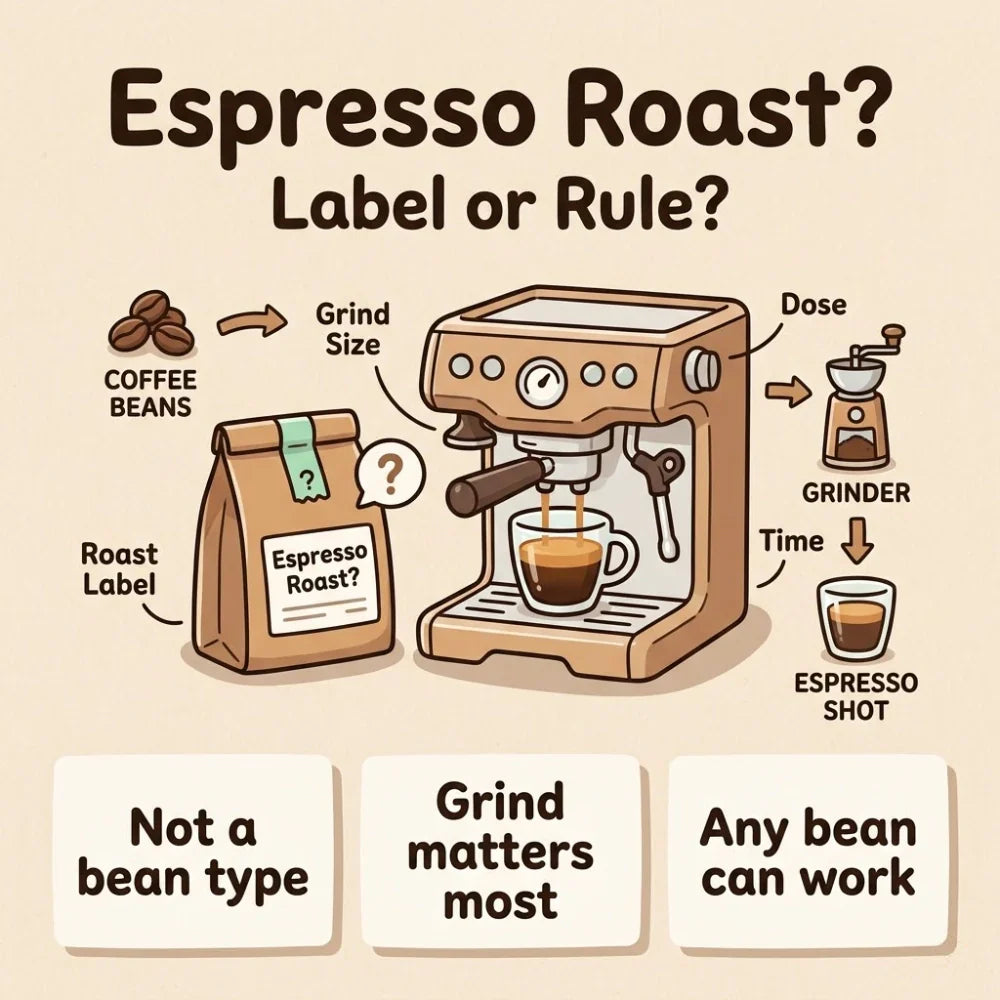
You just bought a home espresso machine. You head to the store, and there it is on the shelf: a bag labeled "Espresso Roast." It feels like an obvious choice. But espresso roast is not a regulated standard, a special bean variety, or a requirement for pulling a good shot. It is a marketing label. What actually matters is how you grind and brew, not what the bag says.
What Espresso Roast Actually Means
The term "espresso roast" has no official definition in the coffee industry. No governing body regulates it, and no universal standard determines what qualifies a bean for that label. Any roaster can print "espresso roast" on a bag, and most of the time it simply signals that the beans have been roasted to a medium-dark or dark level.
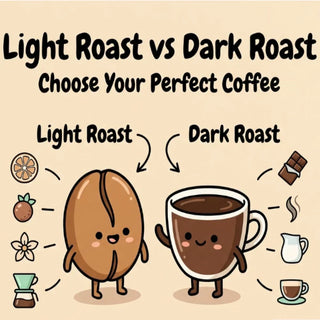
Traditionally, espresso roast coffee beans are roasted darker because dark roast produces low-acid, bold, chocolatey flavors that hold up well under the intense pressure of espresso extraction. Italian espresso culture built its identity around this style, and the label stuck.
What espresso roast coffee beans typically share:
- A medium-dark to dark roast level
- Low acidity and a heavy, full body
- Smoky, chocolatey, or caramel-forward flavor notes
- Blends of multiple origins rather than single-origin beans
That said, none of these characteristics are exclusive to bags labeled "espresso roast." Plenty of dark roast coffees without that label will perform identically in an espresso machine.
Why You Do Not Need an Espresso Roast to Make Good Espresso
Espresso is a brewing method, not a bean type. It refers to how coffee is made: hot water forced through finely ground coffee at high pressure (typically around 9 bars, where one bar equals roughly the atmospheric pressure at sea level). Any coffee bean can go through that process regardless of its label.
What actually determines whether your espresso tastes good comes down to three variables:
- Grind size: The single most important factor in espresso extraction
- Dose: The amount of ground coffee used per shot
- Extraction time: How long water takes to pass through the grounds, ideally 25 to 30 seconds
Get those three right, and the label on your bag becomes largely irrelevant. A bright Ethiopian light roast can produce a complex, wine-like shot. A medium roast Colombian can yield something balanced and sweet. Neither needs the "espresso roast" label to work well in your machine. The label is a useful shortcut for beginners who want a predictable result, not a requirement for good espresso.
How Espresso Roast Level Changes the Flavor in Your Cup
Roast level is still a meaningful choice, even if the label does not dictate it. Different roast levels produce noticeably different espresso shots, and knowing what to expect helps you pick the right bean for your taste.
Light and Medium Roast Espresso
Light and medium roast beans retain more of the coffee's original character. In an espresso machine, this translates to a brighter, more complex shot with higher perceived acidity and more variation depending on the bean's origin. The flavor can be fruity, floral, or even tea-like, which is very different from what most people expect from espresso.
These shots can be outstanding when dialed in well, but they require more precision. Light roast beans are denser and harder, which means they need a finer grind and slightly higher extraction temperatures to pull correctly. With the right grind settings, light and medium roast beans can deliver a genuinely rewarding espresso shot.
Dark Roast Espresso
Dark roast beans are the traditional choice for espresso, and for good reason. The extended roasting process reduces acidity and develops bold, rich compounds that hold up beautifully under pressure.
Dark roast espresso typically delivers:
- Rich, chocolatey, and smoky flavor notes
- A heavier body and thicker crema (the golden-brown foam layer that forms on top of a properly pulled espresso shot)
- Lower acidity and a more forgiving extraction window
- Consistent results that pair well with milk in lattes and cappuccinos
For home brewers just starting out, dark roast espresso roast coffee beans are the most forgiving option. They extract predictably and leave less room for things to go wrong.
How to Dial In Any Coffee Bean for Espresso at Home
No matter which beans you choose, the process of getting a good espresso shot is the same. It comes down to adjusting your grind until the extraction hits the right balance.
A well-extracted espresso shot typically follows the 1:2 ratio: one gram of ground coffee produces two grams of liquid espresso, extracted in around 25 to 30 seconds. If your shot runs too fast and tastes watery or sour, grind finer. If it runs too slow and tastes bitter, grind coarser.
The table below gives a simple starting point based on roast level. Use it as a reference, not a fixed rule, since every machine and bean behaves slightly differently.
| Bean Type | Starting Grind | What to Watch For |
| Light roast | Fine | Adjust finer if the shot tastes flat or under-extracted |
| Medium roast | Medium-fine | Most forgiving starting point for beginners |
| Dark roast | Medium-fine to medium | Dial slightly coarser if the shot tastes too bitter |

Small grind adjustments make a bigger difference than most people expect, which is why having enough settings on your grinder matters. A grinder with only a few settings forces large jumps between coarse and fine, making it hard to land exactly where you need to be for espresso. The SHARDOR Professional 64mm Flat Burr Grinder offers 100 grind settings with a precise LED timer, giving you the micro-adjustment range that espresso brewing specifically demands, whether you are pulling shots with a dark espresso roast or experimenting with a lighter bean.
Make Any Bean Work for Espresso
Espresso roast is a helpful label, not a rulebook. Any well-ground coffee bean can produce a great espresso shot at home as long as your grind size and extraction are dialed in to match the roast. Start with whatever beans you enjoy, adjust based on how the shot tastes, and give yourself room to experiment. The right grinder makes that process a lot more straightforward. Find the setup that fits your brewing style.
FAQs about Espresso Roast Coffee
Q1. Is Espresso Roast a Specific Type of Coffee Bean?
No. Espresso roast is not a standardized term or a specific bean variety. It is a label roasters use to indicate beans suited for espresso brewing, typically roasted to a medium-dark or dark level. Two bags with the same "espresso roast" label from different brands can taste completely different depending on the origin and roasting style.
Q2. Can You Use Espresso Roast Coffee Beans for Drip Coffee?
Yes, espresso roast coffee beans work fine in a drip coffee maker. The roast level does not limit which brewing method you can use. Espresso roast beans tend to produce a bolder, lower-acid cup in a drip machine compared to a lighter roast, so you may want to slightly reduce your dose to avoid an overly bitter result.
Q3. Why Do Most Commercial Espresso Blends Use Multiple Coffee Bean Origins?
Blending multiple origins allows roasters to balance flavor characteristics that a single origin might not provide on its own. One origin might contribute sweetness, another adds body, and a third provides a clean finish. Espresso blends are designed to deliver a consistent, well-rounded shot across different machines and brewing conditions.
Q4. Does Espresso Roast Coffee Have More Caffeine Than Regular Coffee?
Not significantly. Roast level has a minimal effect on caffeine content, and the brewing method plays a much bigger role in how much caffeine ends up in your cup. Espresso is highly concentrated, but a standard single shot typically contains less total caffeine than a full mug of drip coffee simply because of the smaller serving volume.