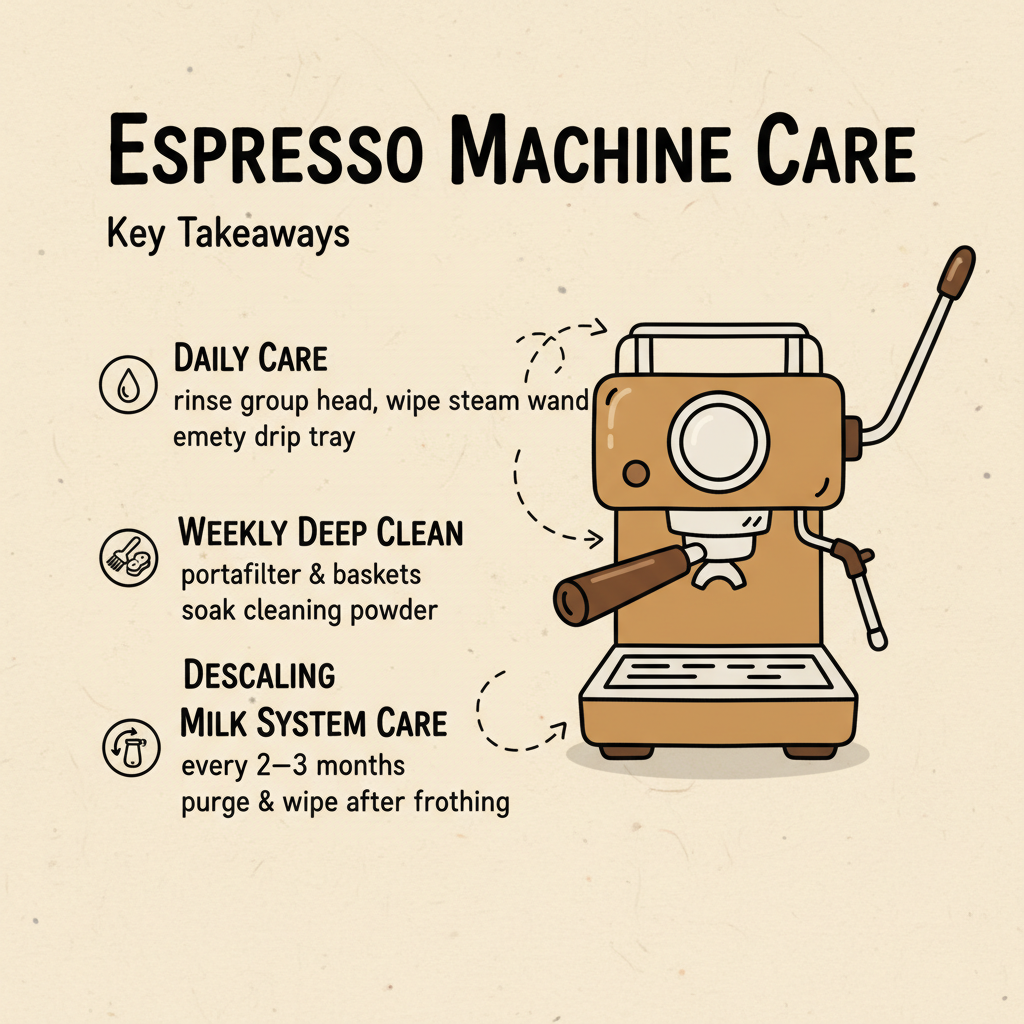
Key Takeaways
- Daily Care: Rinse the group head, wipe the steam wand, and empty the drip tray after each use.
- Weekly Deep Clean: Soak the portafilter and baskets in coffee cleaner to remove coffee oils.
- Descaling: Run descaling solution every two to three months to clear mineral deposits.
- Milk System Care: Purge and wipe the steam wand immediately after frothing milk.
Maintaining your espresso machine on a regular basis is important if you want it to keep making great coffee. Daily cleaning, deep cleaning once a week, descaling on a regular basis, and milk system care keep tastes from getting bitter and make your machine last longer. These easy steps only take a minute or two, but they make a big difference in the quality of your shots and the life of your gear.
Daily Cleaning Steps for Your Espresso Machine
Consistency is the secret to great coffee. A quick daily routine keeps your machine in top condition and ensures every cup tastes fresh. These simple steps take less than five minutes and become second nature once you establish the habit.
- Purge the Group Head: Run a short stream of water before and after every shot to clear loose grounds from the shower screen, which is the metal mesh that distributes water.
- Wipe the Steam Wand: Use a damp cloth to remove milk immediately after frothing to prevent proteins from baking onto the metal.
- Rinse the Portafilter: Remove the metal basket after use and rinse it under hot water to ensure no old oils remain trapped in the holes.
- Clear the Drip Tray: Empty and rinse the tray to prevent mold growth and keep the stainless steel surface looking polished.
Weekly Deep Clean for Your Espresso Machine Components
While daily rinsing handles surface debris, a weekly deep clean keeps your coffee tasting its absolute best. Coffee oils naturally build up over time, and removing them ensures every shot has that fresh, rich flavor you love.
Clean the Portafilter and Baskets
The portafilter is the handle that holds the coffee. Over a week, oils seep into the metal pores and the filter basket holes. To clean them, dissolve a small amount of coffee cleaner in hot water and soak the metal parts for fifteen minutes. Avoid soaking any plastic or rubber handle grips, as chemicals can degrade these materials over time.
Scrub the Group Head Gasket
The gasket is the rubber ring inside the group head that creates a seal with the portafilter. Use a stiff nylon brush to scrub around the gasket and the shower screen. This removes carbonized coffee bits that cause leaks or uneven water pressure during the extraction process.
| Component | Cleaning Method |
| Filter Baskets | Chemical soak in hot water |
| Shower Screen | Brush with nylon bristles |
| Water Reservoir | Hand wash with mild soap |
The table above outlines the primary focus areas for your weekly routine. Following these steps prevents the buildup of old coffee solids that can clog the fine mesh of your filters.
Proper Descaling Process for Your Espresso Machine
Water contains minerals like calcium and magnesium that naturally form a white, chalky substance called scale when heated. Regular descaling keeps your machine running efficiently and maintains optimal brewing temperature for the best-tasting espresso.
The descaling process involves running a citric acid solution or a professional descaling liquid through the entire internal plumbing. You must fill the water tank with the solution and allow it to cycle through the machine to dissolve the mineral crust.
- Drain any remaining water from the internal tank.
- Add the descaling solution mixed with water into the reservoir.
- Run the solution through both the group head and the steam wand.
- Allow the machine to sit for a few minutes so the solution can break down the scale.
- Flush the entire system with at least two full tanks of fresh water to remove any chemical taste.
Descaling frequency depends on your water quality. Most users find that descaling every two to three months keeps their machine performing perfectly. Using filtered water can extend the time between descaling sessions.
Essential Maintenance for Espresso Machine Milk Systems
The steam wand is the metal pipe used to froth milk for lattes and cappuccinos. Milk contains proteins and fats that can stick to the hot metal, so a quick wipe after each use keeps your steam wand working smoothly and your milk froth silky.
- Internal Purging: Turn on the steam for one second before and after you froth milk to clear any liquid trapped inside the tip.
- External Wiping: Always use a dedicated microfiber cloth to keep the wand surface free of milk film and maintain the shine.
- Weekly Tip Soaking: If the steam pressure feels weak, soak the wand tip in warm water to dissolve internal blockages.
- Nozzle Inspection: Periodically check the small holes at the end of the wand to ensure they are not restricted by dried particles.
Enjoy Better Coffee with Simple Care
Proper care ensures your coffee tastes amazing every single day. These simple maintenance steps take just minutes but deliver consistently delicious espresso for years to come. A well-maintained machine is the foundation of a perfect morning ritual.
FAQs about Espresso Machine Care
Q1. How Often Should I Change the Group Gasket on My Espresso Machine?
With proper maintenance, most gaskets survive well over a year. When your portafilter becomes more difficult to lock in, or you notice any small leaks around the seal, you'll know it's time for a replacement.
Q2. Can I Use Vinegar Instead of Commercial Descaling Solution?
No, vinegar can damage your machine's metal parts and rubber seals over time. Use only commercial descalers that are made for espresso machines. They won't damage your equipment and will work better.
Q3. What Causes My Espresso to Taste Sour Even After Cleaning?
If your espresso tastes sour, it's probably because you didn't extract it enough, not because your equipment is dirty. To rectify the taste, try grinding it finer, checking the temperature of the water, or letting the shot pull for a little longer.
Q4. How Do I Know if My Water Is Too Hard for My Espresso Machine?
Check your machine and the water tank for white mineral deposits. In many places, these deposits are normal. If you see them starting to build up, just descale them more often or think about using filtered water to make things even easier.