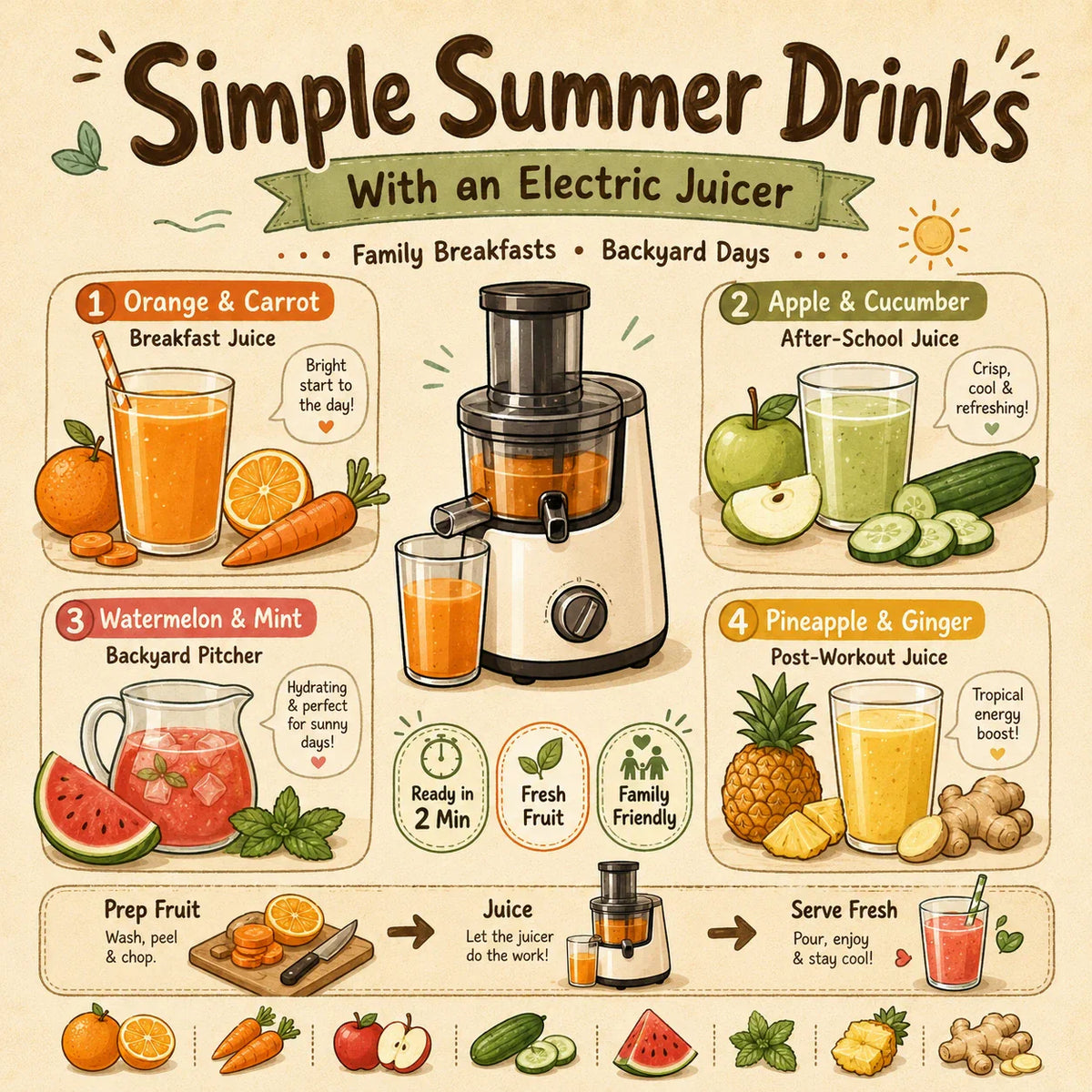
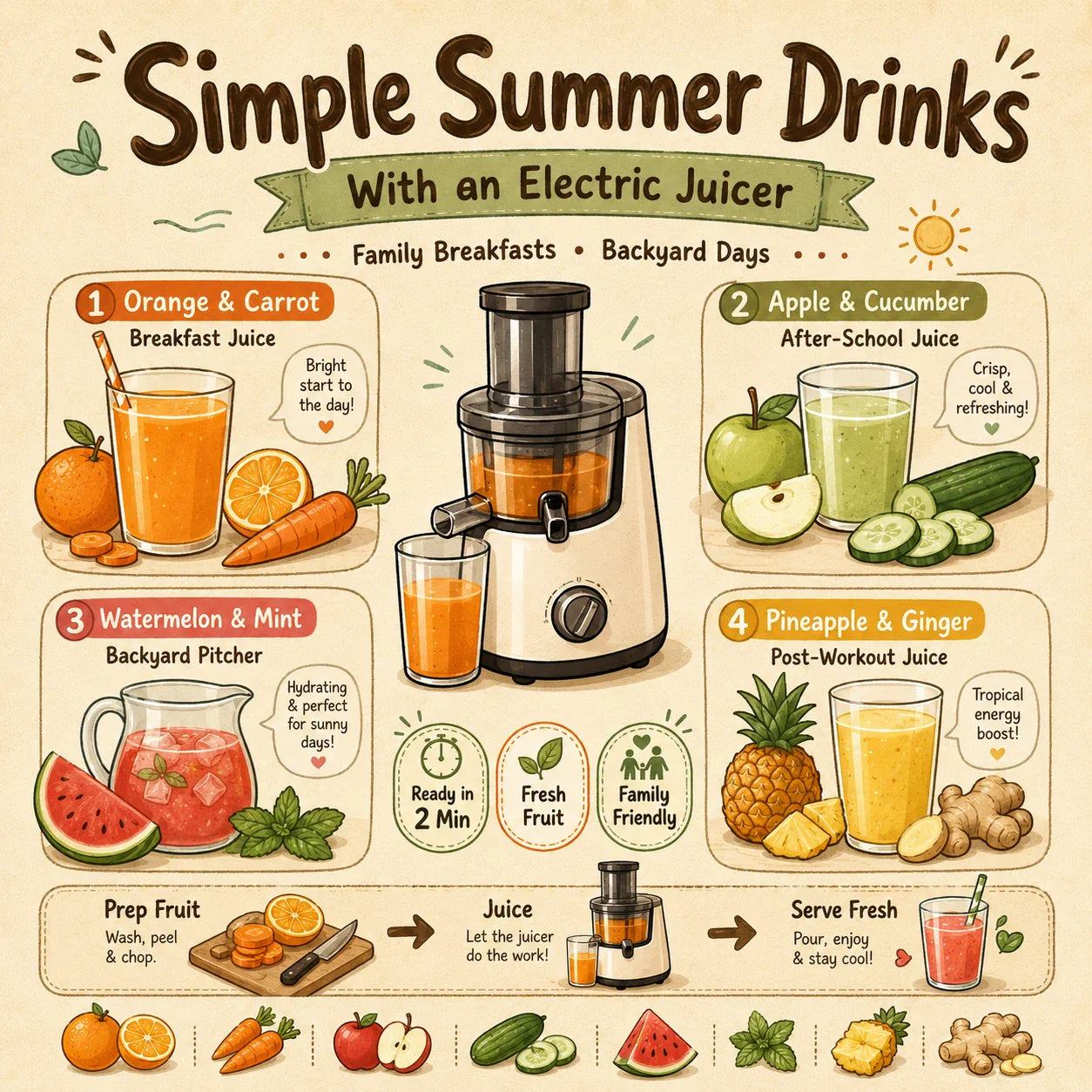
Summer floods kitchens with ripe peaches, watermelon wedges, and citrus that spoil faster than a busy household can eat them. An electric juicer is a countertop appliance that converts whole fruits and vegetables into fresh juice in under two minutes, turning surplus produce into something useful before it goes soft. This article covers four practical angles: family breakfasts, after-school drinks, backyard gatherings, and post-workout recovery.
Four Everyday Moments That Call for an Electric Juicer
An electric juicer earns its counter space only when it fits specific moments in your week. These four scenarios cover the situations where homemade juice adds the most value with the least friction.
Family Breakfasts: Juice Ready Before the Toast Pops
Most families have fewer than 20 minutes for breakfast during the 7–8 a.m. window. A centrifugal electric juicer processes one cup of orange juice in 45–60 seconds, making fresh juice faster than brewing a second pot of coffee. A simple two-fruit morning formula works well here: one orange and one medium carrot take roughly one minute to feed through the chute and yield 8 oz per person. Prepping both items the night before keeps morning effort to a minimum. Starting with a reliable two-ingredient combination prevents the habit from feeling complicated before the day has even begun.
After-School Drinks: Replacing Packaged Beverages With Whole Fruit
Packaged juice drinks marketed to children contain 22–45 g of added sugar per 12 oz serving on average. An after-school juice made from two apples and half a cucumber delivers natural sugars, fiber-associated nutrients, and zero preservatives. Positioning the juicer as a 3 p.m. ritual takes less time than opening a snack bag and hunting for something acceptable in the pantry. Children respond well to being given a consistent option at a predictable time. Replacing one packaged drink per day with a homemade alternative also reduces household spending on single-serve beverages over the course of a summer.
Backyard Days: Crowd-Ready Pitchers Without a Blender
Summer backyard gatherings demand volume, and a standard electric juicer produces enough juice per batch to fill one to two large glasses. Running three consecutive batches fills a one-liter pitcher in under five minutes. Watermelon, pineapple, and fresh mint require zero peeling and yield visually impressive drinks that guests associate with craft beverage service rather than a quick countertop task. Serving pitchers of homemade juice alongside sparkling water gives non-drinking guests an appealing option without additional preparation. The visual contrast of bright pink watermelon juice or golden pineapple in a clear pitcher adds a presentation element that bottled drinks cannot replicate.
Post-Workout Recovery: Fast Electrolyte Replenishment From Fresh Produce
Post-exercise hydration benefits from potassium and natural electrolytes found in whole fruit. A 12 oz serving of fresh watermelon juice provides roughly 320 mg of potassium, and combining pineapple with fresh ginger adds magnesium and natural anti-inflammatory compounds. A compact juicer on the kitchen counter removes the barrier of driving to a juice bar after a run or gym session, which adds both cost and time to a recovery routine that should be immediate. Keeping one recovery-focused fruit combination prepped in the refrigerator means the drink is ready within two minutes of walking through the door.
Each scenario above shares a common trait: the juice needs to be ready in under five minutes or it will not happen consistently. Building the habit around these fixed daily triggers - breakfast, 3 p.m., weekend gatherings, post-workout - converts a seasonal appliance into a year-round tool.
Best Summer Fruits and Combinations to Juice Right Now
Summer produces the highest-yield, lowest-prep fruits for home juicing. The combinations below are organized by juice output per dollar and appeal to both adults and children.
- Watermelon yields the highest juice volume of any summer fruit; roughly 92% water content means one 2-lb wedge produces 16 oz of juice with minimal waste pulp to discard.
- Peaches and nectarines peak in July and August; two medium peaches plus a squeeze of lemon create a 10 oz serving with natural sweetness that requires no added sugar.
- Strawberries juiced with fresh basil produce an 8 oz serving that works as both a breakfast drink and a mocktail base for backyard parties.
- Cucumber and mint require no peeling and yield a pale-green, visually appealing juice that appeals to children who resist green vegetables in other forms.
- Pineapple core (typically discarded) contains the highest bromelain concentration in the fruit and juices cleanly in a centrifugal electric juicer, reducing food waste while adding nutritional value.
- Citrus blends (orange, grapefruit, lime) process fastest of all categories, making them the default choice for weekday mornings when time is the binding constraint.
Rotating through these six fruit categories across the summer ensures variety without requiring new recipes each week. Pairing high-yield fruits like watermelon with faster-prep options like citrus keeps the daily routine sustainable rather than aspirational.
How to Build a Juicing Habit That Sticks All Summer
Habit research shows that a new routine fails most often at the friction point, not the motivation point. These six steps reduce the friction of using an electric juicer daily so the habit survives past the first two weeks.
- Anchor juicing to an existing habit: placing the electric juicer next to the coffee maker puts it in the visual field every morning without requiring a separate decision.
- Prep fruit the night before: washing and roughly chopping two days’ worth of fruit on Sunday and storing it in a covered bowl in the refrigerator drops morning prep time to under 60 seconds.
- Start with a two-ingredient recipe: single-combination juices (orange plus carrot, or watermelon plus mint) eliminate decision fatigue and prevent the habit from feeling like a cooking project.
- Set a standing grocery trigger: adding one juicing fruit to every grocery run automatically removes the “nothing to juice” failure mode that breaks streaks mid-week.
- Assign a family role: children ages 6 and up can load fruit into the feed chute under adult supervision, converting a solo task into a shared activity that increases household buy-in.
- Track streaks with a visible marker: a simple tally on the refrigerator whiteboard creates a social accountability loop that reinforces continuity for every family member.
Friction reduction - not willpower - determines whether homemade juicing continues past week three. The prep-ahead and anchor steps above address the two moments most likely to derail the habit: the morning rush and an empty produce drawer.
Choosing the Right Electric Juicer for Your Kitchen Setup
Not every kitchen and schedule has the same requirements. This comparison maps four practical decision criteria against the two main juicer types so you can match the tool to your actual usage pattern.
| Decision Criteria | Centrifugal Electric Juicer | Masticating Electric Juicer |
| Juice speed | 45–90 seconds per batch; ideal for weekday breakfasts under time pressure | 3–5 minutes per batch; better suited to unhurried weekend mornings |
| Counter footprint | Compact juicer profile; most models fit a 10-inch-wide cabinet slot | Taller and narrower; requires more vertical clearance under upper cabinets |
| Ease of cleaning | Dishwasher-safe removable parts; rinse under the tap in 60 seconds | More components (7–9 parts); requires a small brush for the fine-mesh screen |
| Best produce type | Hard fruits and vegetables (apples, carrots, beets, citrus) process most efficiently | Soft produce (berries, leafy greens, wheatgrass) yields 15–20% more juice by weight |
| Ideal household | Families of 3–5 who juice 5–7 days per week and prioritize speed and low maintenance | 1–2 person households or nutrition-focused users who prioritize yield over speed |
For most families using the scenarios in this article - breakfast rushes, after-school drinks, backyard batches - a centrifugal model meets all four criteria simultaneously. A masticating model becomes the better choice when leafy greens or soft berries make up more than half of the weekly produce mix.

Start Juicing This Weekend With What You Already Have
Three actions make the biggest difference immediately: anchor the electric juicer to the coffee maker so it enters every morning routine, prep fruit the night before to keep morning effort under 60 seconds, and match juicer type to your primary produce and schedule using the table above. Choose one summer fruit from the list in this article, try a two-ingredient juice tomorrow morning, and track the streak for seven days.
FAQs
Q1. How Do You Clean an Electric Juicer Quickly Between Uses?
Rinsing all parts immediately after juicing prevents pulp from drying, which adds 5–10 minutes of scrubbing later. Most centrifugal models include 3–5 dishwasher-safe components. Running parts under cold water for 30 seconds right after each use is the single most effective easy-to-clean juicer habit you can build into a daily routine.
Q2. What Fruits Give the Highest Juice Yield in a Home Juicer?
Watermelon, cucumber, and citrus fruits yield the most juice per pound, typically reflecting 85–92% water content by weight. Hard produce like carrots and beets yields 60–70%. Starting with high-yield fruits maximizes output and reduces the frequency of emptying the pulp container mid-session.
Q3. Can a Juicer Mini Handle a Full Family Breakfast Batch?
It depends on serving size. A juicer mini typically produces 8–12 oz per cycle, sufficient for one or two servings. For families of four or more, running two consecutive cycles adds only 90–120 seconds total. Models with a wider feed chute reduce the number of cycles required per batch.
Q4. Why Does Homemade Juice Separate or Turn Brown So Quickly?
Oxidation begins within 15–20 minutes of juicing because broken cell walls allow enzymes to react with air. Adding one teaspoon of fresh lemon juice per 8 oz serving slows browning by lowering pH. Storing juice in a sealed glass jar with minimal headspace and consuming it within four hours preserves both color and flavor.
Q5. How Do You Decide Which Are the Top Juicers Worth Buying for Home Use?
Prioritize four criteria: cleaning time under two minutes, a feed chute wide enough to reduce pre-cutting time, ideally 2.5 inches or wider, noise level below 80 dB for kitchen comfort, and parts availability for long-term maintenance. Matching these criteria to your primary produce type and daily serving volume produces a more reliable shortlist than comparing top juicers by brand or price alone.