A Brief History: From Spanish Soup to Modern Juice Press
To truly appreciate gazpacho, it helps to understand its origins. Long before modern appliances existed, field workers in southern Spain crafted early versions of gazpacho by pounding garlic, olive oil, salt, and stale bread together in a wooden mortar to stay hydrated under the Mediterranean sun.
When tomatoes arrived in Europe from the Americas, they transformed gazpacho into the iconic ruby-red dish known today.
Today, juicing technology allows us to reimagine this classic Spanish favorite. Instead of eating it with a spoon, cold-pressing these raw, vine-ripened ingredients yields a clear, vibrant elixir that delivers concentrated vitamins directly to your body without heavy carbohydrates or filler oils.
Why Savory Vegetable Juice Belongs in Your Routine
Most fruit-heavy juices deliver a fast spike in blood sugar. Savory vegetable juices, on the other hand, offer sustained hydration and targeted cellular nutrition. Here is what makes this blend a powerhouse:
- Lycopene Powerhouse: Tomatoes are one of nature’s richest sources of lycopene, a potent antioxidant linked to heart health and cellular protection.
- Natural Hydration & Electrolytes: Cucumber and celery provide high water content alongside natural potassium and sodium, making this juice an ideal natural recovery drink after a workout.
- Immune Support: A single red bell pepper contains more Vitamin C than an orange, helping support skin health and immune function.
- Digestive Cleansing: Fresh parsley and lime juice help alkalize the body while stimulating digestive enzymes for smooth digestion.
The Recipe: Modern Tomato Gazpacho Juice
- Prep time: 10 minutes
- Yield: Approximately 2 servings
Ingredients:
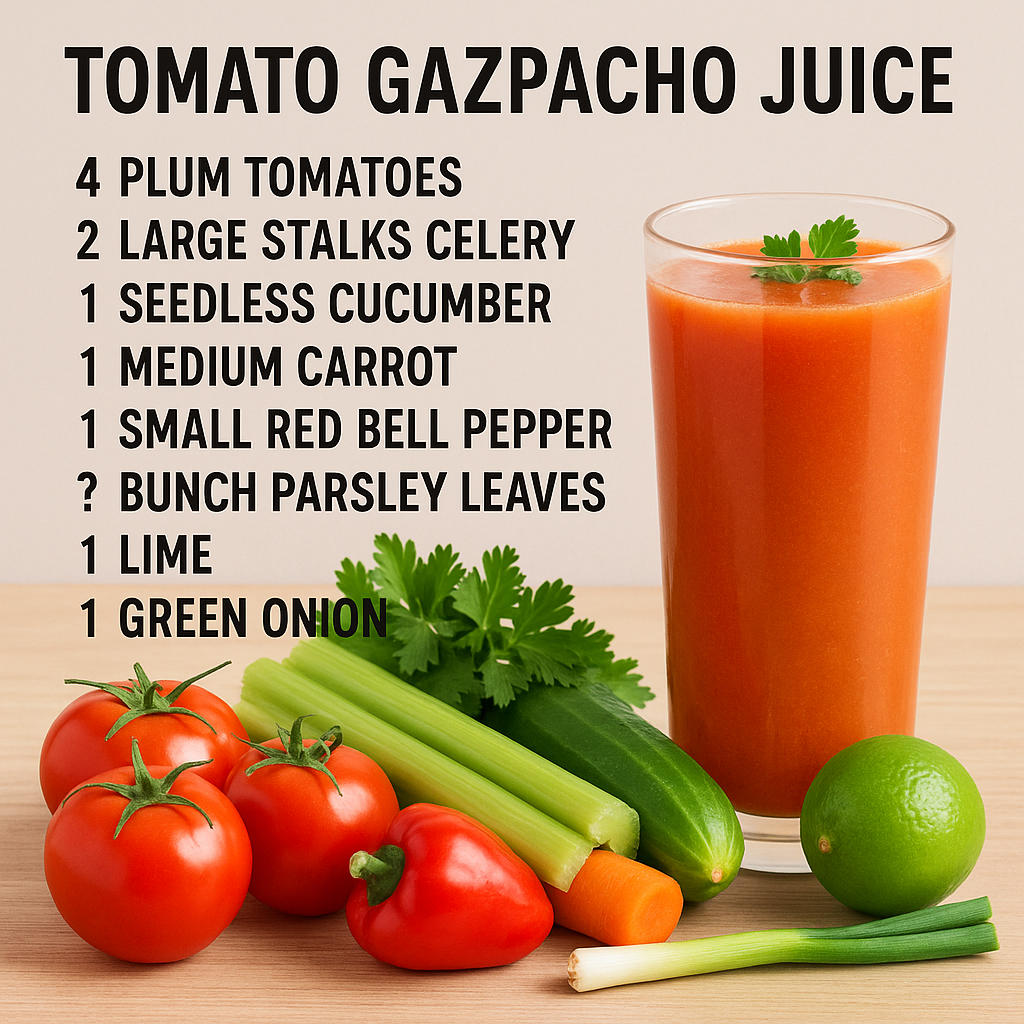
- 4 Plum Tomatoes (ripe and juicy)
- 2 Large Celery Stalks
- 1 Seedless English Cucumber
- 1 Medium Carrot
- 1 Small Red Bell Pepper
- ½ Bunch Fresh Parsley Leaves
- 1 Whole Lime (peeled)
- 1 Green Onion (scallion)
Step-by-Step Instructions
- Prep the Produce: Rinse all produce thoroughly under cold water. Peel the lime, remove the core and seeds from the red bell pepper, and trim the root of the green onion. Cut vegetables into sizes that fit your juicer’s feed chute easily.
- Set Up Your Station: Place a clean juice container under your juicer's spout and ensure the pulp ejection bin is positioned correctly.
-
Feed Strategy (The Layering Technique): To maximize juice yield and prevent clogging, feed ingredients through the chute in the following order:
- Start with soft, leafy herbs like parsley.
- Follow immediately with hard, dense produce like carrots and celery to push the herbs through.
- Add the red bell pepper, green onion, and lime.
- Finish with high-water ingredients like cucumber and plum tomatoes to flush the juicing chamber clean.
- Stir & Serve: Using a spoon, gently stir the freshly extracted juice to blend the aromatic essential oils from the green onion and lime with the rich tomato base. Pour over clean ice into chilled glasses and serve immediately.
Expert Culinary & Serving Tips
- Serving Pairing: Pair this drink with grilled sourdough brushed with extra virgin olive oil, a fresh Mediterranean salad, or grilled seafood.
- Serving Temperature: Gazpacho is best enjoyed ice-cold. Chill your vegetables in the refrigerator for 2 hours prior to juicing for maximum crispness.
- Flavor Adjustments: If you prefer a little kick, stir in a dash of hot sauce, a pinch of sea salt, or a splash of Worcestershire sauce just before serving.