What are beets? A quick nutritional breakdown
Beets are root vegetables high in folate, manganese, and potassium. They also contain dietary nitrates, which have been shown to improve blood flow, lower blood pressure, and enhance athletic performance. Whether you’re a runner chasing a personal record or a busy parent chasing energetic kids, beet juice offers both instant and sustained energy.
Pairing beets with apples, carrots, and cucumber — like in this recipe — blends sweetness, earthiness, and refreshing notes. The complex carbohydrates provide endurance, while simple sugars deliver an immediate lift.
Crafting “The Beets Go On” juice
To make this energizing drink:
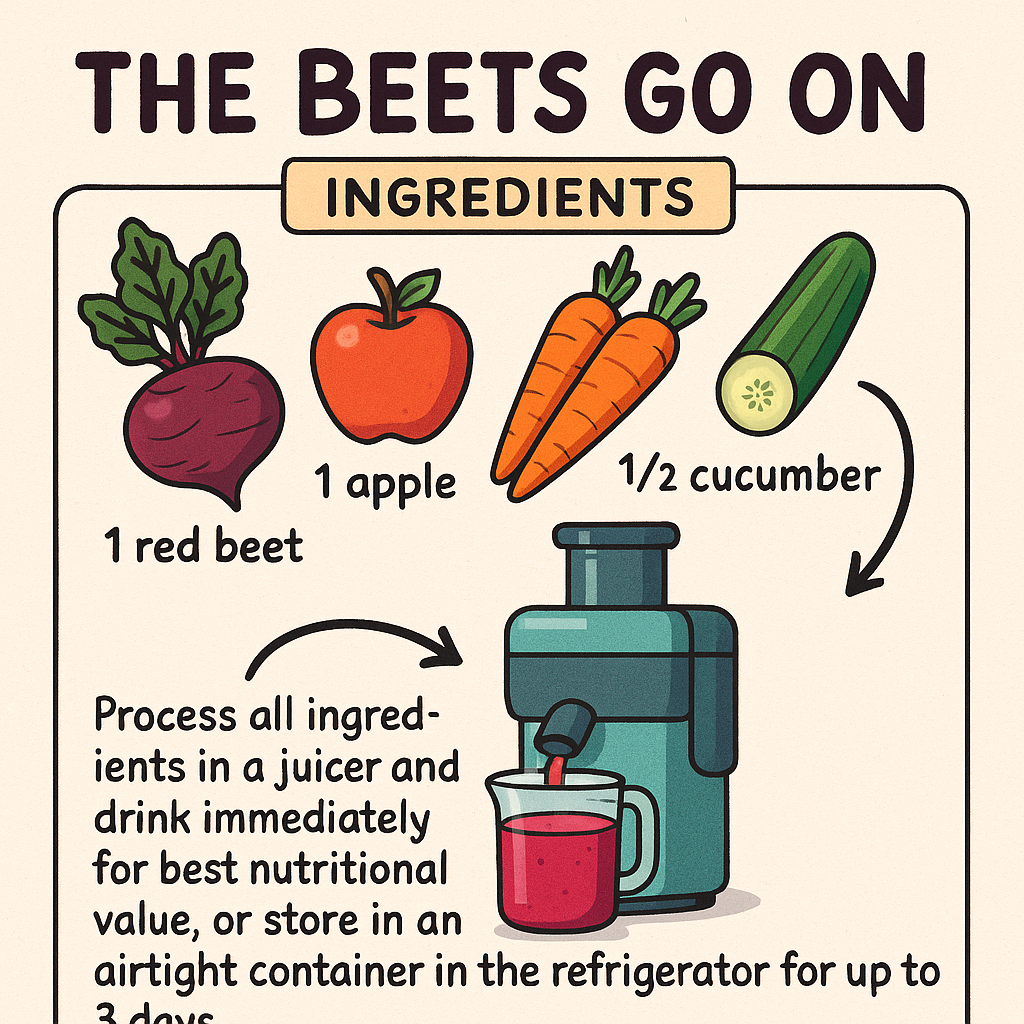
Ingredients:
- 1 red beet
- 1 apple
- 2 carrots
- ½ cucumber
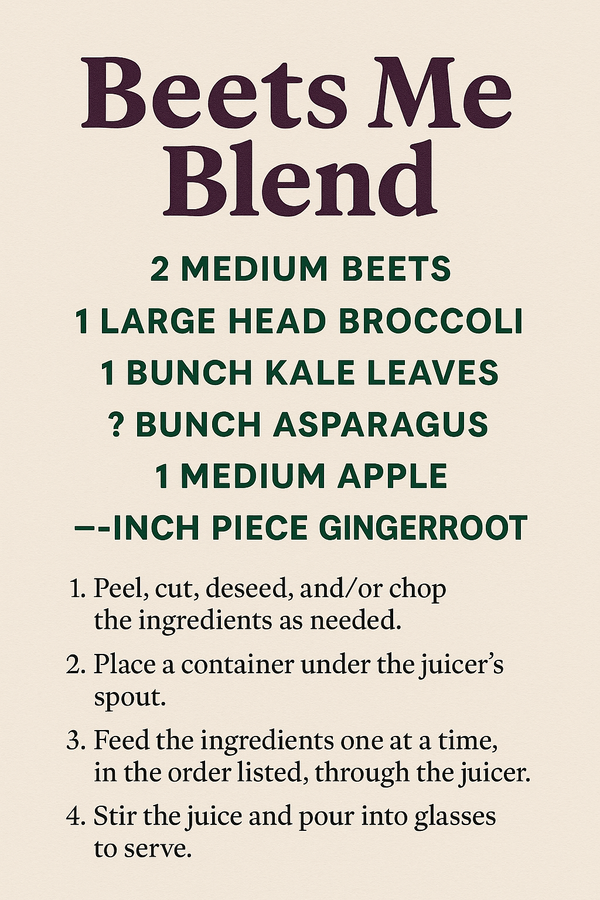
Wash and peel as needed. Process all ingredients in your juicer, and enjoy immediately for optimal nutrient retention.
For juicing, you can use a centrifugal juice machine for speed and convenience, especially if you’re making morning smoothies in a rush, or opt for a manual juicer for a slower, more meditative kitchen ritual. Both methods work — the difference comes down to lifestyle preference and how much control you want over pulp and texture.
Storage & serving tips
If you can’t drink the juice right away, store it in an airtight container in the refrigerator. It will keep up to three days, though the flavor and nutrition are best within the first few hours. For an extra zing, add a squeeze of lemon or some grated ginger.
Pro tip: Serve over ice in a clear glass to show off its stunning red color — perfect for impressing guests or adding a splash of brightness to your afternoon.
A short history of beets in cuisine
Beets have been cultivated for thousands of years, originally prized for their leaves in Ancient Greece. The roots became popular in the 19th century for their natural sweetness — in fact, sugar beets are a major source of refined sugar today. Modern wellness trends have brought them back in raw and juiced form, giving people an all-natural option for energy without the crash of coffee.
Lifestyle benefits
Replacing your afternoon coffee with beet juice can reduce dependence on caffeine, support better hydration, and keep your energy levels more steady. For fitness enthusiasts, drinking beet juice about an hour before training can help improve endurance thanks to its nitrate content.
Families can also benefit — introducing beet juice to children can be a fun way to boost vegetable intake, especially when paired with naturally sweet fruits.