What Are the Spicy Greens for Salad (and Juice)?
When people ask, "What are the spicy greens for salad?" they are often looking for ways to add depth to their meals. In this recipe, we utilize baby kale and fresh parsley. However, if you are wondering, "What salad green tastes peppery?" you might also consider adding arugula or watercress to this blend.
These peppery greens contain glucosinolates—compounds that not only provide that signature bite but also support the body's natural detoxification processes. Using a high-quality juicing method ensures these delicate compounds are preserved, giving you a vibrant, "alive" beverage that bottled juices simply cannot match.
A Powerful Choice for Blood Sugar Management
For those monitoring their glucose levels, the question often arises: "Which salad is best for diabetes?" The same logic applies to juicing. Traditional fruit juices can cause rapid spikes in blood sugar. However, a savory blend featuring cabbage, cucumber, and kale is remarkably low on the glycemic index.
White cabbage, a star ingredient in this recipe, is rich in Vitamin U and sulfur, which are excellent for gut health and inflammation. By focusing on these fibrous vegetables, you create a drink that provides sustained energy without the "sugar crash" associated with sweeter alternatives.
The Recipe: The Shardor Spicy Green Salad Juice
This recipe creates a bold, savory experience that awakens the senses.
Prep time: 5 minutes
Servings: 1-2
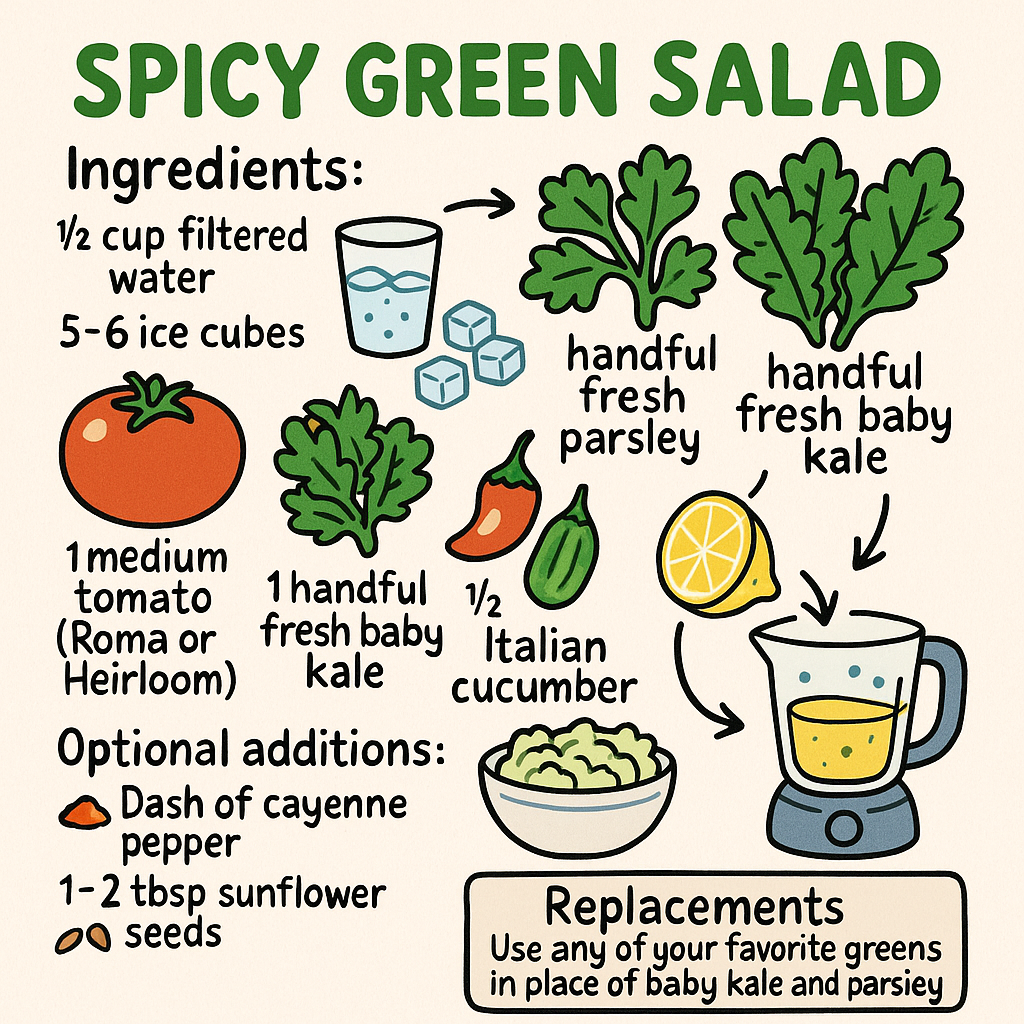
Ingredients:
- ¾ cup Filtered water (to adjust consistency)
- 5–6 Ice cubes (for a crisp, chilled finish)
- 1 medium Tomato (Roma or Heirloom for best flavor)
- 1 handful Fresh parsley
- 1 handful Fresh baby kale
- ¼ Habanero pepper (seeds removed for manageable heat)
- ½ Italian cucumber
- 1 cup Fresh white cabbage
- 1 Lemon (juiced)
Optional Additions:
- A dash of cayenne pepper (for extra metabolism boost)
- 1–2 tbsp sunflower seeds (blend in if using a high-powered extractor for added healthy fats)
Replacements:
- Feel free to use any of your favorite greens, such as spinach or Swiss chard, in place of baby kale and parsley.
Instructions:
- Prep your produce: Thoroughly wash all vegetables. Remove the seeds from the habanero—this is where the extreme heat lives, so handle with care!
- Process: Feed the cabbage, cucumber, tomato, kale, and parsley into your juicer.
- Combine: If using a centrifugal juicer, collect the extract and stir in the filtered water and fresh lemon juice.
- Chill and Serve: Pour over ice cubes. If you prefer a thicker, "gazpacho" style texture, you can use a high-speed blender instead of a juicer.
- Garnish: Sprinkle a few sunflower seeds on top for a delightful nutty finish.
Pro-Tips for the Best Savory Juice Experience
- Temperature Matters: Savory vegetable juices, especially those containing tomato and cabbage, taste significantly better when served ice-cold.
- The "Habanero" Factor: Capsaicin, the compound in peppers, is known to boost metabolism. If you are new to spicy juices, start with a smaller sliver of habanero and work your way up.
- Seasonal Swaps: In the summer, heirloom tomatoes add a sweetness that balances the kale. In the winter, focus on increasing the cabbage and ginger for immune support.
Juicing at home is a journey of discovery. By moving away from store-bought, pasteurized options and embracing the raw power of spicy greens, you are taking a definitive step toward a more vibrant, energized version of yourself.