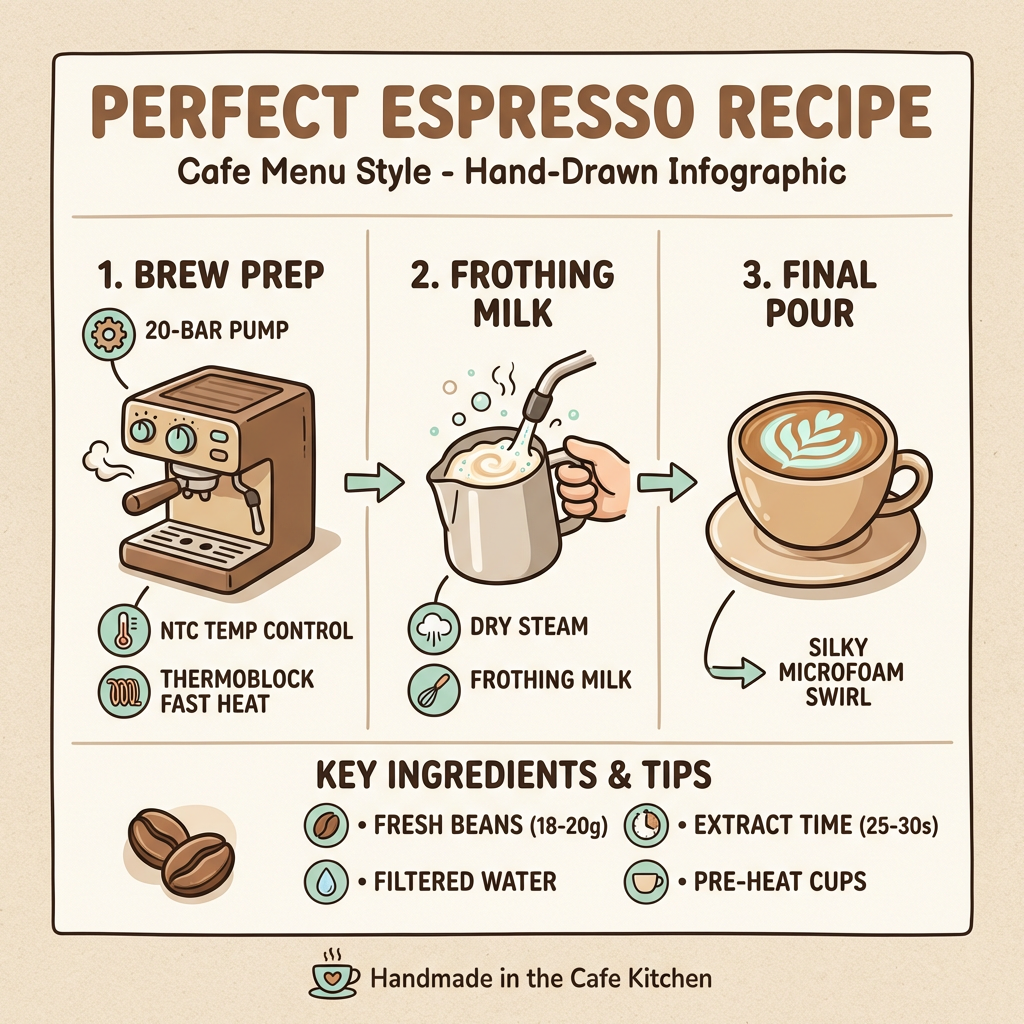
Small kitchens often force a choice between counter space and quality coffee. A small espresso machine does not have to be a compromise. Modern designs pack professional 20-bar pressure and fast heating into tiny frames. You can enjoy creamy, café-style lattes without owning a massive commercial unit. These compact devices prove that great milk foam is about smart engineering rather than physical size.
The Science of Professional Steam in a Small Espresso Machine
A high-quality compact espresso machine uses specific internal parts to turn water into powerful steam. To create micro-foam, which is the silky and smooth milk texture used for lattes, the machine must balance air and heat perfectly.
- 20-Bar Pressure Power: While many machines use 15 bars, premium small models now use 20-bar pumps. This extra power ensures that steam is pushed through the wand with enough force to create a deep vortex in the milk.
- Electronic Temperature Control: Top-tier compact units use NTC sensors. NTC stands for Negative Temperature Coefficient, which is a sensor that keeps the water temperature exact. This prevents the steam from becoming too hot and burning the milk.
- Rapid Thermoblock Heating: Most small units use a thermoblock. A thermoblock is a metal heating element that warms water instantly as it flows through a coil. This means you do not have to wait for a large tank to boil before you start frothing.
- Dry Steam Quality: These machines produce "dry" steam. Dry steam has very few water droplets in it, so it textures the milk without watering it down or making it thin.
While a big machine in a coffee shop is made to run all day, a well-built home version has plenty of power for your morning routine. The secret is how the machine manages its internal heat. By focusing the energy into a small area, these devices can steam milk just as effectively as the heavy models used by professional baristas.
Key Features of a High-Performing Compact Espresso Machine Frother
The right technology makes frothing much easier in a tight space. When looking for a machine that can handle milk drinks, you should pay attention to how it handles the steaming process.
Manual Steam Wands with Removable Sleeves
Modern small espresso machine designs focus on manual steam wands because they offer the most control. A manual steam wand is a stainless steel pipe that releases steam into your milk. Many compact units include a removable sleeve over the wand to help beginners. This sleeve automatically adds air to create thick foam quickly. If you want to learn latte art, you can remove the sleeve to use the professional tip underneath. This process requires stretching, which is the act of tilting the pitcher to pull air into the milk.
20-Bar Pressure and Fast Heating
The speed of your compact espresso machine is also a major factor. A high-quality espresso machine with frother often uses a 20-bar pump. A bar is a unit of pressure: 20 bars provide the strong force needed for a deep milk vortex. These machines usually have a thermoblock, which is a heating system that warms water instantly. Fast heating prevents your espresso shot from losing its crema. Crema is the golden-brown foam on top of the coffee that holds the flavor. digital touchscreens also allow you to switch between brewing and steaming with one tap.
The following table compares different steaming features to help you choose the right setup for your kitchen.
| Feature | Professional Wand with Sleeve | Automatic Milk Frother |
| Skill Level | Beginner to Moderate | Easy |
| Texture Control | High | Low |
| Latte Art Potential | Excellent | Limited |
| Cleaning | Wipe and Purge | Deep Clean Needed |
Deciding between these features depends on your morning routine. Both styles are now available in very small machine sizes to fit your lifestyle.
How to Choose the Best Small Espresso Machine for Milk Coffee
Choosing a powerful machine requires checking specific hardware. You want a unit that stays still but fits your kitchen perfectly.
Pump Pressure and Machine Stability
Look for a 20-bar pressure system. A bar is a unit used to measure force. High pressure ensures steam reaches the pitcher bottom to create a swirl. Your compact espresso machine should have a sturdy and stable base. A solid frame prevents the machine from moving when you lock the portafilter. The portafilter is the handle with a metal basket for coffee grounds.
Smart Touchscreens and Digital Controls
Many modern machines feature sleek touchscreens. These digital displays let you adjust temperature and the volume of your coffee with a single tap. This technology removes guesswork and ensures every cup is consistent. Digital controls also make it easier to switch from coffee brewing to milk steaming quickly.
Durable Wand Material and Movement
Stainless steel is the best material for the steam wand because it is durable and easy to clean. A pivoting wand allows you to find the perfect angle for your milk pitcher. This movement is necessary for creating the whirlpool effect that produces smooth foam.
Tips to Master Milk Frothing with a Compact Espresso Machine Setup
Mastering the art of frothing on a smaller scale requires a few adjustments to your technique. Because the steam power is focused, you have to be very precise with your movements to get the best results.
- Use a twelve-ounce pitcher. A small pitcher works best for a small espresso machine because it does not require as much steam to move the milk around.
- Start with very cold milk. Cold milk gives you more time to create texture before the liquid gets too hot.
- Keep the tip of the wand near the surface. You should hear a tiny "paper tearing" sound, which means you are adding the right amount of air.
- Stop adding air when the pitcher feels warm. Then, push the wand deeper to finish heating the milk while creating a whirlpool.
- Always purge the wand. Purging is the act of turning the steam on for a second without milk to clear out any leftover liquid inside the pipe.
Focusing on these small steps will help you overcome any lack of industrial power. Practice will help you find the specific timing of your machine.
FAQs about Small Espresso Machines
Q1. What Is the Smallest Espresso Machine With a Good Frother?
The smallest machines that still work well are usually five or six inches wide. These units use a thermoblock and a 20-bar pump to provide enough steam pressure without needing a giant water tank. Make sure to choose a model with a real stainless steel steam wand if you want the best milk texture.
Q2. Can Compact Espresso Machines Make Latte Art Quality Foam?
Yes, they can create beautiful foam if they have a manual steam wand and high pressure. You simply need to practice the stretching process to get the milk silky enough for designs. Using a smaller pitcher also helps these machines create the vortex needed for latte art.
Q3. How Wide Should a Small Espresso Machine Be for Tight Counters?
Most people look for machines between five and eight inches wide to save space. This size leaves enough room for a grinder or other kitchen tools on the side. You should also check the height of your cabinets to make sure you can reach the water tank comfortably.
Q4. Do Small Espresso Machine Frothers Heat Milk as Well as Full-Size Models?
Yes, they reach the same high temperatures as the big machines used in cafes. The powerful 20-bar heating systems in modern compact units are very efficient at maintaining heat throughout the entire process. Your milk will be just as hot and creamy as a café drink.
Elevate Your Coffee Game Today
Limited counter space is no longer a reason to drink boring coffee. By picking a high-quality espresso machine with frother, you can bring the luxury of a café into your own home. Focus on finding a machine with a 20-bar pump, stainless steel parts, and a sleek digital display to get the best results. Take the leap and transform your morning routine with professional milk foam in your own kitchen.