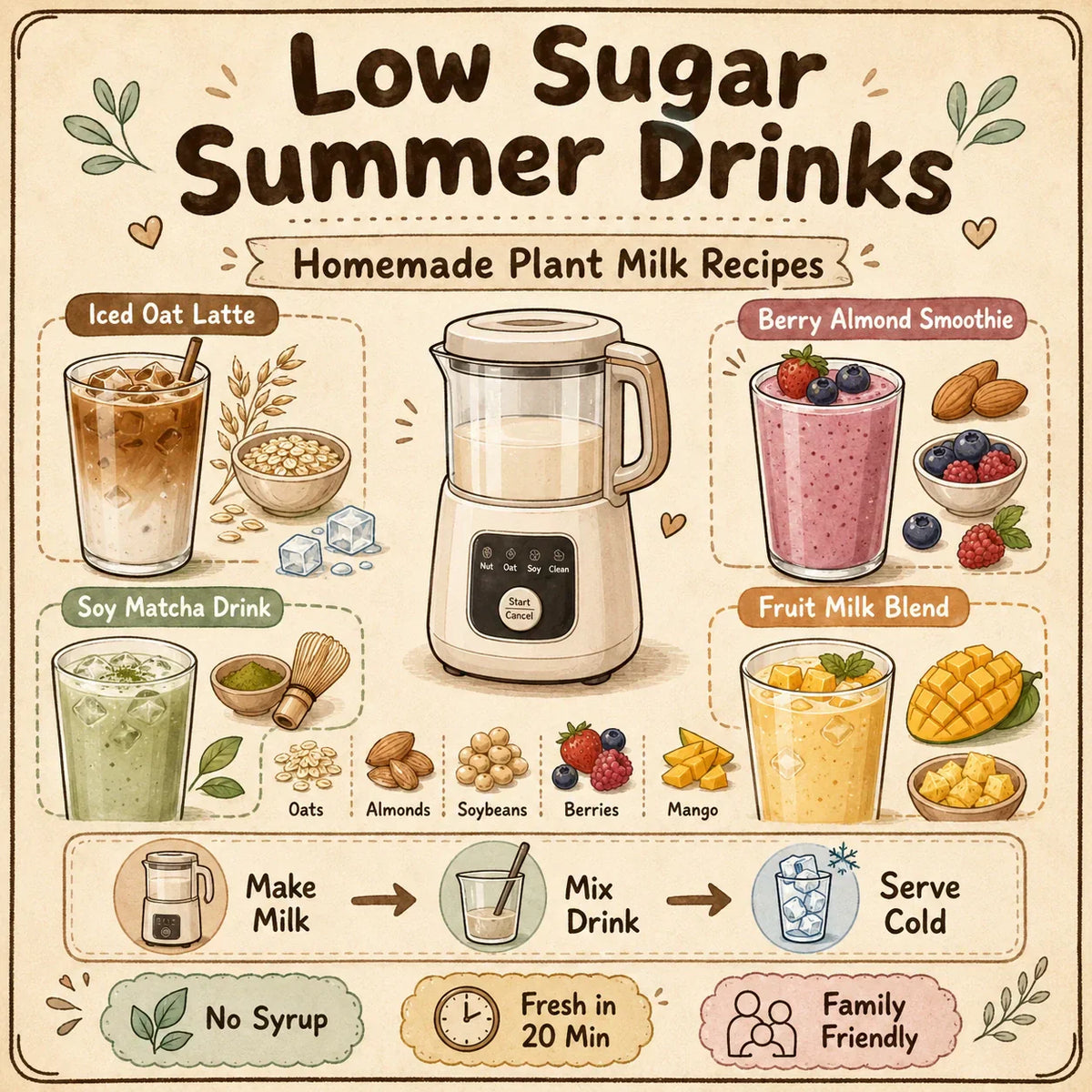
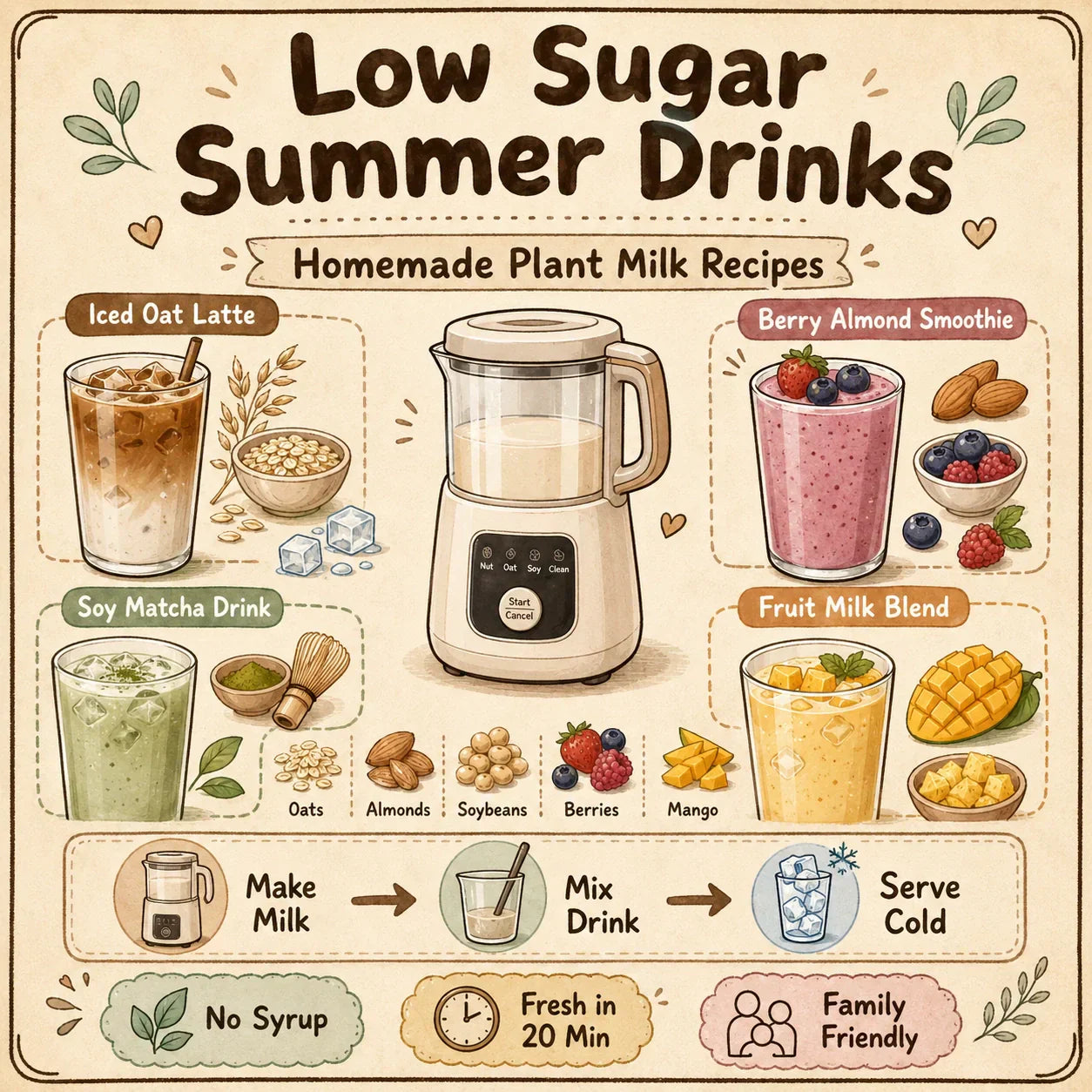
Store-bought flavored plant milks contain 12–20 g of added sugar per serving, making them a poor fit for families and fitness-focused individuals managing daily sugar intake. A home milk maker solves this by producing fresh, unsweetened plant milk from whole ingredients in under 20 minutes, with zero additives. This article covers four ready-to-make low sugar summer drink recipes using oat, almond, and soy milk as bases, designed for everyday household use.
What a Home Milk Maker Actually Produces and Why It Matters for Sugar Control
A home milk maker blends, heats, and strains raw ingredients into fresh plant milk in under 20 minutes, giving you direct control over every gram of sugar added. Understanding what each base contributes nutritionally explains why starting from scratch consistently outperforms carton alternatives for low sugar goals.
Oat Milk: Natural Sweetness Without Added Sugar
Oats contain beta-glucan fiber and release natural maltose during blending, producing a mildly sweet milk without any added sugar. Homemade oat milk made in a milk machine typically yields 3–5 g of naturally occurring sugar per cup, compared to 7–12 g in commercial sweetened versions. Using whole rolled oats with cold or room-temperature water limits enzymatic starch breakdown, keeping the natural sweetness moderate and controlled. This makes oat milk the most practical base for morning lattes where no syrup is needed.
Almond Milk: Low Calorie Base With Neutral Flavor
Almonds are roughly 2% sugar by weight, producing a finished milk with fewer than 2 g of sugar per cup when made unsweetened at home. The neutral flavor makes almond milk a versatile carrier for smoothies and fruit blends without overpowering other ingredients. The standard ratio is 1 cup of soaked almonds to 4 cups of water, yielding approximately 32 oz of finished milk per batch. Its low calorie density also suits readers managing overall energy intake alongside sugar.
Soy Milk: High Protein Option for Post-Workout Drinks
Homemade soy milk delivers 6–8 g of protein per cup, comparable to dairy milk, making it the strongest post-workout base among common plant milks. It contains roughly 1–2 g of natural sugar per cup when unsweetened. A milk maker using dried soybeans produces a richer, creamier result than store cartons, which typically add thickeners, stabilizers, and 6–10 g of sugar per serving. The higher protein content directly supports muscle recovery when used in a post-exercise matcha or shake.
Each plant milk base offers a distinct nutritional profile, but all three contain significantly less sugar when made fresh at home than their commercial counterparts. The choice of base shapes both the flavor and the function of the finished summer drink.
Four Low Sugar Summer Drinks and How to Build Them
These four drinks cover the most common warm-weather drinking occasions: morning coffee, post-workout recovery, afternoon refreshment, and family-friendly fruit blends. All four use homemade plant milk and minimal added sweetener, with a milk maker as the starting point and no commercial syrup or flavored powder required.
- Iced Oat Latte: Brew 1–2 shots of espresso or 120 ml of strong drip coffee, let cool for 5 minutes, then pour over a glass filled with ice and 180 ml of freshly made unsweetened oat milk; the milk’s natural sweetness eliminates the need for syrup, keeping total sugar under 5 g. Use an electric milk frother to aerate the oat milk for 20 seconds before pouring if you prefer a light foam layer on top.
- Almond Milk Smoothie: Blend 200 ml of homemade almond milk with 80 g of frozen berries, half a banana, and 1 tablespoon of chia seeds for 45 seconds; this produces a 300 ml serving with roughly 14 g of total sugar, nearly all from whole fruit, and zero added sugar.
- Soy Milk Matcha-Style Drink: Whisk 1 teaspoon (2 g) of ceremonial-grade matcha powder with 30 ml of hot water until smooth, then stir in 200 ml of warm homemade soy milk; serve over ice for a chilled version or drink warm; total added sugar is zero, and natural sugars stay below 3 g per serving.
- Fruit Milk Blend: Combine 150 ml of homemade almond or oat milk with 100 g of diced mango or watermelon and blend for 30 seconds; this yields a lightly sweet, dairy-free drink under 10 g of total sugar per serving, suitable as an afternoon snack for children or adults avoiding refined sugar.
All four drinks rely on the natural sugar in whole ingredients rather than added sweeteners, keeping each serving between 0 and 14 g of total sugar. Producing fresh plant milk with a milk maker at home is the single step that makes this level of ingredient control practical on a daily basis.
Customizing Sweetness and Texture to Match Your Family’s Preferences
Homemade plant milk is a flexible base, not a fixed formula. These practical adjustments let you fine-tune sugar level, thickness, and flavor without introducing refined sugar or artificial ingredients.
- Soaking nuts or oats for 8–12 hours before blending increases creaminess and softens fiber, producing a smoother milk that requires less sweetener to taste full-bodied.
- Adding one pitted Medjool date per liter of milk during blending raises sweetness by approximately 4–5 g of natural sugar while contributing potassium and fiber absent from refined sugar.
- Blending in half a teaspoon of vanilla extract per batch adds perceived sweetness without any sugar increase, a useful technique for children’s fruit milk blends.
- Adjusting the nut-to-water ratio from 1:4 to 1:3 increases fat content and richness, making the milk suitable for creamier matcha-style drinks without adding thickeners.
- Chilling freshly made milk for at least 2 hours before use improves texture in iced drinks by reducing the watery separation that occurs when warm milk hits ice directly.
- Straining twice through a fine mesh bag removes residual pulp, producing a cleaner mouthfeel in lattes and smoothies without any additional ingredients.
Small adjustments to soaking time, ingredient ratios, and natural flavor additions give families precise control over sweetness and texture. None of these modifications require added sugar, preservatives, or commercial flavor syrups.
Comparing Plant Milk Bases for Summer Drinks: A Practical Decision Guide
Choosing the right plant milk base affects both the nutritional outcome and the drinking experience. This table compares oat, almond, and soy milk across the dimensions most relevant to low sugar summer drink making, helping you match the base to the recipe and the occasion. A home milk maker produces all three from whole ingredients with no additives.
| Plant Milk Base | Natural Sugar per Cup (Unsweetened, Homemade) | Protein per Cup | Best Drink Application | Flavor Profile |
| Oat Milk | 3–5 g | 2–3 g | Iced latte, fruit blend | Mildly sweet, slightly starchy |
| Almond Milk | 1–2 g | 1–2 g | Smoothie, fruit milk blend | Neutral, lightly nutty |
| Soy Milk | 1–2 g | 6–8 g | Matcha drink, post-workout shake | Rich, creamy, full-bodied |
Oat milk suits flavor-forward drinks where mild natural sweetness is an asset; almond milk works best as a neutral carrier for fruit and spice; soy milk’s protein content makes it the functional choice for recovery drinks. Producing each base fresh with a milk maker ensures the sugar figures in this table reflect actual intake, not commercial formulations with additives.

Start Simple, Stay Consistent
Homemade plant milk cuts added sugar to zero at the base level before any other ingredient is added. Four core recipes - iced oat latte, almond smoothie, soy matcha drink, and fruit milk blend - cover every main summer drinking occasion without commercial syrup or flavored powder. Small ratio and timing adjustments deliver custom texture and sweetness without refined sugar. Choose one recipe from this article, make a batch of plant milk at home this week, and observe which base best fits your household’s taste.
FAQs
Q1. How Do You Make Plant-Based Milk With a Milk Maker at Home?
Soak your chosen ingredient - oats, almonds, or soybeans - for 4–12 hours, rinse, then add to the milk maker with water at the recommended ratio, typically 1:4. Run the blending and heating cycle, then strain. Total active time is under 5 minutes; the machine handles the rest in 15–20 minutes.
Q2. What Is a Coffee Milk Frother and Do You Need One for These Recipes?
A coffee milk frother is a handheld or countertop device that aerates milk by spinning a coil at high speed, creating foam in 20–60 seconds. It is optional for the iced oat latte recipe: it improves texture but does not affect sugar content. It is optional for the iced oat latte recipe and improves texture without affecting sugar content.
Q3. Can You Use a Milk Maker to Make Milk for Hot Drinks as Well as Cold?
Yes. Most milk makers include a heating function that warms milk to 140–160°F during the cycle, making the output ready for hot matcha or warm soy drinks immediately after the cycle ends. For iced drinks, refrigerate the finished milk for 2 hours before use or pour it directly over ice.
Q4. Why Do Frothers for Coffee Work Differently on Oat Milk Than on Dairy Milk?
Oat milk froths less stably than dairy because it contains lower fat and no casein protein, which normally traps air bubbles. Homemade oat milk made at a higher oat-to-water ratio (1:3 instead of 1:4) froths more consistently. Chilling the milk before using frothers for coffee also improves foam stability by slowing bubble collapse.
Q5. How Long Does Homemade Plant-Based Milk Stay Fresh?
Homemade plant milk lasts 3–5 days refrigerated in a sealed glass jar. It contains no preservatives or stabilizers, so separation is normal; shake before each use. Discard the milk if it smells sour or develops visible texture changes before day 5.