Good foam is what separates a decent cup of coffee from a genuinely great one. Whether you're making a latte on a Monday morning or trying to nail latte art on the weekend, the tool you use to froth milk matters more than most people realize. An electric milk frother and a hand frother each take a very different approach to the same goal. Here's what you need to know before picking one.
Quick Comparison
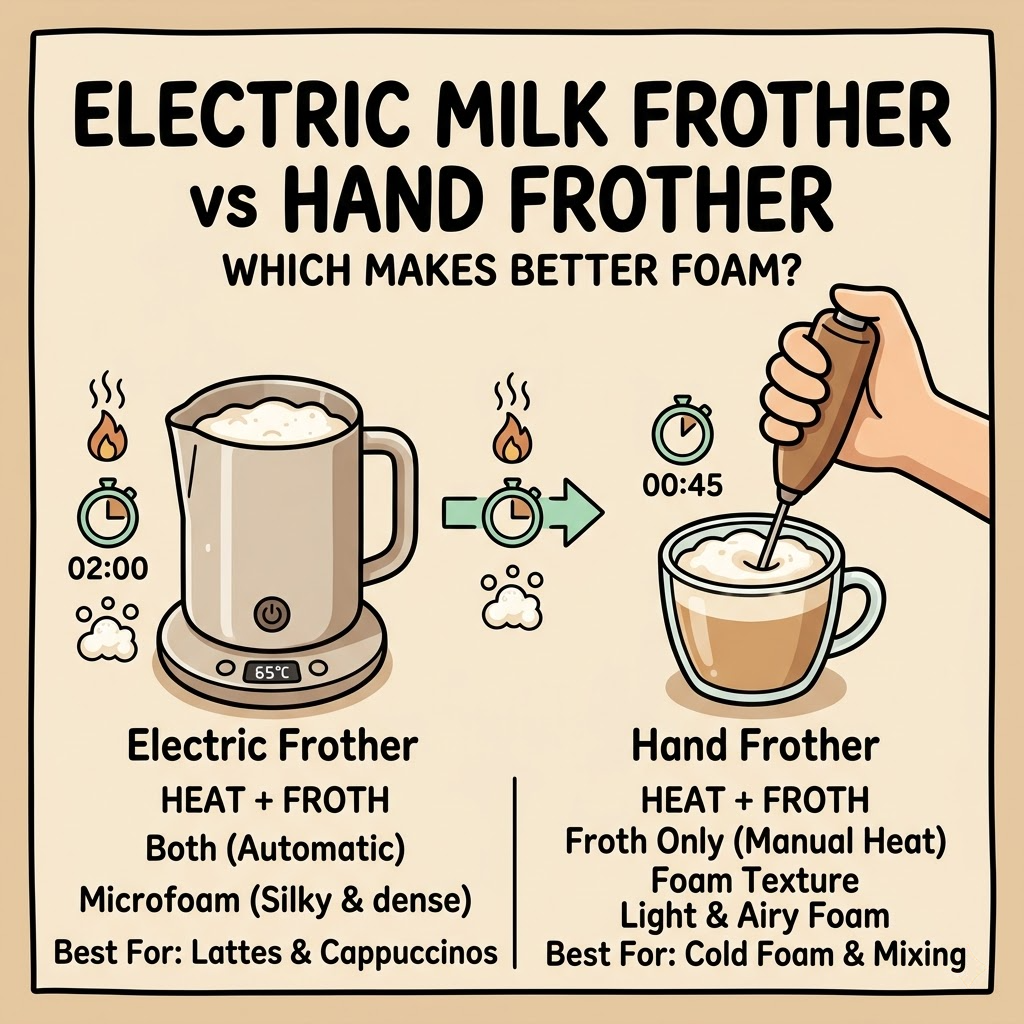
| Feature | Electric Milk Frother | Hand Frother |
| Heats milk | Yes, built-in | No, requires separate heating |
| Foam quality | Fine, stable micro-foam | Coarser, less stable foam |
| Temperature control | Precise, adjustable (130°F to 160°F) | None |
| Foam types available | Hot thick, hot thin, hot milk, cold thin | Basic foam only |
| Hands-free operation | Yes | No, requires manual holding |
| Portability | Countertop appliance | Compact, travel-friendly |
| Ease of cleaning | Non-stick interior, quick rinse | Rinses clean in seconds |
| Best for | Daily use, latte art, varied drinks | Casual use, occasional foam |
What Is an Electric Milk Frother and How Does It Work?
An electric milk frother is a countertop appliance that heats and froths milk automatically. You pour milk in, select your setting, and the machine handles everything else. Most models come with a pitcher-style design, a heating base, and interchangeable whisks for different foam types.
Hands-Free Operation and Built-In Temperature Control
One of the biggest advantages of an electric milk frother is that it removes the guesswork entirely. A quality electric frother lets you dial in an exact temperature and keep it there. Most coffee drinks taste best when milk is heated somewhere between 130°F and 160°F. Having a real-time temperature display means you always know exactly where you are in that range.
Hands-free operation also means you can be doing something else while your milk is being prepared. Start it, walk away, come back to perfectly frothed milk.
How an Electric Milk Frother Creates "Wet Paint" Foam
"Wet paint" texture is a term baristas use to describe micro-foam, which refers to fine, glossy, velvety foam that pours smoothly and holds its shape in a cup. An electric milk frother produces it consistently by controlling both whisk speed and temperature at the same time.
A 4-in-1 electric frother offers four modes to match different drinks:
- Hot thick foam for cappuccinos and macchiatos
- Hot thin foam for lattes
- Hot milk for flat whites and hot chocolate
- Cold thin foam for iced coffee drinks
When a Hand Frother Gets the Job Done
A hand frother is a small, battery-powered tool with a spinning whisk at the tip. You submerge it in a cup of warm milk and hold it there for about 20 to 30 seconds while it spins, introducing air into the milk to create foam. No settings to adjust, no machine to set up.
The appeal is mostly in the simplicity. A hand frother is compact enough to toss in a bag, takes up almost no drawer space, and rinses clean in seconds. For someone who only makes one or two coffees a day and isn't too focused on foam quality, it covers the basics without any fuss.
There are a few practical limitations worth knowing. A hand frother does not heat milk on its own, so you need to warm the milk separately before frothing. The foam it produces also tends to be coarser and less stable compared to what an electric frother delivers. It works well for a casual morning cup, but for drinks that call for a specific foam texture, like a proper cappuccino or a latte with pourable micro-foam, it has its limits.
Is an Automatic Milk Frother Worth the Upgrade?
An automatic milk frother refers to a frother that handles the entire process, heating and frothing, in a single one-touch operation. In practical terms, this is what most electric milk frothers are. The word "automatic" just emphasizes that there's no separate heating step and no manual input required once you've pressed start.
The upgrade question really comes down to what kind of coffee drinker you are.
One-Touch Heating and Frothing in a Single Step
The core benefit of an automatic milk frother is that it collapses two steps into one. You don't heat the milk first and then froth it. You pour cold milk in, press a button, and both things happen together in the same vessel.
This matters because milk proteins behave differently depending on when and how heat is applied. When heating and frothing happen simultaneously, the foam structure develops more evenly, which is part of why automatic electric frothers produce smoother, more stable foam than manually heated and then frothed milk.
It also matters for non-frothing functions. An automatic frother can heat milk to a precise target temperature for drinks like hot chocolate or warm oat milk without producing any foam at all. That kind of control isn't something a hand frother can replicate.
Which Drinks Benefit Most from an Automatic Milk Frother
The following table shows how foam type matches up with common coffee drinks. Different drinks call for different milk textures, and an automatic milk frother gives you the flexibility to make all of them.
Matching the right foam to the right drink is what separates a well-made coffee from one that just has milk in it.
| Drink | Foam Type Needed | Best Tool |
| Cappuccino | Hot thick foam (dense, airy) | Electric / automatic frother |
| Latte | Hot thin foam (silky, pourable) | Electric / automatic frother |
| Macchiato | Small amount of thick foam | Electric / automatic frother |
| Flat white | Steamed hot milk, minimal foam | Electric / automatic frother |
| Iced latte | Cold thin foam | Electric / automatic frother |
| Basic coffee with foam | Any foam | Hand frother (sufficient) |
As you can see, drinks that require a specific foam texture are consistently better served by an automatic electric frother. A hand frother works well for casual drinks where the exact texture isn't critical.
Electric Milk Frother vs Hand Frother: Which Should You Choose?

Both tools can make foam. The question is how much that foam matters to you and how often you'll be making it.
A hand frother is a solid choice if you make coffee occasionally, travel a lot, or just want to add a little foam to a morning cup without much setup. It's simple, portable, and easy to clean.
An electric milk frother is the better choice for anyone who makes coffee daily, cares about foam quality, or wants the flexibility to make different types of drinks at home. The ability to control temperature precisely, froth and heat in one step, and switch between foam textures makes it significantly more versatile.
For specific drinks:
- Cappuccino and macchiato require thick, dense foam that holds its shape. An electric frother handles this consistently.
- Latte needs thin, velvety micro-foam that integrates with espresso. Difficult to achieve without a temperature-controlled electric frother.
- Iced coffee drinks need cold foam, which an electric frother with a dedicated cold foam setting handles more reliably.
If you're serious about your home coffee setup, an automatic milk frother that combines precise temperature control with multiple foam modes is the practical long-term choice.
Better Foam Starts With the Right Tool
Making café-quality drinks at home starts with the right equipment. An electric milk frother with temperature control and multiple frothing modes gives you the consistency and flexibility that a hand frother simply can't match for everyday use. Whether you're pulling shots for a latte or steaming milk for a cozy evening drink, having the right frother in your kitchen makes every cup noticeably better. Explore your options and find the frother that fits your coffee routine.
FAQs about Electric Frothers and Milk Options
Q1. Can I Use an Electric Frother for Matcha?
Yes, an electric milk frother works well for matcha drinks. You can use the hot milk or hot thin foam setting to heat and froth milk separately, then combine it with your matcha. Some people also use the frother to whisk matcha powder directly with a small amount of water first to break up any clumps before adding milk.
Q2. What Is the Healthiest Milk to Froth?
Oat milk and soy milk are popular choices for those looking for a nutritious, plant-based option that also froths well. Whole dairy milk is high in protein and fat, which helps create stable, creamy foam. If you're watching calories, low-fat dairy milk still froths reasonably well while being lighter. The best choice depends on your dietary preferences and the drink you're making.
Q3. Is an Electric Milk Frother Worth It?
For anyone who makes coffee at home regularly, an electric milk frother is a worthwhile addition to the kitchen. It gives you precise temperature control, multiple foam types, and consistent results every time without the extra steps a hand frother requires. If café-style drinks like lattes, cappuccinos, and iced coffees are part of your daily routine, the convenience alone makes it a practical investment.