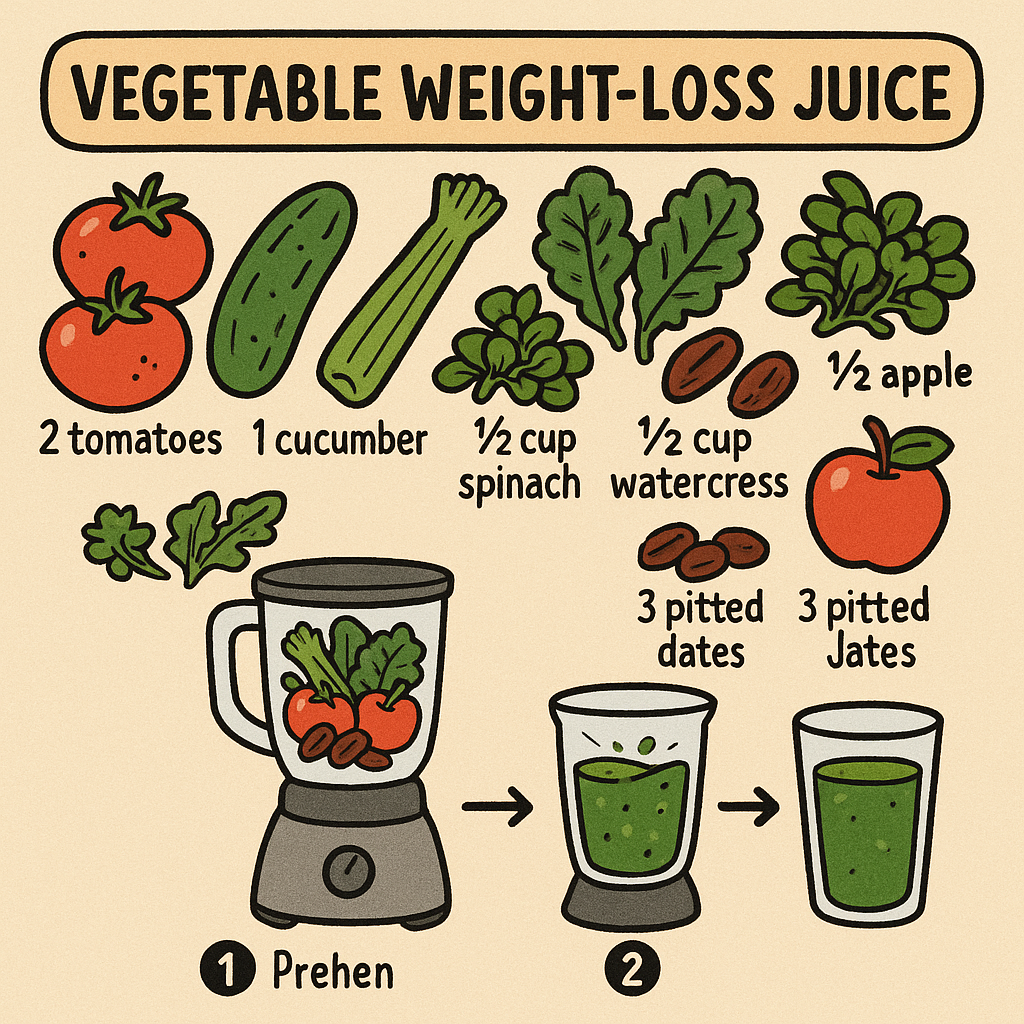

Why Vegetable Juicing Matters
Vegetable juices turn whole produce into a glass of concentrated nutrients. Tomatoes, cucumber, celery, spinach, kale, and watercress are excellent sources of vitamins A, C, and K, as well as minerals like potassium and magnesium. Together, they help balance hydration, support digestion, and may assist in reducing bloating—making this drink one of the most effective options when you’re wondering, “Which juice will burn belly fat?”
Juicing also allows your body to absorb nutrients faster, and when done right, it can complement weight-loss goals without creating calorie overload.
A Closer Look at the Ingredients
Each component in this juice serves a purpose:
- Tomatoes provide antioxidants such as lycopene for cellular health.
- Cucumber helps detoxify and hydrate.
- Celery contributes natural electrolytes, aiding metabolism and fluid balance.
- Spinach, kale, and watercress add a powerful boost of fiber and chlorophyll that may enhance satiety and detoxification.
- Apple introduces natural sweetness and vitamin-rich energy.
- Optional dates can balance acidity with subtle natural sugars.
By processing these ingredients with your juicer—whether a centrifugal juicer for speed or a manual juicer for nutrient retention—you can achieve a drink that tastes fresh and energizing.
Juicing and Health Considerations
For those wondering, “Can a diabetic do a juice cleanse?”, moderation and ingredient balance are key. Low-sugar vegetables are generally suitable for diabetic-friendly blends. Opt for cucumber, celery, and greens as your base and avoid excess high-fructose fruits. Always consult a healthcare provider before starting a juice cleanse if you have special dietary needs.
Tips for Storage and Enjoyment
For maximum nutritional value, drink your juice immediately after making it. However, if you need to store it, use an airtight container and refrigerate it for up to three days. Pair this juice with light meals or enjoy it post-workout for a refreshing recovery boost.
A Brief History of Vegetable Juicing
Vegetable juicing has roots dating back to early wellness movements in Europe during the 1930s. Pioneers in natural diets believed fresh juice could help cleanse the body and strengthen immunity. Today, the same principles guide modern “clean eating” habits—especially among health-conscious home users who want to make professional-quality juice in their own kitchen.