The Nutritional Synergy of Root Juicing
Juicing root vegetables is one of the most efficient ways to flood your body with micronutrients. Because raw roots are fibrous and dense, drinking their extracted liquid allows your digestive system to absorb their nutrients almost instantly, bypassing the energy-heavy digestion process.
- Sweet Potatoes: Raw sweet potatoes are exceptionally rich in beta-carotene (which the body converts to Vitamin A), Vitamin C, and potassium. Unlike processed energy drinks, the natural sugars in sweet potatoes release slowly, providing sustained energy without the sugar crash.
- Beets: Renowned among athletes, beets are packed with natural nitrates. The body converts these nitrates into nitric oxide, which helps dilate blood vessels, improving oxygen flow and physical stamina.
- Red Bell Peppers: Pound for pound, red bell peppers contain more Vitamin C than citrus fruits. They add a bright, slightly sweet complexity to the earthy base of the root vegetables.
- Apples and Carrots: These act as natural binders, balancing the earthy tones of the beets and sweet potatoes with malic acid and natural sweetness.
Why the Right Juicer Matters for Root Crops
If you have ever tried juicing hard root vegetables like carrots, beets, and sweet potatoes, you know it requires a robust machine. Denser vegetables can easily overwhelm low-quality juicers, resulting in wet, wasted pulp and a strained motor.
To achieve a professional-grade consistency at home, using a high-torque machine like a Shardor juicer is essential. A powerful motor ensures that the maximum amount of micronutrient-rich liquid is extracted from these tough fibers, leaving you with dry pulp and a smooth, foam-free beverage.
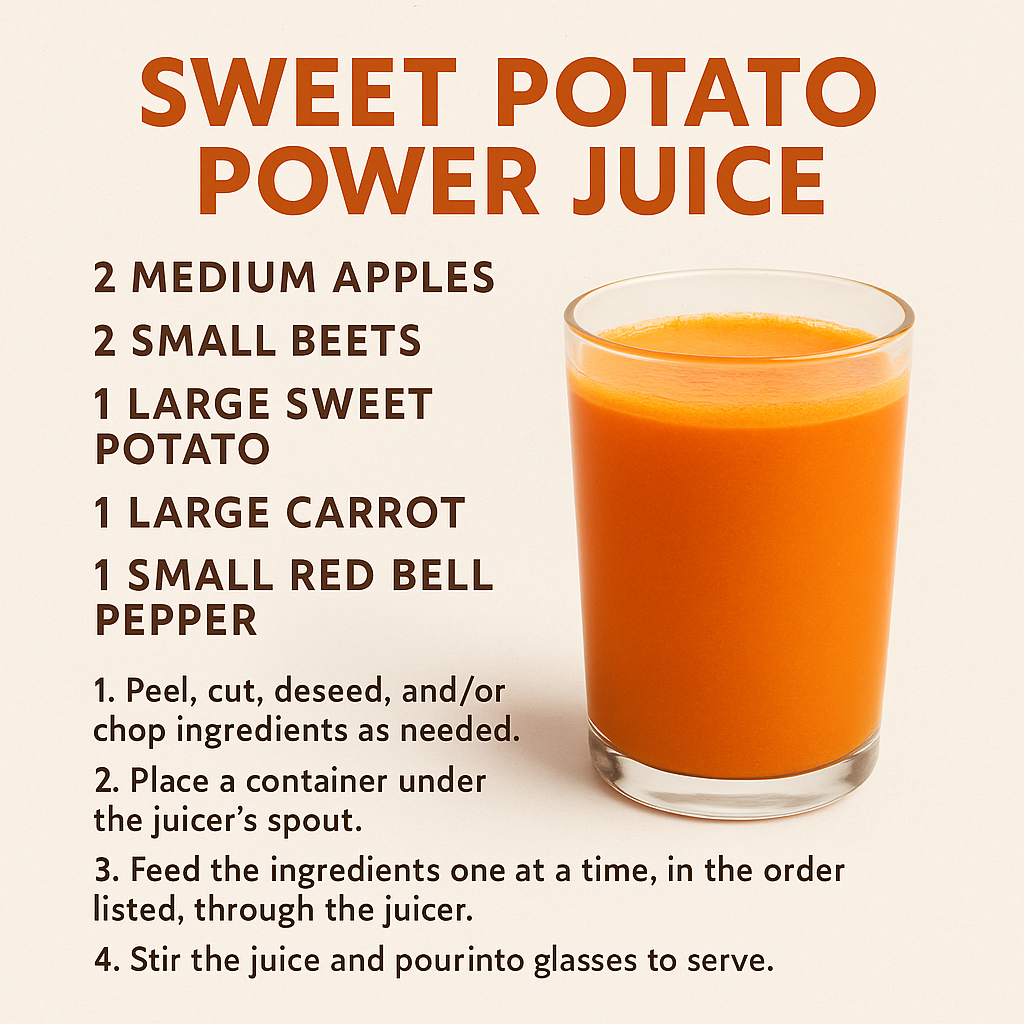
Recipe: The Sweet Potato Power Juice
Prep time: 10 minutes | Yield: 2 servings
Ingredients:
- 1 Large Sweet Potato (scrubbed, unpeeled if organic)
- 2 Small Beets (ends trimmed, washed thoroughly)
- 2 Medium Apples (cored)
- 1 Large Carrot (washed)
- 1 Small Red Bell Pepper (seeded and stemmed)
Step-by-Step Instructions:
- Prep the Produce: Peel, cut, deseed, and chop the ingredients as needed to fit your juicer’s chute. Tip: Leaving the skins on organic carrots and sweet potatoes preserves extra trace minerals.
- Set Up: Place a clean container under the juicer’s spout.
- Feed the Juicer: Feed the ingredients one at a time, in the order listed, through your Shardor juicer. Alternating between the harder roots (sweet potato, beet) and juicier ingredients (apple, bell pepper) helps push all the pulp through efficiently.
- Stir and Serve: Stir the juice gently to combine the layers of nutrients, pour into glasses over ice if preferred, and serve immediately.
Professional Tips for the Ultimate Pour
To elevate your homemade vegetable juice from a standard kitchen experiment to a spa-quality beverage, consider these tips:
- The Fat-Soluble Vitamin Secret: The beta-carotene in sweet potatoes and carrots is fat-soluble. To maximize absorption, enjoy your juice alongside a healthy fat, such as a small handful of walnuts or a slice of avocado toast.
- Optimize the Order: Always juice your leafy or dense ingredients first, and finish with water-rich fruits like apples. This acts as a natural flush, ensuring no valuable nutrients are left behind in the juicing screen.
- Storage: Fresh juice is best consumed immediately when enzyme levels are at their peak. However, if you must store it, keep it in an airtight glass mason jar in the refrigerator for up to 24 hours. A squeeze of fresh lemon juice can help preserve the bright color and prevent oxidation.