
Health Benefits Beyond the Flavor
Cantaloupe contributes water, sweetness, and a soft melon flavor. Its texture and flavor pair well with mango, especially when the fruit is fully ripe.
Mango adds body, beta-carotene, and tropical sweetness. Together, mango and cantaloupe create a smooth base that works well as a chilled juice or blended drink.
How to Make Mango‑Cantaloupe Juice at Home
Ingredients
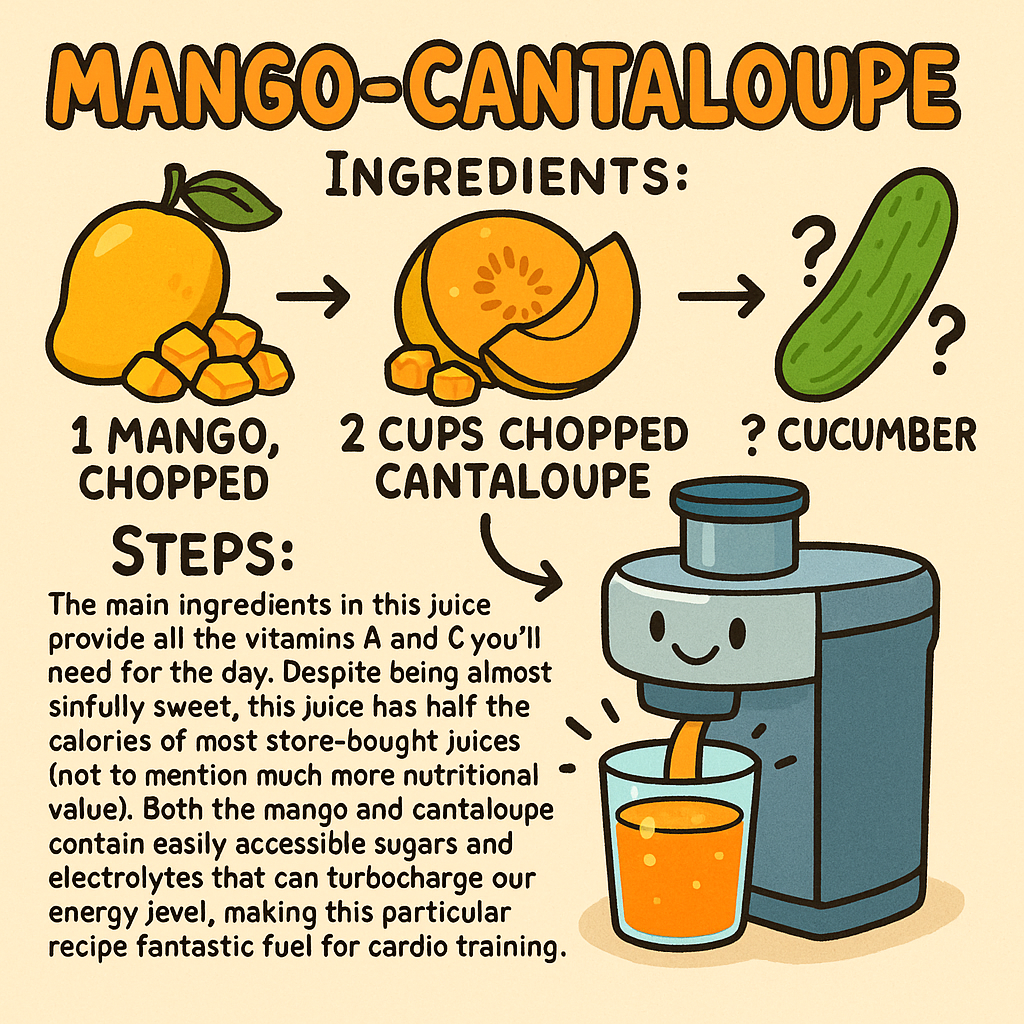
- 1 ripe mango, chopped
- 2 cups chopped cantaloupe
- ½ cucumber
Steps
- Wash and peel the fruits. Cut them into chunks small enough for your juicer chute.
- Process them using your centrifugal juicer for a quick extraction, or use a manual juicer if you prefer a slower, hands‑on approach that retains more pulp and fiber.
- Serve immediately over ice for the highest vitamin content, or store it in an airtight container in the refrigerator for up to three days.
Pro Tip: If you like a touch of zest, add a few mint leaves or a squeeze of lime to enhance freshness.
Why Juicing Matters for Home Wellness
Freshly made juice offers more than just flavor—it’s part of a mindful lifestyle. Compared to store‑bought products, homemade juice allows you to control sugar levels and avoid preservatives. Juicing at home can become a daily ritual that encourages mindful eating and hydration. For families, it’s also a fun way to introduce kids to natural fruits and vegetables.
If you’re new to juicing, start with a centrifugal juice machine, which works perfectly for soft fruits like mangoes and melons. Over time, you can explore other recipes like green vegetable juice or citrus blends to keep things interesting.
A Short History of Cantaloupe and Mango Pairings
Both fruits have ancient roots in tropical and Mediterranean diets. Cantaloupe was cherished in the gardens of historic Cantalupo, Italy—hence the name—while mango has been cultivated in South Asia for more than 4,000 years. Bringing them together reflects the modern fusion of global flavors: bright, fresh, and powerfully nutritious.