The Power of Plant-Based Nutrition
Juicing is more than a trend; it is an efficient way to flood your system with bioavailable phytonutrients. Unlike processed alternatives, a homemade green juice retains the vibrant enzymes and vitamins found in raw produce. By combining leafy greens with crunchy vegetables, you create a complex flavor profile that is both hydrating and alkalizing.
The Ingredients: Why They Work Together
Each ingredient in the Green Goodness recipe serves a specific purpose:
- Carrots: Provide a subtle sweetness and a hefty dose of beta-carotene.
- Cabbage: Often overlooked, cabbage is rich in Vitamin C and K, adding a mild, earthy depth.
- Cucumber: Your primary hydration source, keeping the juice light and refreshing.
- Green Bell Pepper: Adds a crisp, tangy brightness that cuts through the earthiness of the greens.
- Kale: The king of greens, packed with antioxidants and fiber.
- Cilantro: A natural detoxifier that adds a fresh, aromatic finish.
Crafting the Perfect Green Goodness Juice
To achieve that professional-grade texture, preparation is key. Here is how to create this nutrient-packed blend at home.
Ingredients:
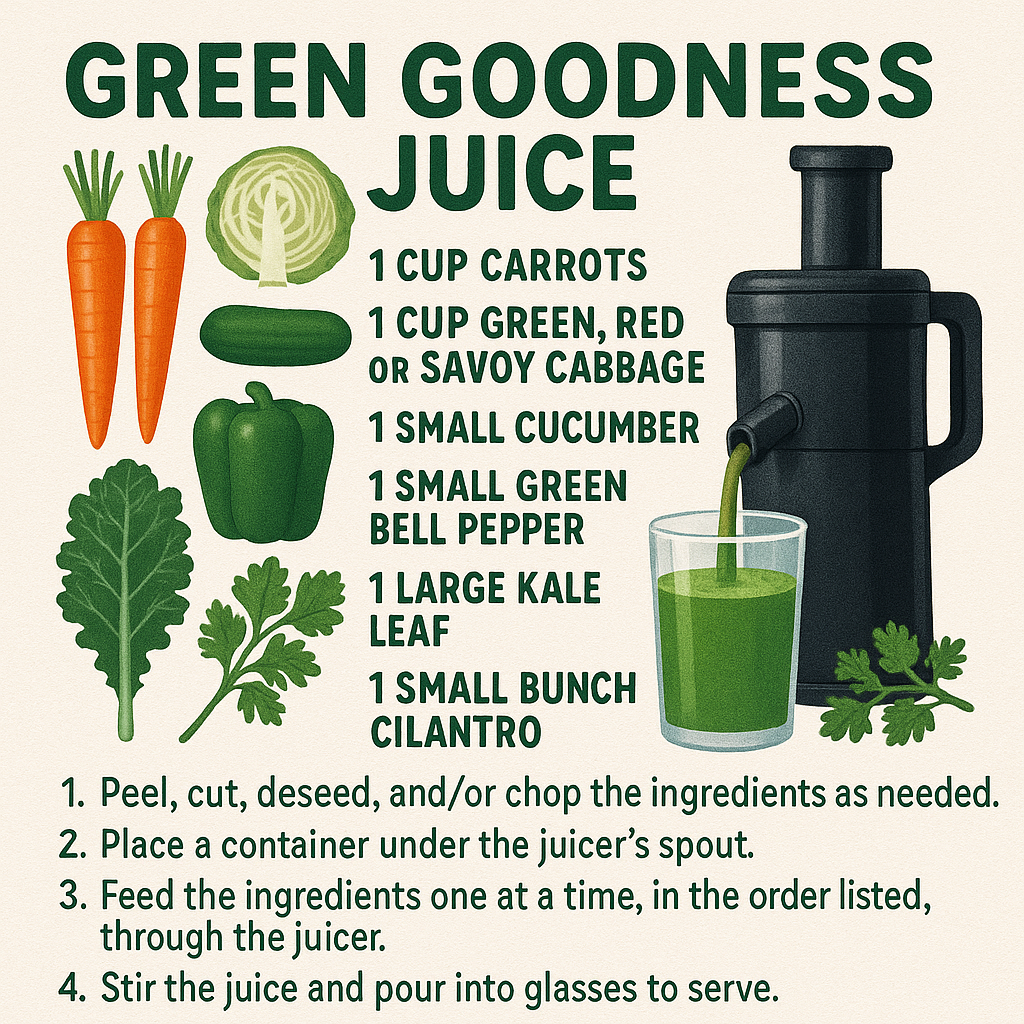
- 1 cup carrots
- 1 cup cabbage (green, red, or savoy)
- 1 small cucumber
- 1 small green bell pepper
- 1 large kale leaf
- 1 small bunch cilantro
Instructions:
- Prep Work: Peel, deseed, and chop your produce into manageable, uniform pieces. Proper prep ensures your juicer can extract the maximum amount of liquid from the fibers.
- Setup: Place a clean container directly under the spout.
- The Sequence: Feed ingredients into the juicer one at a time. Following the order above helps maintain a consistent flow and optimal extraction.
- Final Touch: Gently stir the juice to ensure the flavors are well-integrated before serving in a chilled glass.
Pro-Tips for Home Juicing Success
- Temperature Matters: For the best taste, keep your vegetables refrigerated until the moment you are ready to juice.
- Rotation is Key: To get the most out of your produce, try alternating between soft ingredients like cucumbers and fibrous ones like kale.
- Storage: While fresh is always best, if you must save some for later, store it in an airtight glass bottle in the refrigerator for no longer than 24 hours to preserve the integrity of the nutrients.