The Nutritional Power of Fresh Vegetable Juice
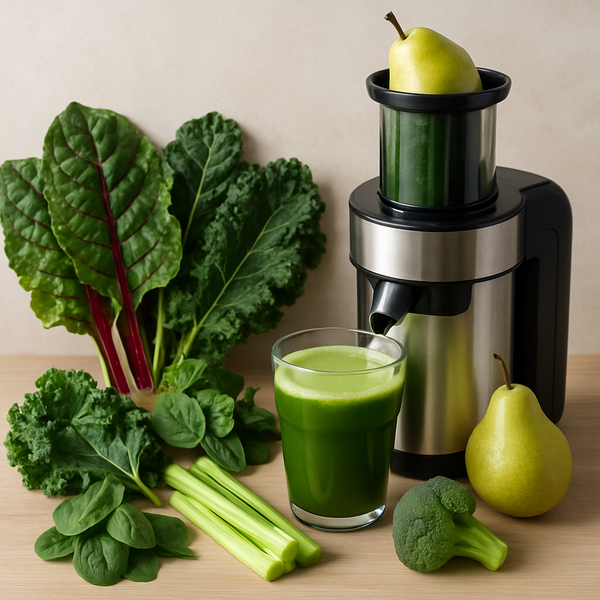
A well-made vegetable juice delivers a concentrated dose of vitamins, minerals, antioxidants, and hydration. For example, a mix of tomatoes, celery, carrots, and a touch of lemon provides a rich source of vitamin C, potassium, and beta-carotene. Fresh juice also helps balance electrolytes and supports digestive health — all without unnecessary additives or sugars.
Many people often ask, “Is 100% vegetable juice healthy?”
The answer largely depends on how it’s prepared. When made from fresh produce and consumed in moderation, 100% vegetable juice can absolutely be part of a balanced lifestyle. The key is freshness — juice is richest in nutrients when consumed soon after preparation.
Vegetable Juice and Blood Sugar: A Smart Choice for Wellness
If you’ve ever wondered, “Which vegetable juice is good for diabetes?”, opt for recipes lower in natural sugars. The combination of tomato, celery, and carrot in this recipe offers nutrients without causing sharp spikes in blood glucose levels. Tomato juice, in particular, contains lycopene and antioxidants that support cardiovascular health — a bonus for those managing their sugar intake.
Adding lemon or a hint of fresh horseradish intensifies flavor without the need for salt or sweeteners, making it a smart option for people looking to control blood pressure and sodium levels.
The Step-by-Step Recipe: Classic Vegetable Juice
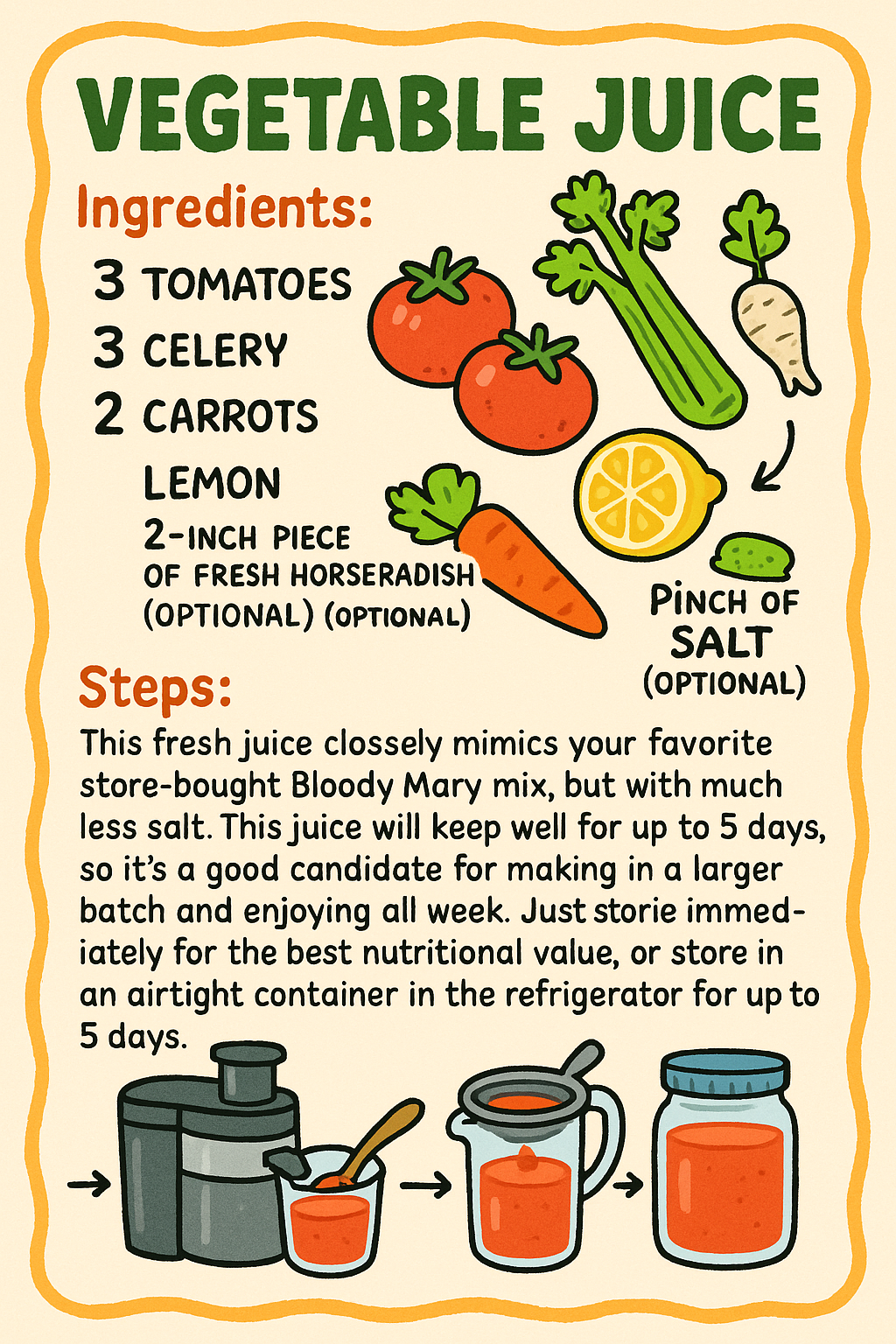
Ingredients:
- 3 tomatoes
- 3 celery stalks
- 2 carrots
- ½ lemon
- 2-inch piece of fresh horseradish or 2 tsp prepared horseradish (optional)
- Pinch of salt (optional)
Instructions:
- Wash all produce thoroughly.
- Process the tomatoes, celery, carrots, lemon, and horseradish in your juicer.
- Stir in salt and horseradish (if desired).
- Strain through a fine mesh sieve for a smoother consistency.
- Enjoy immediately for peak nutrition or store in an airtight jar for up to 5 days.
A Bit of History and Serving Tips
Vegetable juice first gained popularity in the early 20th century as part of wellness movements emphasizing natural foods. Since then, it has evolved from a simple health drink into a lifestyle staple. Today, from brunch bars to home kitchens, the trend continues to thrive.
Serve your homemade juice chilled with a few ice cubes and a stalk of celery for garnish. Pair it with a light breakfast or enjoy it post-workout for a refreshing burst of nutrients.
Final Thoughts: Bringing Freshness into Your Routine
Homemade vegetable juice is not just a drink — it’s a daily ritual that supports health, creativity, and balance. Whether you use a centrifugal juicer or prefer the slow pace of a manual juicer, making your own juice allows you to embrace wholesome ingredients while reducing waste and additives.
So, next time you wonder what is a healthy vegetable juice, remember — the best one is the juice you make yourself, freshly pressed, full of color, and brimming with vitality.