Why Juice Cruciferous Vegetables? (The Science & History)
For centuries, ancient Roman and Greek physicians prescribed cabbage and radish tonics for digestive ailments and long-term vitality. Today, modern nutritional science confirms what these ancient cultures knew intuitively: cruciferous (Brassica) vegetables are biological goldmines.
Vegetables like cauliflower, Brussels sprouts, and green cabbage are rich in glucosinolates—compounds that break down into sulforaphane when chopped or crushed. Sulforaphane is widely studied for its potent anti-inflammatory and cellular protection properties.
The Raw Juicing Advantage
When you cook cauliflower or sprouts, high heat degrades sensitive enzymes like myrosinase (which activates sulforaphane) and destroys heat-labile Vitamin C.
- Cold-pressed extraction allows you to consume these active enzymes in their purest, most bioavailable form.
- Fiber reduction via slow juicing allows your digestive tract to absorb these concentrated micro-nutrients effortlessly without causing the bloating sometimes associated with eating large amounts of raw cruciferous veggies.
Balancing the Palette: The Art of Flavor Synergy
One challenge with juicing brassicas is their sharp, earthy, and sometimes sulfurous taste. The secret to a delicious veggie juice lies in flavor synergy.
- Cruciferous Base (Cauliflower, Cabbage, Brussels Sprouts): Provides a mild, slightly nutty, and hydrating base rich in Vitamin K and folate.
- The Peppery Spark (Radishes with Greens): Adds a bold spice that stimulates digestive enzymes. Don't throw away the radish greens—they contain more Vitamin C and calcium than the roots!
- Natural Sweetness (Carrot): Acts as the harmonizer. The natural sugars and rich beta-carotene in carrots cut through the bitterness of the green cabbage and sprouts, creating a perfectly balanced profile.
Recipe: Cool Cauliflower Juice
This recipe yields a crisp, nutrient-packed veggie juice with a vibrant color and a surprisingly smooth finish.
Ingredients
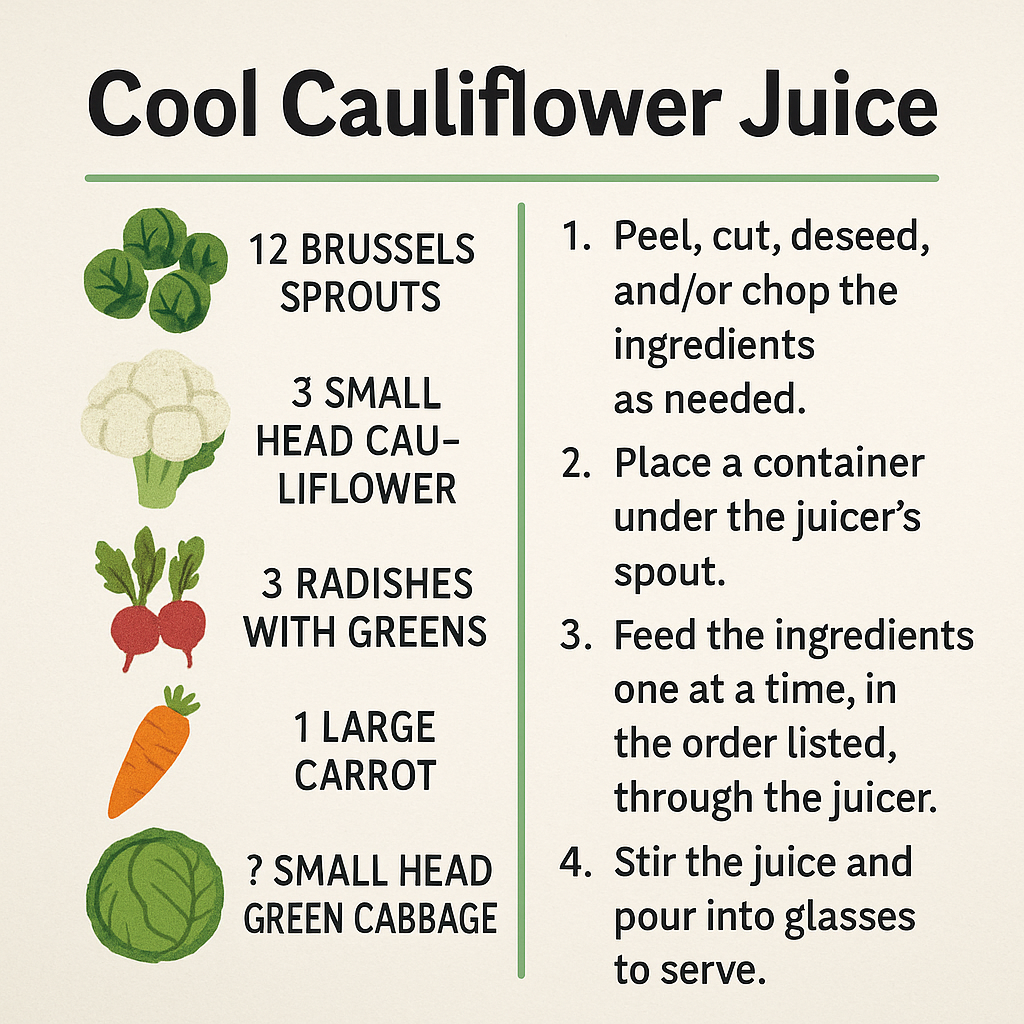
- 12 Brussels sprouts
- 1 small head Cauliflower (florets and stem)
- 3 Radishes (with greens attached)
- 1 large Carrot
- ½ small head Green cabbage
Step-by-Step Preparation
Step 1: Prep Your Produce
Wash all ingredients thoroughly under cold running water. Strip any damaged outer leaves from the Brussels sprouts and cabbage. Cut the cauliflower and cabbage into strips small enough to easily fit your juicer's feed chute. Leave the green tops on the radishes, and trim the root tips off the carrot if desired.
Step 2: Set Up Your Workspace
Position a clean juice jug or glass container under your juicer’s spout, and ensure the pulp collector is firmly in place.
Step 3: Juicing Technique for Maximum Yield
For maximum extraction and optimal flavor integration, feed the ingredients one at a time, in the following order:
- Brussels Sprouts: Hard and dense, starting with these sets a strong nutrient base.
- Cauliflower: Alternate florets with stem pieces to keep the juice flowing smoothly.
- Radishes & Greens: Push greens through together with the roots to extract every drop of chlorophyll.
- Green Cabbage: High water content helps wash down the denser bits.
- Carrot (Last): Feeding the firm, fibrous carrot at the end helps push out any remaining leafy residue from the juicing chamber.
Note: Using a high-efficiency masticating juicer, like those engineered by Shardor, ensures cold extraction that prevents oxidation and keeps your juice fresh longer.
Step 4: Stir and Serve
Give the juice a gentle stir with a spoon to blend the layered flavors. Pour over ice if desired, and enjoy immediately for optimal enzyme activity!
Chef's Tips & Serving Suggestions
- Morning Wellness Shot: Drink this juice on an empty stomach in the morning to jumpstart your digestion and hydration.
- Add a Touch of Citrus: If you prefer a brighter, tangier profile, squeeze in half a fresh lemon or lime right before serving. Citrus helps boost iron absorption from the radish greens.
- Zero-Waste Tip: Don't throw away the dry veggie pulp! Save it to add body to homemade vegetable broth, mix it into plant-based burger patties, or compost it for your garden.