A conical burr coffee grinder does something more: it makes the job repeatable. Every morning, with every cup, the goal is the same: fresh, flavorful coffee that tastes as good as the beans deserve. The type of grinder on your counter has more to do with reaching that goal than most people realize. Here is what sets the conical burr apart and why it fits so naturally into a daily coffee routine.
How a Conical Burr Coffee Grinder Works
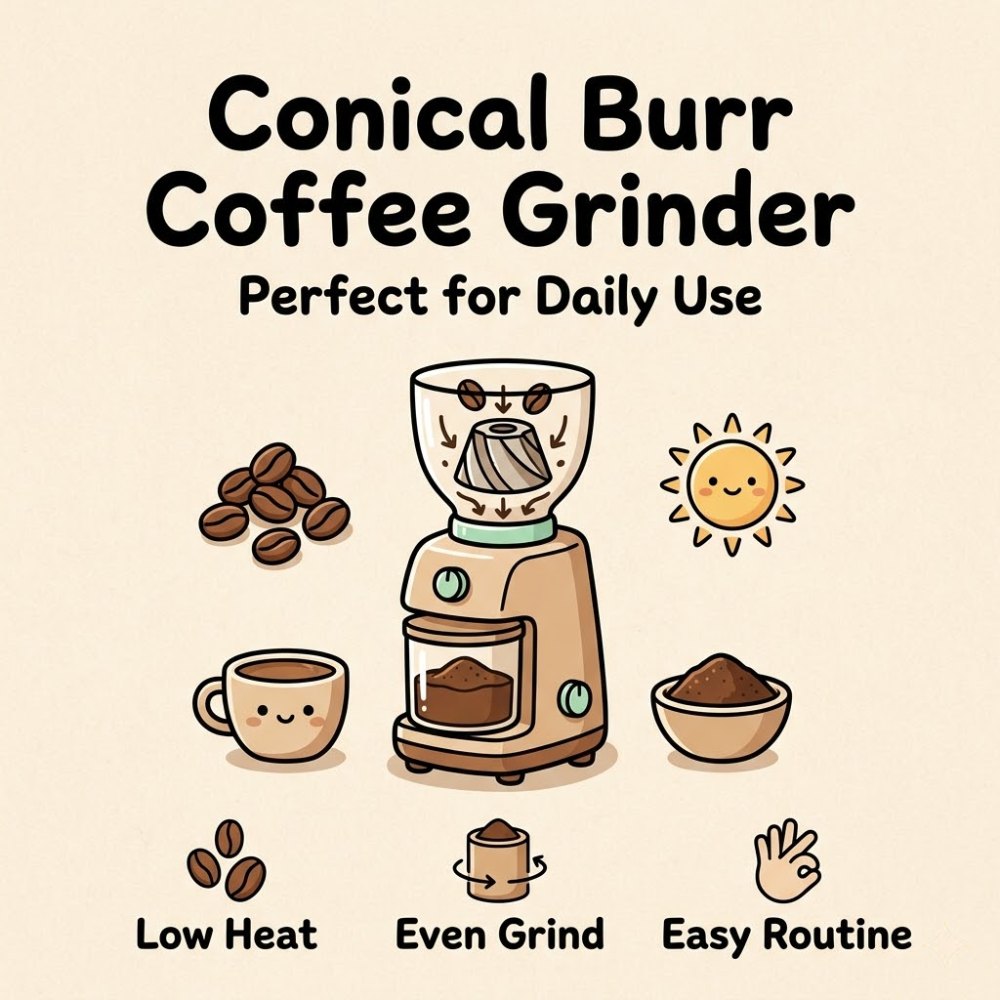
A conical burr coffee grinder uses two cone-shaped burrs, one fixed on the outside and one rotating on the inside. As beans fall between them, they are crushed at a gap you can adjust to suit your brewing method. Because every bean passes through the same gap, the grounds come out at a uniform size, which leads to even extraction and a more balanced cup.
The conical shape also keeps heat low during grinding. Heat degrades the essential oils inside coffee beans that carry aroma and flavor, so minimizing it from the start helps protect what ends up in your cup.
Conical Burr vs Flat Burr Grinder Compared
Before looking at daily use advantages, it helps to understand how a conical grinder burr compares to the other common burr type: the flat burr. A flat burr grinder uses two parallel disc-shaped surfaces that face each other horizontally. Beans pass through the center and are ground as they move outward between the two flat discs. Both styles produce consistent grounds and are a significant step up from blade grinders, but they differ in a few meaningful ways.
The table below gives a quick side-by-side look at the two types.
| Factor | Conical Burr | Flat Burr |
| Burr shape | Cone inside cone | Two parallel discs |
| Heat generation | Lower | Slightly higher |
| Grind consistency | High | Very high |
| Noise level | Optimized for quiet operation | Varies by model |
| Ease of cleaning | Straightforward | Varies by model |
| Best suited for | Everyday home brewing | Espresso-focused and precision brewing |
Both styles are well-suited for home use and deliver consistent, quality results. The conical design runs quietly and generates less heat, which works especially well for daily brewing routines. Flat burr grinders shine when ultra-fine grind precision is the top priority.

Why a Conical Burr Coffee Grinder Holds Up to Daily Use
Using any appliance every day puts it to the test. A conical burr coffee grinder is built with regular use in mind, and two factors in particular make it well-suited for the long run.
Heat Management During Daily Grinding
Grinding generates friction, and friction creates heat. In a conical burr design, beans move through the grinder at a pace that limits how much heat builds up during the process. Lower grinding temperatures help preserve the volatile aromatic compounds, meaning the natural flavor and fragrance, inside each bean. For someone grinding fresh beans every morning, that protection adds up over time and shows up directly in the cup.
Easy Maintenance for Everyday Users
A grinder that is hard to clean tends to get cleaned less often, which affects both performance and flavor over time. Conical burr grinders are generally designed with removable components that allow for straightforward cleaning. The upper burr and hopper can typically be detached, making it easier to clear out residual grounds and coffee oils that build up with regular use. Many models also include a grounds residual cleaner tool that pushes out remaining particles after each grind session. Keeping the grinder clean takes only a few minutes and makes a real difference in how consistent each grind remains over time.
What Brewing Methods Work Best with a Conical Grinder Burr
One of the strongest arguments for a conical grinder burr in a daily routine is its range. It does not lock you into a single brewing method. Because grind size is adjustable across a wide spectrum, the same grinder can handle multiple styles of coffee without compromise.
Here is how different brew methods map to grind size:
- Espresso: Requires a very fine grind. Uniform fine particles are especially important here since espresso extraction is sensitive to even small inconsistencies.
- Pour-over: Uses a medium-fine grind. Controlled particle size helps water flow through the coffee bed evenly for a clean, bright cup.
- Drip coffee: Works with a medium grind. One of the most forgiving methods, and the conical burr delivers reliable results every time.
- French press: Calls for a coarse grind. The conical burr dials out to coarser settings without losing uniformity, preventing muddy texture in the cup.
- Cold brew: Also uses a coarse grind, making it just as accessible through the same adjustable settings.
The flexibility to move between these methods with a single grinder is a practical advantage for anyone whose coffee preferences shift by season, mood, or occasion.
Choosing the Right Electric Burr Coffee Grinder for Your Routine
An electric burr coffee grinder automates the grinding process, which matters more than it might seem for everyday use. Manually operated grinders require physical effort and time, which is fine for occasional brewing but less practical when you are making coffee before work every morning.
When evaluating an electric burr coffee grinder for daily use, a few features stand out:
- Grind settings: More settings give you finer control. A wider range means the grinder can serve multiple brewing methods without adjustment compromises.
- Timer or dose control: Built-in timers let you grind a consistent amount every time without measuring by eye. Some models allow you to select the number of cups, and the grinder handles the rest.
- Anti-static technology: Ground coffee can cling to surfaces due to static electricity. Grinders with anti-static features keep the process cleaner and reduce counter mess.
- Noise level: For early morning use, a quieter motor is a practical consideration, especially in shared spaces.
- Ease of cleaning: Removable burrs and hoppers simplify maintenance and help the grinder perform consistently over its lifespan.
A well-chosen electric burr coffee grinder becomes part of the morning routine without adding friction. The goal is a machine that works reliably every day and delivers the same quality grind from the first use to the hundredth.
Grind Smarter, Brew Better
Switching to a conical burr coffee grinder is one of the simplest ways to raise the quality of every cup you make at home. It preserves flavor, adapts to any brewing method, and handles daily use with ease. If you are looking for an electric burr coffee grinder built for real routines, explore the options available and find the one that fits how you brew.
FAQs about Conical Burr Coffee Grinders
Q1. Can a Conical Burr Coffee Grinder Be Used for Decaf Beans?
Yes, a conical burr coffee grinder works just as well with decaffeinated beans as it does with regular ones. Decaf beans go through a different processing method, but their physical properties at the grinding stage are comparable. The same grind settings and routines apply, so no adjustments are needed when switching between the two.
Q2. How Often Should You Replace the Burrs in a Conical Burr Grinder?
Burr lifespan depends on how frequently the grinder is used and the type of beans being processed. For a home user grinding daily, burrs typically maintain their performance for a significant period before needing replacement. Signs that it may be time to replace them include a noticeable drop in grind consistency or an increase in the time it takes to process the same amount of beans.
Q3. Does Grind Speed Affect the Quality of a Conical Grinder Burr?
Grinding speed can influence the amount of heat generated during the process. Slower grinding speeds tend to produce less heat, which helps protect the aromatic oils in the beans. Many electric burr coffee grinder models are designed with motor speeds calibrated to balance efficiency and heat control, making them practical for daily home use without sacrificing cup quality.
Q4. Is a Conical Burr Coffee Grinder Suitable for Flavored Coffee Beans?
A conical burr coffee grinder can be used with flavored coffee beans, though some extra cleaning afterward is recommended. Flavored beans often have added oils or coatings that can leave residue on the burrs over time. A quick clean after each use of flavored beans helps prevent flavor transfer to the next batch of regular coffee you grind.