Why Swiss Chard Works So Well in Green Juice
Swiss chard has been used in Mediterranean cooking for centuries, often sautéed with olive oil, garlic, herbs, or added to soups and grain dishes. In fresh juice, it brings a mineral-rich, slightly earthy flavor that pairs beautifully with sweet fruit.
If you have ever wondered, “What does ‘chard’ mean?”, the word refers to the leafy green vegetable related to beets. Unlike beets, chard is grown mainly for its large leaves and colorful stems. Swiss chard can have white, red, yellow, or rainbow stems, which is why you may see it sold as rainbow chard in grocery stores.
So, what does chard do for your body? Swiss chard naturally contains vitamin K, vitamin A, vitamin C, magnesium, potassium, and plant antioxidants. These nutrients support normal body functions such as bone health, immune function, hydration balance, and overall wellness. While no single juice is a cure-all, adding leafy greens like Swiss chard to your routine is a practical way to increase your intake of vegetables.
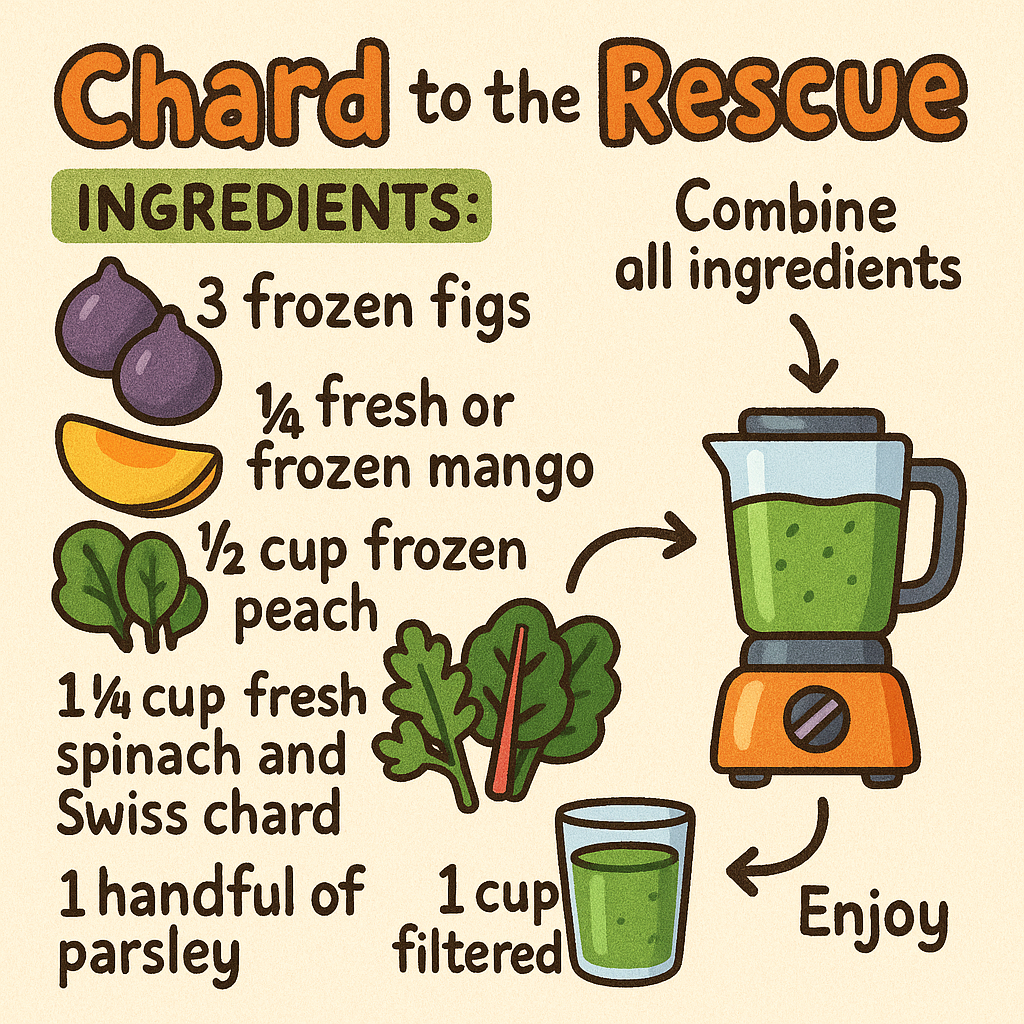
Chard to the Rescue Recipe
Ingredients
- 3 frozen figs
- 1/2 fresh or frozen mango
- 1/2 cup frozen peach
- 1 1/2 cups fresh spinach and Swiss chard
- 1 handful of parsley
- 1 cup filtered water
How to Make It
- Rinse the spinach, Swiss chard, and parsley thoroughly.
- Remove any very tough chard stems if you prefer a smoother texture.
- Add the filtered water first, then the leafy greens, frozen figs, mango, and peach.
- Blend or juice until smooth and bright green.
- Taste and adjust. Add more water for a lighter drink or more mango for extra sweetness.
- Serve immediately for the freshest flavor.
If using a centrifugal juice machine, feed the greens slowly and alternate them with fruit to help the machine extract more liquid. If making a manual juice version, finely chop the greens, mash the fruit slightly, and press through a fine strainer or nut milk bag. The texture will be lighter, though the yield may be smaller.
Flavor Profile: Sweet, Green, and Balanced
Swiss chard can taste strong on its own, especially for people who are new to vegetable juice. This recipe solves that problem with a thoughtful fruit pairing.
Frozen figs provide a honey-like sweetness and a soft, rounded flavor. Mango adds tropical brightness, while peach keeps the drink mellow and familiar. Spinach softens the stronger taste of chard, and parsley gives the juice a clean herbal finish.
The result is a healthy green juice recipe that tastes refreshing rather than grassy. It works well as a morning drink, an afternoon reset, or a light pre-brunch beverage when you want something nourishing but not heavy.
Health Benefits of the Main Ingredients
Swiss Chard
Swiss chard is rich in leafy-green nutrients and adds depth to vegetable juice. It contains natural antioxidants and is especially known for vitamin K content. For many people, it is a simple way to bring more greens into the diet without cooking a full meal.
Spinach
Spinach makes the drink smoother and milder. It also adds folate, iron, magnesium, and plant compounds that support a balanced diet.
Figs
Figs bring natural sweetness and fiber when blended. Their deep flavor helps reduce the need for added sugar, making this recipe ideal for people who want a naturally sweet green drink.
Mango and Peach
Mango and peach add vitamin C, aroma, and a soft fruit flavor. They also help make the drink more family-friendly, especially for anyone who is still getting used to leafy greens.
Parsley
Parsley is more than a garnish. In juice, it adds freshness and a clean finish. It pairs especially well with chard because it lifts the earthy flavor and makes the drink taste brighter.
Who Should Not Eat Swiss Chard?
A common question is: Who should not eat Swiss chard? For most healthy adults, Swiss chard is a nutritious food. However, some people may need to be cautious.
People taking blood-thinning medication should speak with a healthcare professional before greatly increasing foods high in vitamin K, such as Swiss chard. Those with a history of kidney stones may also want to limit high-oxalate foods, including chard and spinach. If you have kidney disease, specific dietary restrictions, or a medical condition requiring mineral control, ask your doctor or registered dietitian before making Swiss chard juice a regular habit.
For general wellness, moderation is key. Rotating greens—such as kale, romaine, cucumber, celery, parsley, and chard—can help keep your juice routine balanced.
Tips for Making This Green Juice Taste Better
- Use frozen fruit to create a colder, thicker, more refreshing texture.
- Add lemon juice if you want a brighter, more citrus-forward flavor.
- Use young Swiss chard leaves for a milder taste.
- Remove thick stems if you prefer a less earthy flavor.
- Drink it soon after making for the best color and freshness.
- Add cucumber if you want a lighter vegetable juice.
- Add ginger if you prefer a sharper, warming finish.
Easy Pairing Ideas
This Swiss chard green juice pairs well with simple, wholesome meals. Try it with:
- Whole-grain toast with avocado and egg
- Greek yogurt with berries and seeds
- Oatmeal with walnuts and cinnamon
- A vegetable omelet
- A light lunch bowl with quinoa, roasted vegetables, and lean protein
Because the recipe includes fruit and greens, it can stand alone as a light snack. If you want it to be more filling, pair it with protein or healthy fat.
A Small Juice Story: From “Too Green” to Everyday Favorite
Many people try green juice once and decide it is not for them because the first version tastes too bitter, too grassy, or too intense. The secret is balance. Traditional vegetable juices often rely on celery, cucumber, and greens, which can taste very clean but not always satisfying. By adding figs, mango, and peach, this recipe becomes approachable without losing its fresh green character.
That is why Chard to the Rescue works so well for families. It introduces Swiss chard in a way that feels bright and enjoyable. Children may like the sweetness of peach and mango, while adults appreciate the herbal, garden-fresh finish from parsley.
Storage and Make-Ahead Notes
Fresh juice is best enjoyed right away. If you need to store it, pour it into an airtight glass bottle and refrigerate for up to 24 hours. Fill the bottle as close to the top as possible to reduce air exposure. Shake well before drinking, as natural separation is normal.
For faster mornings, wash and portion the Swiss chard, spinach, and parsley the night before. Keep frozen figs, mango, and peach ready in freezer bags. In the morning, all you need to do is add water and juice or blend.