Understanding Alkalinity in Vegetable Juice
The body regulates its own acid-base balance. In this recipe, the practical value of the vegetables is their flavor, color, and nutrient variety rather than changing body pH.
What vegetable is the most alkaline? Leafy greens such as spinach and kale top the chart, but broccoli—a key ingredient in this recipe—also boasts high alkalinity along with a rich supply of fiber, vitamin C, and antioxidant compounds.
Is carrot juice acidic or alkaline? While carrots have a mildly sweet flavor, carrot juice is actually slightly alkaline, making it an ideal choice for balancing flavors and nutritional value when paired with other alkaline vegetables.
The Recipe – Simple, Fresh, and Powerful
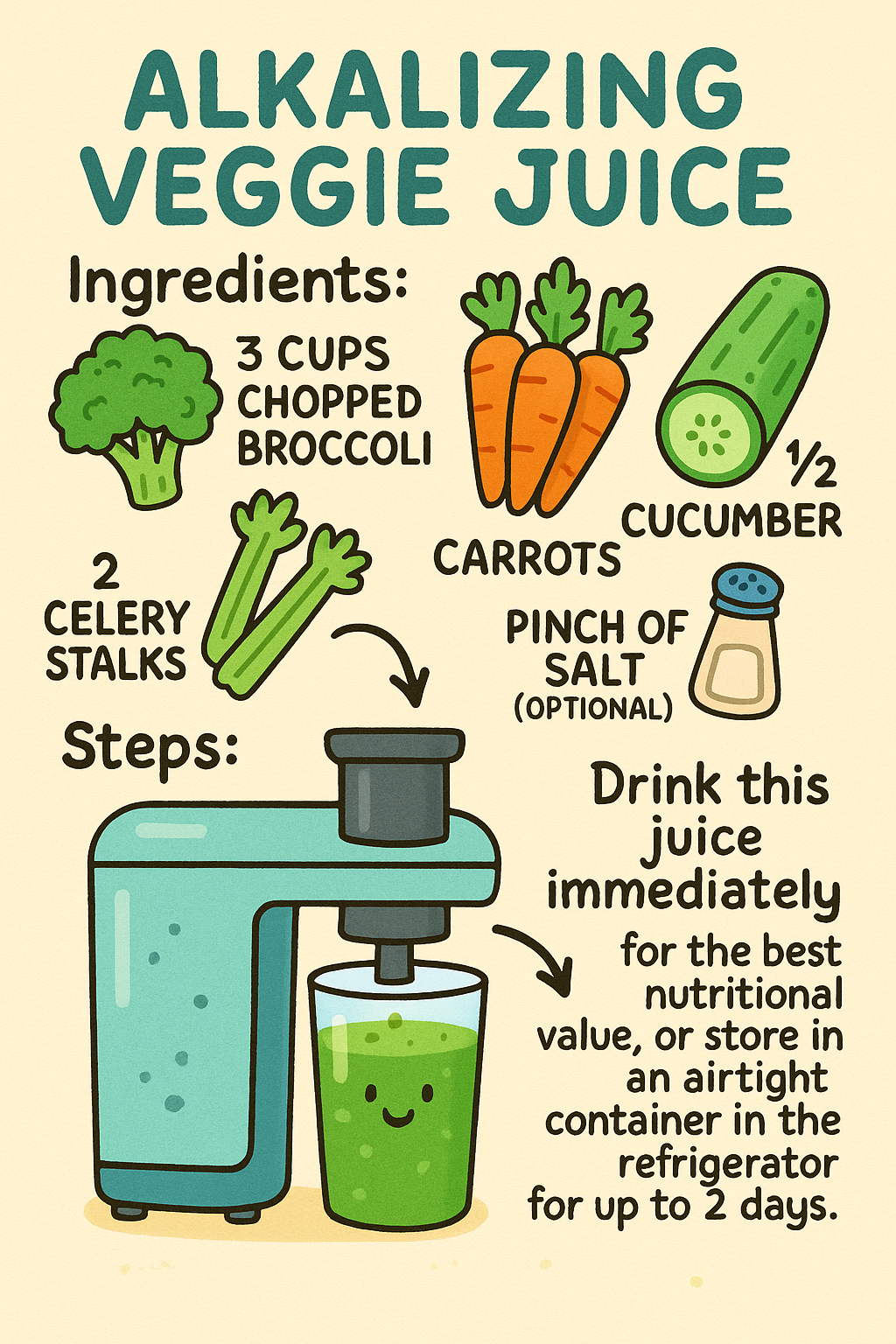
Ingredients:
- 3 cups chopped broccoli
- 3 carrots
- 2 celery stalks
- ½ cucumber
- Pinch of salt (optional)
Steps:
- Feed the broccoli, carrots, celery, and cucumber into your juicer.
- Stir in a pinch of salt if you like.
- Serve immediately for maximum nutritional benefit or store in an airtight container in the refrigerator for up to 48 hours.
Tip: For best texture, a centrifugal juicer can handle fibrous vegetables quickly, while a manual juicer can yield slightly denser, more nutrient-concentrated juice.
Historical Note: Juicing for Health
Fresh vegetable juices have appeared in many food traditions and became more popular with home juicing equipment in the twentieth century. Today they are mainly a convenient way to use a variety of produce.
Pairing Suggestions and Variations
For a sharper finish, add a small piece of fresh ginger. Kale or spinach can deepen the green color and add a more pronounced vegetable flavor.
For a cooling summer drink, blend the juice with a few mint leaves and serve over ice. You can also experiment with different ratios of vegetables depending on your taste preference.
Why Make Juice at Home?
Many store-bought juices are pasteurized, which can decrease certain nutrients. Juicing at home puts you in control:
- You choose the freshest produce.
- You decide the combinations.
- You avoid added sugars and artificial ingredients.
Whether you use a centrifugal juicer or manual juicer, freshly made vegetable juice offers maximum flavor and nutrient density.